The Psychology of Envy

envy4

Do you find it hard to be happy for the success of others?

Do you gossip about people?

Do you feel extremely competitive with others?

Do you find yourself becoming more and more judgmental of other people?

Do you find yourself comparing yourself to other people on the daily?

Do you find yourself undermining other people’s relationships?

Do you feel happy when you see someone fail?

If you answer yes to any of these questions, you may be struggling with the emotion of envy.

Envy is one of the seven deadly sins and it can be very destructive to your life and your relationships.

Bertrand Russell said, “Beggars do not envy millionaires, though of course they will envy other beggars who are more successful.”

We tend to direct our envy at the people who orbit our social stratosphere–friends, family members, neighbors, colleagues. The reason for this is these are the people we frequently interact with. These are the people we can “realistically” use as a measuring stick to gauge ourselves against.

Most of us would not compare ourselves to Bill Gates but we may use our friend or coworker as a way to gauge our success because we feel we are on a similar playing field.

We cannot experience envy if we are not comparing ourselves to others.

Envy is an emotion we feel when we engage in the social comparison game. Whoever you are envying you believe you are in competition with–yet there are no winners to be had in this game. People who struggle with envy tend to be people who frequently compare themselves to others.

When you compare yourself to another and come up short, you are likely to feel envious.

envy3

Envy is an emotion we all feel from time to time.

It is an emotion that unfolds in a predictable fashion. First, we must face a person with a superior achievement, quality, or possession. Second, we must want whatever this person possesses for ourselves, OR wish that the other person didn’t have it. Finally, we must be disturbed by the emotion we experience when we are in the company of this person.

These type of experiences are available to us on the daily.

Maybe we see a neighbor get a new luxury automobile and look at the ten-year old car sitting in our driveway with feelings of envy.

Maybe a friend gets a new promotion and makes more money then we will ever be able to make in our field and feelings of envy arise.

Maybe our sister travels frequently and often. We can’t afford it and don’t have the luxury of taking time off of work. We begin to feel envious of her.

Any of those scenarios may feel familiar to you.

Unfortunately, the emotion of envy runs rampant in our modern-day society.

With social media, we all get a peek into the lives of others (or at least of the facade they like to present to the world).

Envy is the pain we experience from being confronted by the advantages of others. It causes us to feel anger, disappointment, and resentment.

These emotions turn us against others–and ourselves. Envy truly is a green-eyed MONSTER.

If someone is envious of you, it is not a compliment. They likely hate your guts.

envy 7

Envy is a secretive emotion. Very rarely will you hear someone admit they are envious of someone. To neutralize feelings of envy, the envious person is likely to continually denigrate the target of their envy to anyone who will listen. This works to simultaneously diminish the target of their envy and elevate themselves in comparison.

Envying someone can become an obsession. An unhealthy obsession.

It is a cheap, easy way to give ourselves a boost to our self-esteem–by destroying the goodness we see in others.

It does not matter what the metric you may be using to compare–money, looks, youth, intellect.  You can always find someone worse off than you are IF you are looking for that.

But you will also find someone better than you if you are looking for it.

The reality is there is ALWAYS someone younger, in better shape, better looking, with a better career, more money, better behaved kids, or whatever it is you use as your measuring stick.

Envy is a short-sighted approach to life. We lose sight of the bigger picture.

envy1

For instance, we may envy our friend, who is a doctor–a person with a prestigious career, nice house, luxury car, who travels to exotic places…. BUT we do not envy what it took to get her there: the hundreds of thousands of dollars of student loan debt, the stress of her job, the debt from starting a practice, the cost of malpractice insurance, the years upon years of schooling and residency. We often look at the end result and not all the work or the numerous sacrifices that went into achieving it.

Oftentimes we envy people for things we don’t even WANT for ourselves if we were given the opportunity. Perhaps we are envious of the doctor yet we hate science and math. We would never want to go to medical school and study all the material that is required to BE a doctor. We wouldn’t want to have touch other people’s bodies or be around sick people. Thus we are envying someone who does something for a living we don’t even enjoy nor have a desire to do.

Personally, I could never envy a doctor because I would never want to do what is required to become a doctor.  I would not be willing to be a Bio or Chem major in college. I don’t enjoy the sciences OR math. Would never want to take the MCATS. Or go to medical school. Have to SEE blood. Touch body parts that have not seen the light of day in years. Or deal with insurance companies/HMOs. Or tell someone they are dying from an illness. The list can go on and on for all the things doctors deal with in their profession that I would not be want to do.

When you feel envious, you are often looking at an idealized version of someone else’s life. Not the reality of their day-to-day life.


envy2

What should you do if you find yourself struggling with the emotion of envy?

1)Use envy to motivate yourself. Look at whoever or whatever it is you are envious of. What do they have that you want? Use envy to help you figure out your goals, desires, and values. Do you feel envy when you see a friend’s never-ending travel pics on Instagram? Maybe you have an untapped desire to travel and see the world. Feeling envious when you see a friend in a bikini pic? Maybe it is time to look at your own diet and workout routine. It may be time to work on creating the physique of your dreams. If used appropriately, envy can be a compass guiding us towards things we want in our OWN life.

2)Practice self-compassion. Whatever you feel, don’t be so hard on yourself. Envy tends to arise in someone with a critical spirit–towards others AND themselves. Don’t fight against whatever it is you are feeling but try to engage in these emotions in a positive way. Envy leads to poor decision-making. All emotions, including the uncomfortable ones, are teaching us something about ourselves. We tend to be hard on ourselves for feeling the normal range of human emotions. It is okay to feel envious. However, it is not healthy to act out on these feelings towards others.

3)Start a gratitude practice. Often I have clients start a daily gratitude journal. Envy is counting other people’s blessings instead of being appreciative of our own.  Gratitude helps us focus on all the positive things in our life. Practicing gratitude helps people to be more satisfied with their own life and less focused on others.

4)Reflect on what you feel is missing in your life. If you are feeling envious towards your friend, what is it you feel is missing from your own life? Envy tends to arise from having low-self esteem and feeling unfulfilled. Spend some time reflecting on your goals, desires, and dreams. Is there something in your life that is making you feel dissatisfied? Make a realistic game plan to work towards achieving all that you want out of your life. If you are busy working towards your own goals, you won’t have much time to spend feeling envious of others.

a111

5)Understand your own capabilities. If you are jealous of a singer or athlete, ask yourself if you have the capabilities to achieve what they achieved on that level. I cannot be envious of someone who sings or is an incredible athlete because I am not capable of either.  I am a 100% okay with that because I accept those are gifts I do not have. I find it is more productive to focus on the strengths I do have and build on those. We all have different aptitudes and potentialities.

6)Ask yourself if you really want what someone else has. Are you envious of someone who makes big bucks working in the financial sector but you are risk averse and HATE numbers? This go back to looking at the reality of the life of someone you are envious of. Are you a working mom who when you son gets sick starts to wish you were a stay-at-home mom? Yet when you were on maternity leave you were dying to get back to work because you missed it? We fall into feelings of envy when we forget about the compromises involved in our choices. The compromise we ALL have made in our choices.

Perhaps you have days you wish you could be home with your kids but you enjoy the professional fulfillment of your career and being independent is an important value to you-financial and otherwise. You wouldn’t be happy being financially dependent on someone else or without the ability to use your education and skills. Your kids are also already in school so you wouldn’t be home with them most of the day anyway.

Therefore your envy of a stay at home mom is not what you really want if you were to weigh the pros and cons. You are solely focused on the benefits and not the big picture of what that choice means giving up. This is a common dilemma I hear from women especially as it relates to balancing one’s career with being a parent. Don’t fall victim to the grass is always greener syndrome.

7)Be cognizant of the negativity envy brings to your life. Envy damages and destroys relationships. It creates unhealthy competition. It leads to negative feelings about yourself AND others.

Envious people think life is a zero sum game. They view another person’s win as their own loss. This comes from a scarcity mindset.

Indulging feelings of envy is a road to unhappiness. Have you ever met an envious person who did not seem miserable? Unlikely.

Feelings of envy are likely to lessen as you mature and as you learn to be realistic of your potentialities and accept your limitations.

Try not to worry about what others have.

At the end of the day, we all have our OWN race to run. Comparing yourself to others is a race your will NEVER will and all it will do is SLOW you down on your way to achieving your goals.

envy1 0

envy6

Why You Need Boundaries to Live a Happy Life

41654950_1508409825926967_2680141282981969920_n

Have you been feeling exhausted lately?
Stressed out?
Completely drained?

Ever feel under appreciated, unseen, and unsupported?

If you do, it may be that you need to learn how to set some boundaries in your life and relationships.

Our relationships need boundaries.

Healthy self-esteem=good boundaries=happy life 

The more you love and respect yourself, the more you can love and respect others.

In this day and age, we are living in an increasingly boundary LESS society.

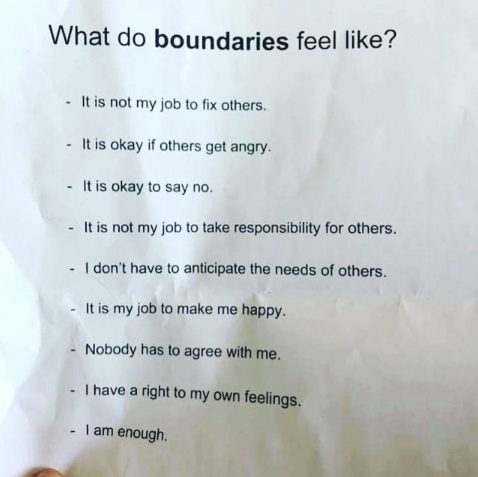
Boundaries, or personal boundaries, can be understood as an invisible shield or fence around you. It’s a line you set for yourself and others that separates you from others and their influence.  Boundaries fulfill an important role in relationships. They are the emotional, physical, and mental limits we set with others that determine what we will, and will not, accept.

We are all separate people but we are also interconnected. Boundaries are the space between.

A lot of issues that arise in counseling, relate to boundary issues in a client’s life.

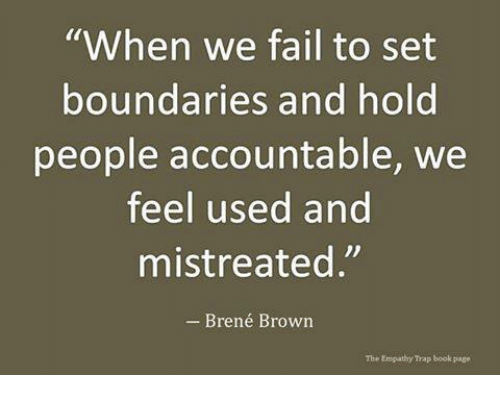
People who lack healthy boundaries are often unhappy. They are more likely to be emotional needy, get taken advantage of, and get treated with disrespect. Boundaries mean not letting people into your life to behave badly.

b1

Good fences make good neighbors.

Boundaries go both ways-you need to extend the same respect to the boundaries of others.

Boundaries give us a framework on how to act. They give us a warning when they are being violated. If someone steps over our boundary, we know it, we feel it, we have a visceral reaction.

Our emotions and thoughts are a compass guiding us–who we want to spend more time with and who we want to stay away from.

We all have the right and responsibility to set limits and create boundaries that work for us. It is up to you to enforce your boundaries.

You need to value yourself because when we value something we protect it.

b2

What are some signs you have poor boundaries?

~Your relationships tend to be difficult

~You always feel a little bit annoyed

~You think others don’t show you respect

~Your relationships tend to be dramatic

~You hate to let people down

~You feel other people let you down

~You may be passive aggressive

~You have trouble making your own decisions

~You fear being abandoned or rejected

~You are tired all the time

~You have trouble saying no

~You are easily guilted into things

~You coerce others into doing things

~You struggle with anxiety

~You often feel like a victim (especially to situations that you feel are out of your control)

b3

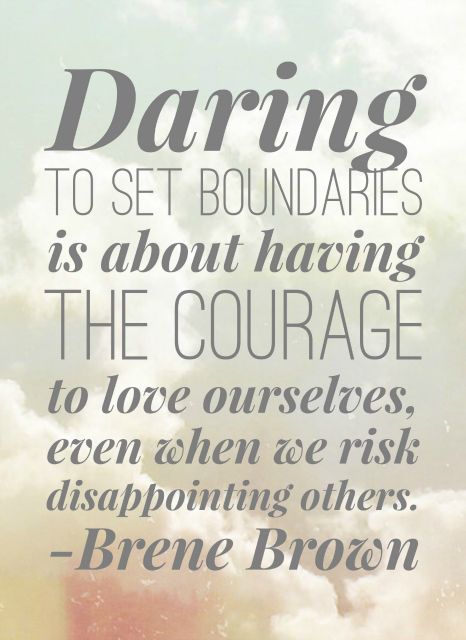
Boundaries are a form of self-care. They don’t steal your happiness, they protect it.

Healthy people have boundaries.
Boundaries are different for everyone—we are all comfortable with different levels of closeness in our relationships.

Boundaries are largely subjective. What I may be comfortable with you, you may be uncomfortable. Neither of us is right or wrong-just different.

If you set a boundary with someone and they do NOT respect it, they are showing you they care more about their own ego gratification than they do about you and the relationship. If this is the case, while it will be painful to find out, it will lead to greener pastures.

There are two possible outcomes when you set boundaries with people:
~a BETTER, healthier relationship (for both sides)

OR

~you find out the person doesn’t care about the relationship enough to respect the boundaries set forth and the relationship disintegrates (if this is the case you usually feel liberated in the end because you are taking care of yourself)

Ultimately, either outcome, is win-win for you.  Boundaries strengthen understanding and connection between both parties. Healthy boundaries are the cornerstone of happy relationships.

Boundaries are fluid and change as we change.

As someone who is naturally a pretty open book, I have learned over the years to be more private. Perhaps this is a natural progression of maturing. On the flip side, you may be someone who is more reserved, who is working on becoming more open with others.

Boundaries are a two-way street.

Just as we want to ensure people respect our boundaries, it is equally important for us to respect OTHER people’s boundaries.

If you struggle with respecting the boundaries set forth by others, causing conflict in your relationships, it would be helpful to take some time to reflect on why.

Unless there’s an emergency, the one screaming is usually the problem.

There are extenuating circumstances when there’s an emergency or crisis. Or if you are dealing with an extremely toxic person. But if you find yourself flipping out on people, blaming or resenting others for your feelings, the first place to look is in the mirror. You and your boundaries are probably the problem.

If I feel strong in my boundaries and you feel strong in yours, we can meet and connect in a healthy way.

b5

It’s important for our mental well-being to have personal boundaries. They lay the groundwork for how we approach relationships. Our boundaries help us live according to our values.

Clearly established boundaries help us to take care of ourselves emotionally, physically and spiritually. Our boundaries help us to become less concerned about how we are viewed by others and more satisfied with the perceptions we hold of ourselves.


b4

If you enjoyed this article and are interested in seeking counseling with me:

https://www.psychologytoday.com/us/therapists/erin-doyle-theodorou-nutley-nj/243617

Erin Doyle Theodorou, M.Ed, LPC, NCC

THEODOROU THERAPY, LLC

590 Franklin Ave.

Suite 2

Nutley, NJ 07110

973-963-7485

etheodorou@theodoroutherapy.com

Are You Judgmental? Or Do You Fear Being Judged? The Misery that Arises from Both Sides of the Judgement Coin.

miserable

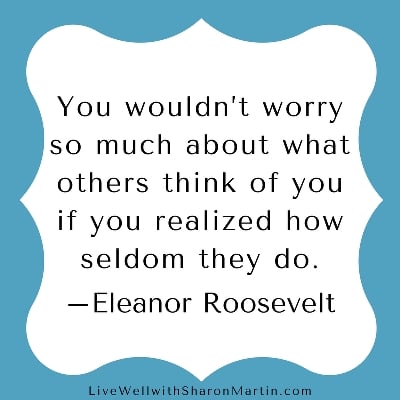
Nobody cares what you think.

Alright.  That might sound a little harsh. Let me roll it back a little bit.  I will be fair here. Maybe a few people do–hopefully your parents do. And your kids if you have them. Your partner. And possible a few people in your inner circle of close family and friends.
But for everyone else you come in contact with? They don’t care.

I personally find this truism very liberating.  There is such freedom in realizing no one cares what you think. Most people spend their days thinking about themselves, not the other people around them.

In general, people feel what they feel, think what they think, do what they do. Nothing you say will likely get anyone to change their mind. Have you ever read someone’s political post or read a comment that you disagreed with and thought, “Hmm they ARE right, I am going to change my mind.” That would be the anomaly not the norm. People tend to be pretty entrenched in their opinions especially the older they get. There is a reason for the saying it is hard to teach an old dog new tricks! The truth is most people are not moved by the opinions of others, particularly, if they have a strong sense of themselves and their own values.

The reason I felt this topic was important to write about is as a therapist, I have seen people who are so CONSUMED by what other people think, it inhibits their life.

As a clinician, I have heard time and time again, “Well, what would they think?” The answer is WHATEVER it IS, it doesn’t matter because in all likelihood whatever they (whoever “they” are) thinks will be forgotten about quickly. Most people do not have the time in the day to spend thinking about you, your mistakes, your choices. Human nature being what it is-people are egocentric.

For some of us, this is just a given. But for others, who struggle with worries about what other people think, this is something they may need to hear.

It is our OWN egocentrism in thinking people are that concerned with us and are paying THAT close of attention to our lives. Yet this is a common presenting problem I see that brings people into counseling. Many people, across all age groups, struggle with worrying about what other people think of them.

At certain times in our life, this is normal. Being worried about what other people think is developmentally appropriate during adolescence when we are in the stage of having an “imaginary audience” where one thinks other people are paying close attention to him or her and watching their every move closely.

However, as you mature, if you still continue to think that other people are paying that close of attention to you-you may be stuck in an adolescent stage of development. During adolescence it is also normal to have a “personal fable” where one thinks they are unique and special. But this egocentrism is supposed to be a stage we develop and mature out of. It is appropriate when you are 15 to have a personal fable with its corollary the imaginary audience, but it is not appropriate when you are 35.

ab2

Realizing this, we need not let ourselves be consumed by the opinions of others, as they really aren’t paying that close attention to us in the first place.

If there is in fact someone out there fixating on you and your life, that is unhealthy. Unhealthy for them, not you! (unless of course the person in question is a celebrity or politician or some public figure–I follow the news on some of these folks closely myself!)

But this is good news–knowing that other people do not care what you think should bring a sense of relief. Realizing this should help you become comfortable with not caring what other people think either.

Now when I say you shouldn’t care with what other people think, I don’t mean you should be rude. Or impolite. Or inconsiderate. Or disrespectful. What it means is you should live your life according to YOU. And your values. Without worrying about how other people will react to your decisions and choices.

It is just not psychologically or emotionally healthy to live your life for the approval and validation of others.

I have seen so many people who live in fear of what other people think–prisoners of their own making. It is a recipe for misery.

I often find these same people who fear others’ judgement are the same people who judge others the MOST.

We all struggle with being judgmental to a certain extent from time to time. Judging is just so easy, it is the path of least resistance. We judge everything we can about other people: how they look, their politics, their bodies, their Facebook posts, career choices, parenting choices, choice of partner. We may judge so much it can become a way of life for us.

But I need to tell you something.

It is a big waste of time.

Not only do most other people not care about your judgments, being judgmental makes YOU miserable. Not the person you are judging.

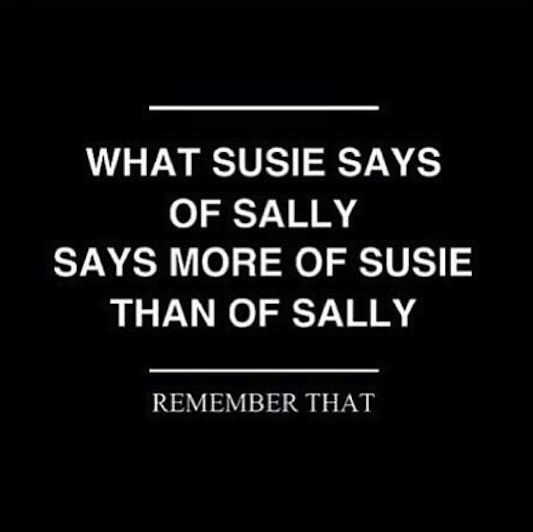
Other people’s judgments really do say more about them than the person they are judging. Most people tend to use our own metrics (biased in favor of themselves of course) to judge others.

a1

It explains:

~Why married people tend to think marriage is preferable to being single

~Why single people think being single is preferable to being married

~Why people who are parents think it is better than people who choose not to have kids

~Why people who choose not have kids think it is better than people who choose to become parents

~Why stay-at-home moms think they are better mothers than moms who work

~Why working moms think they are better mothers than moms who stay-at-home

~Why people in the private sector think their work is a better choice than people who work in the public sector

~Why people in the public sector think it is a better choice than people who work in the private sector

Get the gist? 

Notice our judgments tend to validate our own life choices.

When we judge, we get an instant hit of self-righteousness.  It is basically us congratulating ourselves for our great choices (and remember, this isn’t other people congratulating us, this is us patting ourselves on the back).

But the more we judge, the less tolerant we become.

The less tolerant we become, the more conflict we will have with other people.

The more conflict we have in our lives the more miserable we will be.

I write this with the hope that if you are someone who is so consumed with the worries of what other people think, that you gently realize, most people are caught up in the things going on in their own lives. That you should lighten up and live as you please without the fear of what other people will think. We humans are very egocentric beings. People are worried about hiding their own imperfections from the world, not focusing on yours.

a2.jpg

And if you find you have developed the habit of judging, and you have a lot of anger in your heart, you would do well to seek support. Being judgmental keeps others at a distance and creates misery for you and others–most of all you!

ab1

If you enjoyed this article and are interested in seeking counseling with me:

https://www.psychologytoday.com/us/therapists/erin-doyle-theodorou-nutley-nj/243617

Erin Doyle Theodorou, M.Ed, LPC, NCC

THEODOROU THERAPY, LLC

590 Franklin Ave.

Suite 2

Nutley, NJ 07110

973-963-7485

etheodorou@theodoroutherapy.com

If you enjoyed this article and are interested in seeking counseling with me:

https://www.psychologytoday.com/us/therapists/erin-doyle-theodorou-nutley-nj/243617

Erin Doyle Theodorou, M.Ed, LPC, NCC

THEODOROU THERAPY, LLC

590 Franklin Ave.

Suite 2

Nutley, NJ 07110

973-963-7485

etheodorou@theodoroutherapy.com

Beware of Aggressive Personalities: The Wolves Who Feast on Sheep in Our Increasingly Narcissistic Society

Have you ever felt something was just not right with someone? You can’t quite put your finger on it but something feels off.

Yet outwardly this person seems benign enough. So you let it go.

Then as time passes little things start to happen. An inappropriate remark here. A cutting comment there. Repeatedly doing things that just don’t sit right with you.

You know this behavior isn’t normal but you scratch your head trying to figure out the motive for the behavior. Knowing you did nothing to harm this person, you can’t understand why they are behaving and acting in this unsettling way.

Meanwhile, you can’t quite put your finger on it but you recognize things in your relationship are being done subtlety. In an underhanded way. Against you. You can tell something is not right about this person but they have a way of appearing good but not truly being good.

It is also hard because as a person with a good conscience, you WANT to make excuses and justifications for other people’s bad behavior and not think the worst of them. I know I am guilty of this. You cannot understand why these people are unprovoked, not being threatened, yet are acting in an aggressive manner.

And oh, the excuses, the lengths we will go to, just to not have to face down an unpleasant truth.

OH, the rationalizing. You probably have heard the same justifications tossed around. Psychologists used to have many go to justifications for poor behavior: A bad childhood. Bad parenting. Bad relationships. Insecurity. Or as a defense mechanism.  We look to make excuses for others because we don’t want to believe that some people just aren’t good people. For someone with a good conscience it may not even feel fathomable that someone in their life may have a disturbed character. Therefore, many of us try to rationalize away other people’s inappropriate behavior.

But this strategy does not work in the long-term.

Because this does not explain the people who treat others poorly for no reason other than to gain advantage over them. Something that is becoming increasingly common in our ME first society.  The reality is there are people who mistreat others just because they enjoy the act of dominating others they interact with. These people are not in a defensive posture but are posturing to gain advantage. 

These are people who are not neurotic or on the defensive, but victimize or try to dominate others just for their sheer pleasure in doing so. These people need to be at the top of the hierarchy. They want others to know they are a force to be reckoned with. This is the basis of much literature by George Simon who wrote in great detail about the increasingly disturbed characters in our everyday lives.

It is very similar to the ways cat behave. (Got to love cat analogies–because who doesn’t love cats-unless you are a dog lover). When a cat is threatened, it displays “reactive” aggression. It’s tail puffs up, its back arches. It doesn’t want to fight, but it is willing to if it must. It is trying to scare away the threat. This is the category many of us fall into. We hate conflict, but if someone mistreats us, we will be forced to speak up.

But then there are the aggressive personality types this post is about. These people are more like a cat that spots a mouse. The mouse isn’t aware, it is unsuspecting. The cat isn’t provoked. The cat simply wants to eat the mouse without knowing it is coming. This isn’t about fear. This is about a pure desire to victimize or dominate, a concept hard to wrap our mind around to most of us.

As people of good conscience, we do not like to think other people can be social predators. We like to think it is anger or fear motivating bad behavior.

This simply isn’t true with these aggressive personalities.

As time passes, you slowly start to see this person does not seem to adhere to the same social boundaries all the rest of us follow. They cross lines most of us would be mortified to cross.

Later you may start to feel, this person does not seem to care how their words and actions impact others. 
aggress 3

I am not talking about the passive disregard you may experience from a self-absorbed person, a person who is not against you, but is simply living their life for themselves. If they hurt you, it wasn’t intentional, but a byproduct of their own pursuit of their self-interests.

What I am talking about is different. A person who is actively, not passively,  disregarding you. A person who goes beyond not simply caring but actively wants to manipulate, hurt, and DOMINATE those who they come in contact with.

These types of people are becoming commonplace in the current social and political landscape we are living in. Narcissism in on the rise, aggressive behavior is being rewarded, and overstepping the boundaries of others is seen as righteous. In many ways, it almost seems to get ahead in this world, you need to behave aggressively.

I read a book in graduate school called, “In Sheep’s Clothing” which centers around these predatory personality types. It changed the way I approach my role as a clinician and how I conceptualize the why behind maladaptive behavior.

Social dominance is real and it is a concept that is often misunderstood by therapists and the general population alike.

Dominance is a characteristic of having power or influence over another.  It is the desire to win over others, even at great cost.

A person with an aggressive personality type looks at life as a game-where there are winners and losers. (Even our current President preaches this philosophy). These aggressive personality types approach relationships that in order for them to win, you must lose. And they are determined to be the winner even at your expense. Most of us who are not this way find this hard to understand. We do not look at relationships as competitions and may find it hard to grasp this mindset.

A book written in the 1960s by Thomas Harris on transactional analysis touched on 4 personality types:

~I am okay, you are okay (ideal)

~You are okay, I am not okay

~I am not okay, you are not okay,

~I am okay, you are not okay

It is this last perspective I am touching on here as it has become so prevalent in modern-day society.

The unsettling reality is many of these aggressive types walk among us in our day-to-day life. Aggressive personalities see themselves as superior to others and entitled to treat others as less than. For them life is a game, which they are determined to win, at all costs.

Even in a situation where sitting back and taking a more subordinate position would be beneficial to these types, they just can’t will themselves to do it. They aggress at the expense of others but also at the expense of themselves. 

People like this are openly at war–with themselves and most people around them.

Domination to them is second-nature. Even if they have a civil facade they show to most of the world at their core is a ruthlessness that lacks any empathy.

Empathy is the cornerstone of any authentic relationship. You cannot have a genuine relationship with someone who lacks empathy.

The thing is these people will openly defy social norms—-even though they know what is expected of them. They don’t care to abide by the rules the rest of us play by because they feel they are above them. They can’t stand to acquiesce to anyone else’s demands or expectations.

Now, we all, from time to time, will slip up and violate social norms. A slip of the tongue here or doing something without thinking–we are human after all. What I am talking here is patterns of behavior.

We all know such tough, callous people. It is hard to maintain relationships with these types unless you are willing to completely set aside your needs and values.

An example of this would be if you were dealing with someone who has been mistreating you–making rude comments, asking inappropriate questions, not respecting your boundaries, not carrying their share of the workload, whatever the situation may be. You decide to speak to them about their behavior in hopes it would help better the relationship.  You think by bringing their behavior to their awareness, things might get better. You may say, “I have experienced you doing xyz to me. It makes me feel hurt and disrespected. I do not treat you with disrespect and I would appreciate if you would treat me with the same respect I bestow upon you.” Maybe you cite examples of behaviors that led you to this point (note you are discussing the behaviors and actions, not attacking the person-i.e. separating the behavior from the person). This is an example of being assertive, not being aggressive.

Now in this example, with a healthy functioning person with normal levels of empathy, they would feel bad that you have felt hurt and disrespected by their behavior. They would feel bad if they did something wrong to you. But this is not the case with these aggressive, predatory types.

aggressive

The thing is with these types of people it is not awareness that is the problem. You see many of us make the mistake that therapists do–thinking lack of awareness is the problem. Yet with these aggressive personalities they ARE aware, they just don’t care. 

In fact, they are now most likely going to be committed to treating you even worse for calling them out on their bad behavior. For them, having their way is all that matters. They will be furious at you for having the audacity to call attention to their behavior. They will think you are cruel for pointing out their behavior. They will think if you really care you would accept them for how they are and not make a big deal about their actions–that they are not as bad as you are making them sound. They will say things to you with such conviction, you start to doubt yourself.

You see these types of people do not want to be accepted for who they are. These personality types want to be excepted for who they are. They want to be the exception to the rule. They don’t care if you love them or loathe them as long as you overlook their behavior–so they can continue to act however they want to act–rude, inconsiderate, disrespectful but without any consequences.

If you won’t allow this you are the evil, bad one.

If you stay out of their way, you may never have a problem with them.

These people can be coworkers, family members, in our extended friendship circle.

aggressive 2

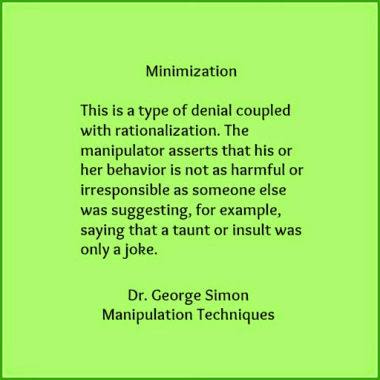
The thing to realize is people with good consciences want to make fair, honest judgments. Thus when a person with impaired conscience is called on their behavior they know that you don’t want to see them as evil or bad. They will distort, deny, and rationalize their behavior knowing we want to buy into what they are selling.

These people can talk the talk and walk the walk to get out of a tight spot.

The problem is their behavior will NOT change because they do not want to change.

These people want to be in control, to be top dog, the alpha–anyone who gets in the way of this pursuit will experience the scorched earth these people will go to in pursuit of winning (I am sure a certain politician is coming to mind here).

However, submission of any type to an aggressive personality is impossible, even if it would benefit them in the long-run. Most healthy functioning people recognize sometimes we need to humble ourselves to losing a battle to win the war. With these aggressive personality types they cannot give an inch. These people submit to no one, but expect others to subordinate themselves to them, no questions asked.

These people want their way, regardless of who gets hurt, and will fight to the end, regardless of the cost to themselves and those around them.

What is most dangerous about these types of people is we often do not recognize them as such until after the damage is done.

While these are people who can be very brazen, they can also be very charming and likable, as long as you do not openly speak out against their my way or the highway attitude.

As the title of this article references the increasingly narcissistic society these types operate in, one such problem with these dominant personalities is there are social benefits to behaving in such a manner. It seems in a society that emphasizes wealth and power, these personalities that must win at all costs are increasingly likely to be found. We can see this playing out daily in the current political and economic landscape.

The fact is we live in an increasingly narcissistic society that fosters character disturbed behavior.

What are the characteristics of a narcissistic society?

~Focus on self and the individual, instead of a communal focus

~Excessive striving for status, position, superiority

~Overvaluing externals: stereotypical beauty, money, power, success

~Undervaluing people who work in less lucrative professions that benefit society (teachers, police officers, public service)

~Valuing money and power at the expense of all else

~Instilling a sense of entitlement in children

~Lack of gratitude

~Greed

We can see these values playing out clearly in politics. But it is harder to accept in our day-to-day lives.

Too many are people in our society are not insecure at all, not hung up enough, or shamed by their poor behavior towards others.

My hope is that being armed with this knowledge you can better protect yourself from the people who can and will harm you and you never saw it coming.
aggres4


Can You Tolerate Uncertainty? The Answer May Reveal Why You Struggle with Anxiety

anxiety 2

We live in an age of uncertainty.

Not knowing can be the worse.

 All of us experience anxiety from time to time. 

It is a part of the human condition to feel the discomfort that is anxiety. Many of our “firsts” trigger such feelings of anxiety-our first day of school, our first time away from home, our first date, our first kiss, our first job.

Anxiety can also be brought on by life events: going away to college, getting married, your first job, having a baby, buying a house, getting divorced, selling your house, retirement. Any major life change, positive or negative, can produce worries and feelings of apprehension. In life changing moments or when you are in unfamiliar waters, these feelings are to be expected.

As human beings, we have a tendency to hate change.

Dealing with an uncertainty is an inevitable part of life. None of us can predict the future. For some of us this is just an inalienable truth to life–none of us know what the future will bring. But for others, their INability to tolerate uncertainty causes distress and suffering.

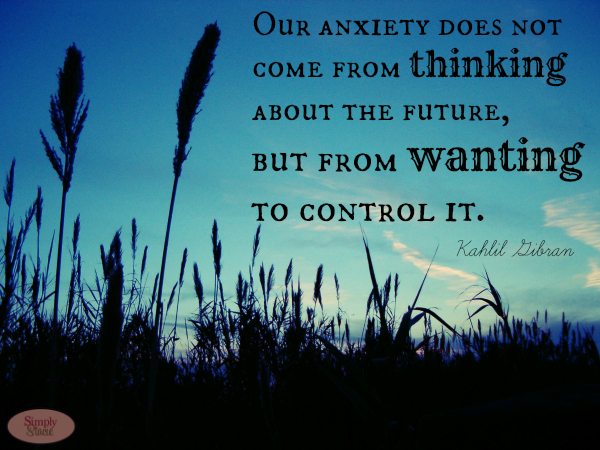
Anxiety is the root cause of controlling behavior. Many people struggle to control themselves, the people in their lives, and their environment. For them, this is a way to try to ensure certainty in an increasingly uncertain world.

Some of us can tolerate a large amount of uncertainty in our lives but for others even a small amount can feel unbearable.

The sad thing for people who suffer with anxiety is they miss out on many of the unpredictable, unplanned for moments of life that come with going with the flow. Of spontaneity. Of just waiting to see how the day unfolds.

For people who cannot stand uncertainty–their increasing levels of anxiety makes their world smaller and smaller. If anxiety isn’t effectively managed it can take over your life.

Anxiety suffers tend to use safety behaviors designed to eliminate uncertainty.

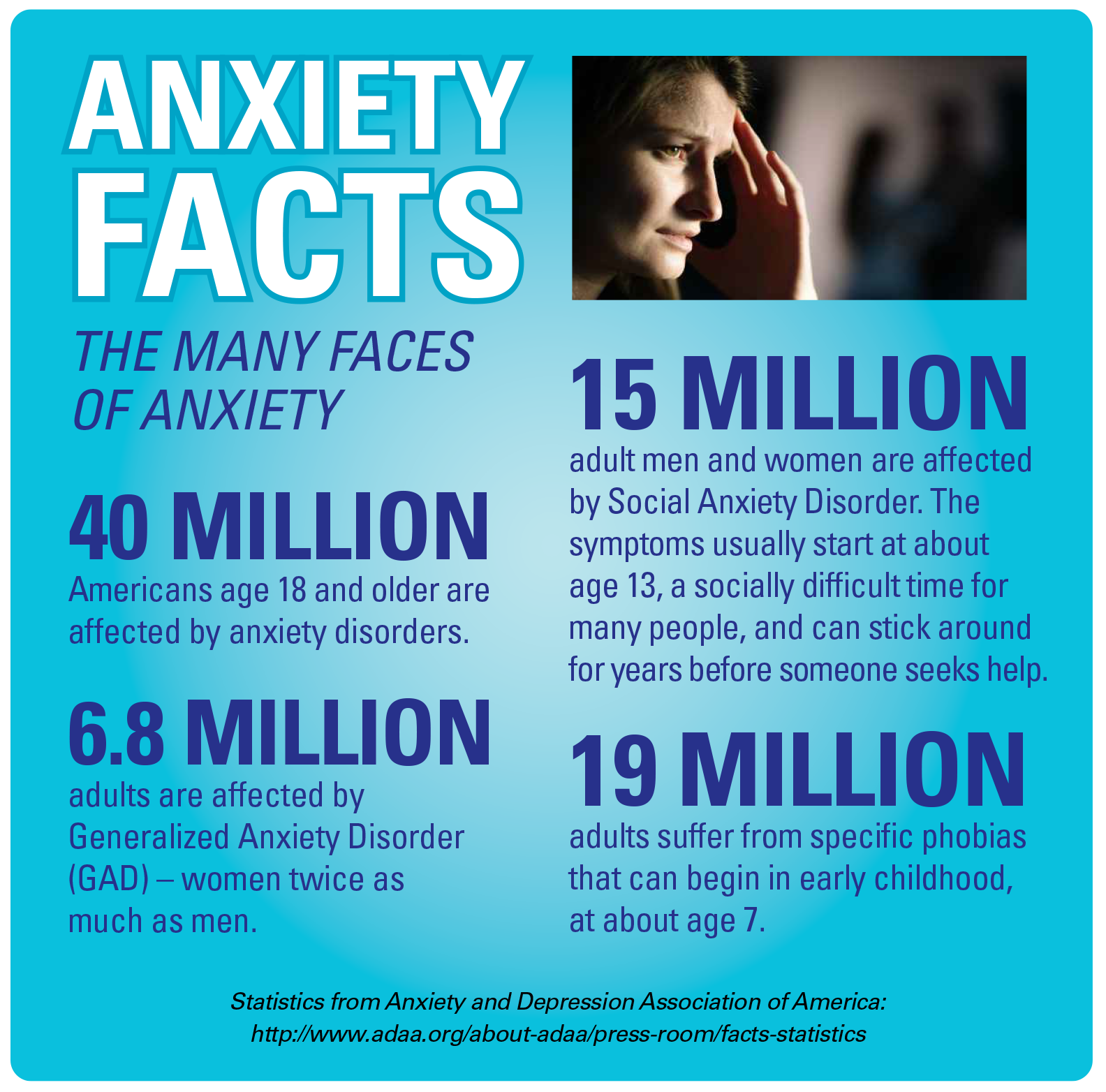
As many as 1 of 4 adults suffer–meaning there are people in your life who struggle with this disorder and you may have no idea.

Anxiety is the most common mood disorder in the United States (NIMH).

anxiety 3

If you are wondering if you or someone you know may be struggling with anxiety below are some behaviors and red flags of people with high anxiety:

~You have trouble having fun

~Seeking reassurance from others

~Withdrawing from others

~Sleep disturbances

~Refusing to delegate tasks to others

~Difficulty focusing

~Mood swings

~Procrastinating

~Needing to be in your comfort zone (usually your house or some other environment you feel in control of)

~Planning things down to the minute (can’t let others make the plans)

~Unwilling to travel to new places (or at all)

~Relationship issues (constantly checking in, codependency, not going anywhere without your partner)

~Overthinking

~Struggling with anger

~Second guessing (yourself and others)

~Underemployment or unemployment

~Difficulty with change

~Preparing for every possibility (or trying to)

~Having a dislike for anything new (new equates to uncertain)

~Avoidance of said new places, new people, new experiences

~Avoiding any situation (or person) you feel you cannot control


anxiety 1

If you recognize yourself in these behaviors, there are steps you can take to mitigate your anxiety.

1)Stay in the present moment. Anxiety comes from projecting our attention into the future. Anxiety is negative thoughts about the future–negative what-ifs and worst case scenarios. Practice bringing your attention back to the present when you feel your anxiety levels rising.

anxiety 6

2)Expose yourself to the things that make you anxious. Avoidance behavior is an effective way to relieve anxiety in the short-term, but increase your anxiety in the long-term. Anxiety will continue to make your world smaller and smaller unless you push yourself outside of your comfort zone. Take baby steps out of your comfort zone.

3)Reflect on your personality. Certain personalities are more prone to anxiety–some people have a more active brain than others–reflecting, worrying, analyzing things to death. You may worry too much about what others think or about making a mistake. If you fall into this category, you are more likely to struggle with anxiety.

4)Stop focusing on yourself. Anxiety is a very much a focus on your feelings, your thoughts, your reactions. A large part of anxiety is centered on how things affect YOU. Try to step outside of yourself and focus on helping out someone else. As someone who works in a helping profession, I find helping others is one of the most effective ways to lessen my OWN worries and anxious thoughts. It is hard to sit in worry and anxiety when you are busy with connecting and helping others.

5)Seek counseling. A good therapist has numerous technique and coping skills they can provide you with. They can also help you work through the root causes of your worries. Counseling is a good place to start your recovery from anxiety.

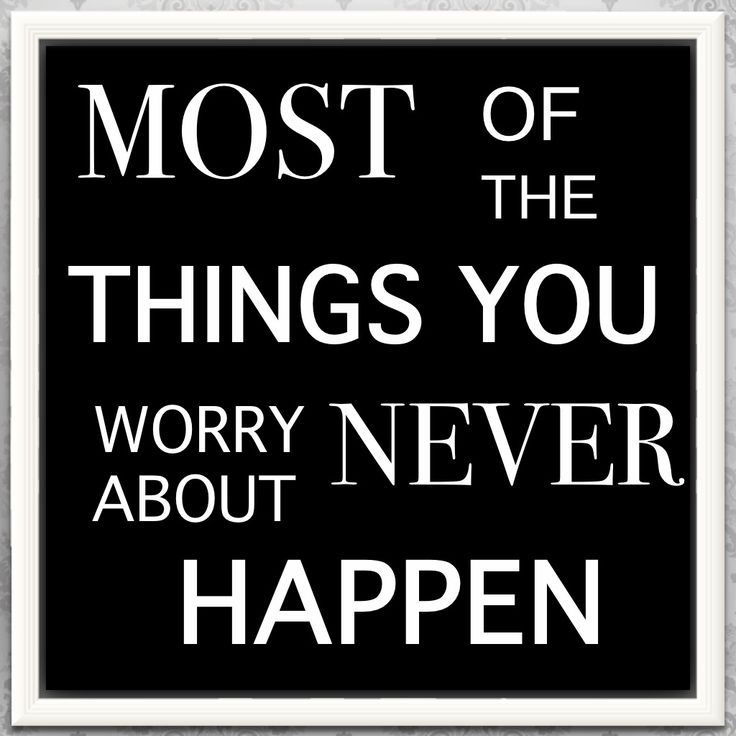
And lastly, what is the likelihood something bad will happen? I often have my clients discuss with me things they worried about that never came to fruition. It helps them to recognize that most of the things we worry about, never happen.

anxiety 4