Coping with Mid-Life Challenges

Midlife is a time of transition, reflection, and, for many, a bit of confusion. It’s a phase where the dreams of youth can sometimes feel distant, and the future can seem uncertain. Whether you’re approaching your 40s, 50s, or beyond, coping with midlife involves understanding the challenges that come with aging while also embracing the opportunities for growth, renewal, and reinvention.

In this blog post, we’ll dive into how you can cope with the changes that come with midlife and use this period to rediscover yourself, your passions, and your purpose.

1. Acknowledge the Feelings: It’s Okay to Feel Mixed Emotions

One of the most important steps in coping with midlife is simply acknowledging your feelings. It’s common to experience a range of emotions: nostalgia for the past, anxiety about the future, and even frustration with changes in your body, energy, and lifestyle.

It’s completely normal to go through what is often called a “midlife crisis,” although not everyone experiences it in the same way. For some, it’s a time of questioning one’s life choices, relationships, and career. For others, it’s a moment of deep reflection that leads to a profound sense of self-awareness and growth.

Tip: Start by acknowledging where you are emotionally. Journaling, therapy, or open conversations with friends can help you process complex feelings. Sometimes, just recognizing and naming your emotions can be a powerful first step toward healing and growth.

2. Embrace the Physical Changes: Your Body is Evolving, Not Fading

Midlife often brings noticeable changes in the body—weight gain, wrinkles, less energy, and for women, the onset of menopause. These changes can trigger feelings of loss, but rather than seeing them as signs of decline, it’s helpful to view them as part of your evolution.

Stay Active: Regular exercise can help maintain energy levels, improve mood, and boost your overall health. Find an activity you enjoy—whether it’s walking, yoga, swimming, or even dancing.

Take Care of Your Mental Health: Midlife is a time when mental health can be more vulnerable. Anxiety, depression, and stress may arise, but they can be managed. Meditation, mindfulness, therapy, or creative hobbies can do wonders for emotional well-being.

Nourish Your Body: Focus on a balanced diet with nutrient-rich foods that support your energy and overall health. Also, don’t forget to hydrate and get enough sleep. Small, consistent changes in your diet and lifestyle can make a big difference in how you feel physically and emotionally.

3. Reevaluate Your Career: This Might Be the Time for a Change

For many people, midlife is a time when they start to question their career. Perhaps you’re feeling unfulfilled or thinking about switching paths. Maybe the corporate grind isn’t as appealing as it used to be, or you’ve always dreamed of starting a business or pursuing a creative passion.

While these questions can feel overwhelming, midlife offers a unique opportunity to pivot and pursue something more aligned with your values and interests.

Tip: Take the time to assess where you are professionally. What’s working, and what isn’t? What would make you feel more fulfilled? It could be an ideal time to invest in further education, take up a new hobby that could turn into a side hustle, or even plan a full career change.

For some, transitioning into new professional endeavors later in life can be one of the most rewarding parts of midlife. With experience and wisdom on your side, you may find that you have the confidence to take risks that you wouldn’t have earlier in life.

4. Strengthen Your Relationships: Deepen Your Connections

Midlife often brings shifts in relationships. Your children may be growing up and becoming more independent, or your social circle may be changing as you age. While this might bring feelings of loss, it can also be a great time to focus on the relationships that matter most.

Reconnect with Yourself: During the busyness of earlier life stages, you may have prioritized others—your kids, your career, or your partner. Now is the time to reconnect with yourself. Invest in activities that allow you to grow and rediscover your own needs, desires, and dreams.

Build New Bonds: Seek out new friendships or strengthen existing ones. Sometimes, making new connections with people who share your interests can bring fresh energy into your life.

Nurture Your Romantic Life: If you’re in a relationship, midlife can be a time to rekindle the romance. Whether it’s a long-term partner or someone new, don’t be afraid to invest time in your romantic life and explore new ways of connecting.

5. Find Purpose and Meaning: Reinvent Yourself

One of the most powerful ways to cope with midlife is by finding a renewed sense of purpose. This could involve pursuing a long-held passion, contributing to your community, or focusing on things that truly matter to you.

Volunteer: Giving back to others can be deeply rewarding. Whether it’s through mentorship, charity work, or community involvement, helping others can bring a sense of fulfillment that goes beyond personal achievements.

Travel or Explore New Experiences: You may have put off certain dreams or experiences for years. Whether it’s learning a new language, traveling to a new country, or trying something creative like painting or writing, midlife is a great time to explore new avenues of personal fulfillment.

Be Open to Spiritual Growth: Some people find that midlife sparks a journey toward spiritual exploration or introspection. Whether it’s through organized religion, meditation, or philosophical reflection, exploring deeper questions about existence can lead to profound personal growth.

6. Celebrate Your Achievements and Gratitude

Finally, remember to take stock of all the things you’ve achieved in your life. Midlife can sometimes bring a sense of “time running out,” but it’s also a time to celebrate how far you’ve come. Practice gratitude for the experiences and lessons that have shaped you into the person you are today.

Celebrate your accomplishments, big and small, and recognize the wisdom that comes with age. Reflecting on how much you’ve learned and how much you still have to give can provide a sense of empowerment as you move forward.

Conclusion: Midlife as a New Beginning

Coping with midlife isn’t about avoiding change or wishing for the past. It’s about embracing change, learning from it, and using it as a platform for the next chapter in your life. While the road might seem uncertain at times, midlife offers a unique opportunity for reinvention, self-discovery, and personal growth.

Whether you’re navigating physical changes, career transitions, or personal reflections, remember: midlife is a phase of life, not a crisis. Embrace it as a time to rediscover your passions, refocus your priorities, and find deeper meaning in your everyday experiences.

By accepting the changes, reflecting on what truly matters, and embracing the possibilities, you’ll find that midlife can be one of the most fulfilling and exciting phases of your life.


If you’re navigating midlife yourself, what’s been most helpful to you? Feel free to share your thoughts in the comments below or connect with others who are on the same journey. We’re all in this together!

If you are interested in counseling, please reach out to me:
Don’t PUNISH the Wrong People

Most of us do our best to behave. We try to do the right thing, be polite, follow social/moral norms, and not harm others.

Yet punishment exists across society in as far back as history goes, albeit our ancestors doled out different forms of “punishment” then current society may permit (public stoning–not going to fly these days)! Evolution has instilled in humans the desire to identify and discipline wrongdoers. It is a part of our collective human nature. The reasons for direct punishment are clear. If someone wrongs you, retaliation reduces the likelihood that they will do it again. Additionally, if others see you retaliate, they will also be less likely to wrong you in the future.

When our goals are thwarted or we feel diminished in some way, many of us find ourselves in the uncomfortable position of having a lot of negative energy to unload but not feeling able to direct it towards the correct person due an imbalance of power. Thus, we punish the wrong people, usually those closest to us, making them suffer to relieve our own suffering.

Of course, this process is not conscious. We wait for some way to rationalize our behavior by citing the wrong behavior of the person we are punishing, but if we look deeply we can usually trace our hostility not to what this person has done, but to an unfulfilled desire to retaliate against the person who has hurt us.

If this setup is familiar to you, try a different route next time. Instead of attacking the wrong person, openly admit to your hurt feelings and ask for comfort and support instead. You’ll feel a lot better, which is why you’re trying to punish your loved one in the first place, and you’ll be strengthening your relationship instead of decaying it.

It can be pretty tough to admit to feeling diminished, you’re exposing your soft underbelly not just to someone else but also to yourself by admitting you have one. But it’s preferable to blaming and punishing a person who doesn’t deserve it, in effect making someone else feel just as bad as you have been made to feel yourself.

Learning to Make Peace with the Differences in Ourselves and Others

How comfortable are you with being different? How comfortable are you with other people’s differences?

Take a moment and pause to think of the people you are closest with.

Do you find these people are like you in terms of beliefs? Political, personal, and otherwise? Do your friends have a wide range of perspectives and approaches to life? Or do you find your relationships center around a shared outlook and belief in life and how the world works?

Often when people come to counseling, the sessions are relationship focused, namely on relationship problems. As you can probably guess, differences lead to conflict rather than sameness in relational dynamics. I see clients time and time again not being able to wrap their mind around how a partner, friend, or family member acts or thinks as they do.

Yet the OTHER person is not the problem. It is the orientation towards differences that is likely at the heart of the issue.

Differences are part of being human. It does not make you unhuman because you are different. We have sameness and we have difference. As do all the people we meet and interact with.  As does all our family, friends, colleagues, etc.

From a family system perspective, we have togetherness and separateness. We have individuation and connectedness. The goal of becoming self-differentiated is learning to balance these forces to manage our self and our relationships.  The aim of counseling is to find a way to be more at peace with ourselves and others.

At the cornerstone of many relationship issues tends to be an inability to tolerate differences and manage our responses. Too much togetherness can lead to problems. Too much distance can equally lead to problems. A healthy balance leads to a stable life with healthy relationships.

Some people are afraid to be themselves because of the fear of how others will respond. They have grown up in a family where differences are not valued. Often not tolerated.

Often in dysfunctional families, we see the mindset of we should all think and feel the same way i.e., “group think.” Differences are not very well accepted if you did not hold the party line. There is a great value in sameness.

The truth is if you are self-aware, self-defined, and self-regulated you are going to be different from other people. AND THAT IS A GOOD THING. That is a human thing.

And if someone else is going to be self-aware, self-defined, and self-regulated they are going to be different from me. That is a good thing too.

Acceptance means we respect that other have a right to be their own unique persons. Our world becomes a lot more interesting when we learn to accept other people’s differences.

We can have differences while also being connected. Although for many people it is hard for them to connect with someone who is different from them because again their existence is based on sameness. So, if you are not the same as me then I need to exclude you, or we are not going to connect because we are not the same.

In counseling, I often point out to clients I will not believe everything everyone else believes. I will not feel everything else feels. This is a certitude that holds true for us all.

Accepting differences is a part of maturity and growing up. Accepting that not everybody is me. Developmentally, that is what teenagers look for me when they reach adolescence. Teens want to fit in and be around like-minded people which during that specific developmental stage is appropriate. It is not a permanent state to live in as we mature into adults.

Weaknesses or limitations that we all possess make it hard to make peace with differences in ourselves and others. Accepting differences means accepting others’ strengths without feeling inferior, meaning you do not feel less than the other person because they have a strength. Just like you do not feel more than the other person because you have a strength.

It is understanding that other people’s strengths mean nothing about my strengths. Their differences mean nothing about my differences.

That is where I think the therapeutic value comes in and can be helpful. Counseling can help you accept that they can be different and think different, I can be me and think differently.  Many people in sessions struggle with worrying about what another person in their life thinks of them.

Accepting differences mean coming to accept other people are entitled to think as they will and for us to be unaffected by it. To accept we do not need to fight to change people’s perceptions of us. Thus, if they have a negative view of me, I am LETTING them have that negative view of me and I am not absorbing it. I do not think I am bad or stupid or worthless. YOU may think that. That is your right to do so. Those are your thoughts. In turn it gives me a greater amount of detachment and neutrality because I accept their differences. And their differences can be ludicrous especially in dysfunctional people. But that is okay. Those are their beliefs for whatever reason, but they are not my beliefs. We can observe rather than absorb them.

It is healthy to realize I am not you and you are not me. It is a helpful notion to have with other people. And it such a common struggle for people of all ages and from all walks of life.

If you are not comfortable with differences is leads to hiding, lying, keeping secrets in our relationships. Those are the difficulties that arise when we need sameness to feel comfortable.

I think part of maturing and getting older is accepting people think differently than I do, and they will. And that is okay.

A common way you know you struggle with accepting differences is when you try to change someone. We are not respecting differences if we are trying to fix others. It is not accepting the principle of we are all not the same.

The thing you must remember is accepting differences is not accepting the behavior.

If someone thinks harshly or badly about you, if I accept their differences, it does not mean I will stay in for the abuse. It means I now must make choices about how I am going to relate to this person. I cannot change them, and I have probably tried to many times. But I can’t—now what to do I do to position myself with them that has the least toxic effect? In turn you are accepting their differences by adjusting yourself to that reality. Then we care for ourselves more while respecting their differences.

We must remember there are not only differences in beliefs, but differences in how we react and respond. If you really want to get a reaction from someone, feel differently than they feel.

Feeling neutral can be seen as a bad thing as some. Because being neutral can be unsettling. People often feel more comfortable in emotional reactions because even if they are not healthy, they are familiar.

People may not like or accept this response. Reactivity may be what they are comfortable with. Remember, reactivity is lack of being okay with difference. Because if you are okay with difference, why would you be reactive to the other person? If you are okay with being neutral and with differences, you do not need to be reactive.

If I am okay with my position, I do not need to react to the positions of others.

They may not in turn have everything they want, but I do not have everything I want. Such is life.

Being okay with differences reduces the reactivity in our relationships. It leads to less conflict and more harmony.

Others can believe what they choose but I must then act accordingly. Oftentimes, we do not like the options of acting accordingly—it may mean boundaries, it may mean loss of the relationship, it may mean loss of finances, it may mean lots of things.

In counseling, people often ask how they can CHANGE the other person. Or struggle with accepting the other person WILL NOT CHANGE. Yet one of the best ways we can change a belief in others is not to be reactive to it. It is often counterintuitive and surprises the other. Thus, them having that belief is totally on them—they need to take responsibility for that belief and its repercussions.

It is also accepting that other people may not believe what you believe. People may challenge your beliefs and values. Yet I am not going to defend myself out of that belief—often when you are defending yourself, you already loss.

Defending yourself does not fix the true issue at play.

How much does defending oneself truly work? Often the belief comes from an irrational position, an emotional position, or a systems position. It is not coming from a LOGICAL position so giving all the facts is not going to change anything about what you believe, or the other person believes. We see this at play in the political arena daily.

This principle is not about forcing or changing differences, it is about RESPECTING differences. Even if those differences are illogical or irrational, we then just must decide how we will respond in turn. That is true emotional maturity.

As I frequently share with my clients, I cannot change others irrational beliefs. Thus, I respect that—those are their beliefs. I may not believe them to be true at all but that is okay. That is my belief. Now, what am I going to do?

Accepting differences can be both liberating and scary. Both emotions will come up the more you differentiate. You understand you are truly alone. When you experience the difference of where you end and the other person begins, it can get scary. But also, profound.

The person I have is me. Therefore, inner bonding work can be so important. Because really the only person you have is you. Yet this is true for us all.

There are other people we connect with. But we do have to learn to stand alone. That is a part of emotional maturity.

Counseling can be a way to develop the ability to cultivate respect for differences in our self and others. This can help all the relationships we have in our life including our relationship with self.

When You are Disappointed by Life

d3.jpg

Do you feel disappointed by life?

It is a question that as a therapist, I often find myself asking my clients, at some point in our sessions. The answer to this question gives me a peek into the inner workings of their emotional life, their expectations, and their overall life perspective.

Unfortunately, more often than I like to hear, people will share with me that YES, they are indeed disappointed by life.

As a clinician, I take the reveal of being disappointed with life as a possibility this person may be experiencing some form of depression (or has the potentiality to develop depression).

Disappointment is often the final step before depression. Thus how you answer the question of “Are you disappointed by life?” can be very telling of your mental state.

As a mental health professional, I have found that disappointment reveals a lot about the person who expresses said emotion because disappointment is largely a subjective emotion.  What I may be disappointed by may not even register on your radar. Disappointment reveals one’s values, expectations, and goals based on what they are disappointed by. Therefore, when a client tells me they are disappointed by life I follow-up with what specifically disappoints you about life. The answer is telling.

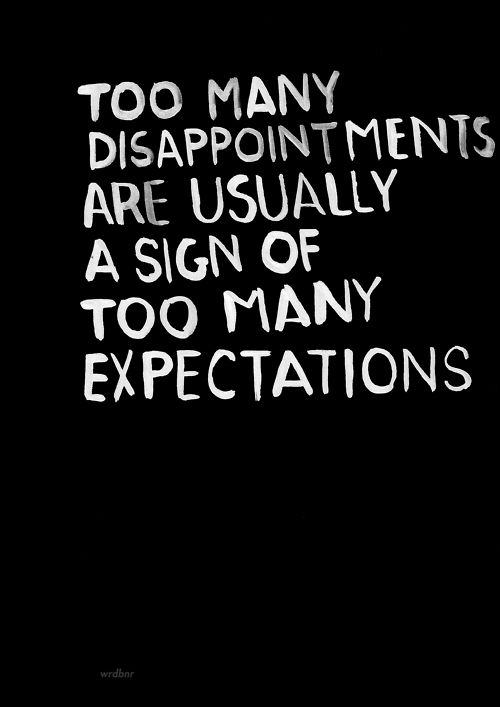
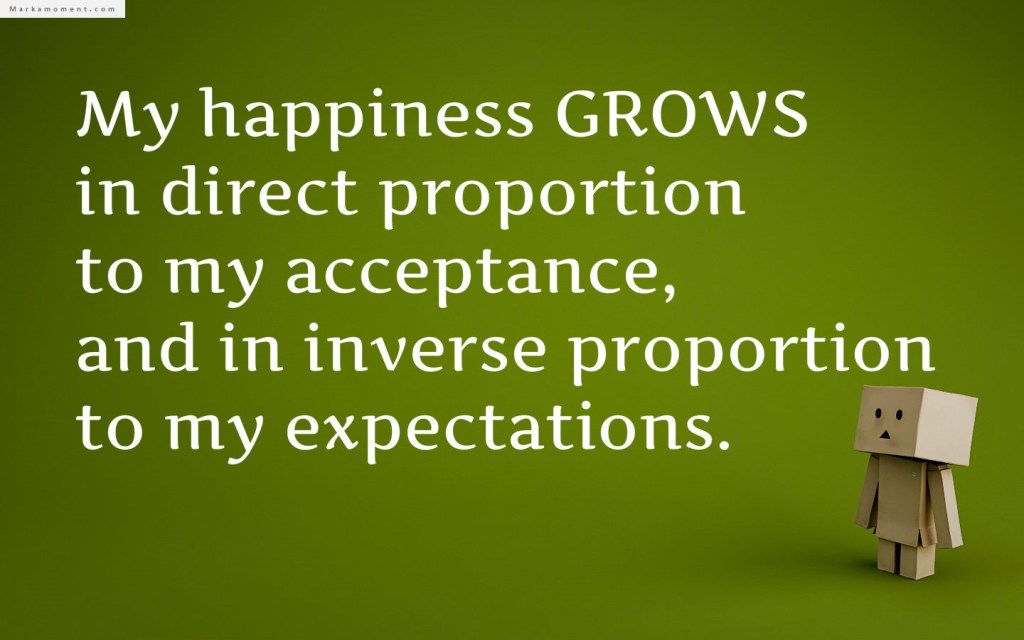
High expectations lead to frequent disappointment.

You cannot be disappointed by a situation you have no vested interest in. You cannot be disappointed by someone you expect nothing of (which should be most people because I feel we should not hold expectations of the vast majority of people we encounter unless we want to be constantly disappointed). We can only be disappointed by something we hold an expectation of. Disappointment manifests itself through the failure of expectations being met.

The thing about disappointment is it says a lot more about the person who experiences it than the target of the disappointment.  If you are frequently experiencing disappointment, then likely you need to reevaluate the expectations you hold of yourself, others, and life in general.

Now do not take this as me saying you should not have standards. You should. We should all have standards of being treated with civility and human decency. However, often I find clients will share with me their expectations of others are out of touch with what we can realistically expect of other people.

Disappointment is in many ways a narcissistic emotion. We experience it when life isn’t going according to “our” plan. If someone tells you they are disappointed in you, they are basically say you are not living up to THEIR expectations.

When you are experiencing disappointment, you likely are viewing life as unfair. Your glass is “half empty.” This is not a healthy place to be living life from.

When you think about what might have been, in contrast to what actually IS, you may experience disappointment. The further our ideal life is from our actual life, the more disappointed we will feel.

You likely have been disappointed many times before—by yourself, other people, and situations. It is extremely human to experience this emotion.

However, in trying to provide ourself with the ability to best cope with life’s inevitable “disappointments” we need to shift what we expect out of ourself, others, and life in general.

d1

Life is never the problem. Our expectations are. Often if an outcome is worse than expected, we experience extreme disappointment.

This is all simple stuff to understand but we are often not cognizant that our own expectations are what cause us to feel disappointed. We often shift the blame to “out there.” We blame the other person, the situation, anything but ourself.

When things go right, you feel happy.

When things go wrong, we feel sad, angry, frustrated, and YES disappointed.

I find in counseling session, many of the people I work with do WHATEVER they can to avoid experiencing disappointment. They play it too safe. They live cautiously. They avoid “putting themself out there” out of fear—fear of rejection, fear of looking foolish, or fear of being disappointed by how things turn out. This is no way to live.

The problem with disappointment is it feels so hard to manage and overcome.

In disappointment comes a certain finality–the fact that you don’t have, didn’t get, or will never achieve whatever it is that you wanted. This is a bitter pill to swallow. Thus people avoid experiencing the emotion at all cost.

In disappointment, a goal we are trying to achieve is not achievable. It can be not getting our “crush” to agree to a date, not getting into our first choice college, not getting a job we wanted, not getting a house we put an offer on. Throughout life many opportunities present to experience disappointment.

In dealing with the people we love, disappointment can be soul crushing.  When we expect our loved one to give us what we want or treat us with respect and they do not–it is quite painful. Constant disappointment by a loved one leads to blame, resentment, and eventual detachment as we no longer are able to see them as a person we can trust with our feelings and emotions. Being repeatedly disappointed in the actions and behaviors of another lead to friendships ending, marriages dissolving, and family estrangement. 

It is often in feeling disappointment that we turn to anger. It is easier to feel anger towards whatever it is that is causing of us to feel disappointment then to face the sadness about the course of events. It is also easier to not look at ourselves and the role we played in our disappointment. We stay angry to avoid the sadness experienced in disappointment.

With anger you can continue to fight against what is and denigrate the person, situation, or event that is causing you to feel this way. However, disappointment requires an acceptance of what is and the reality of the situation.

Many people do whatever they can to avoid reality. This includes avoiding the experience of disappointment.

Much of what we experience is life is relatively neutral but our view on the experience colors whether it is good or bad.

How can we cope with our disappointment?

  1. Accept disappointment is a fact of life—it is an emotion we all will experience. Some disappointments are bigger than others but in resisting the reality of the situation, all we do is perpetuate the negative emotions that come with disappointment. Acceptance and normalizing the experience of disappointment is the first step in moving on.
  2. Reframe your perspective. Often our expectations of ourself, others, and situations are out of line with reality. Are you looking at the big picture? Take time to reflect on what mindset you are bringing to the table.
  3. Speak with a professional. If you are constantly feeling let down by life, now may be the time to speak with a professional counselor. Talking to a therapist who truly listens and has your best interest at heart can be incredibly helpful. Therapy can help you readjust your expectations to live a happier, more positive life.
  4. Shift your expectations. Are your expectations realistic? Can we expect people to do what is in the best interest of us over themselves? We forget that sometimes what is best for us is not necessarily best for another even someone we love. We all have our own lives to lead. Often our expectations of life can be unrealistic which sets us up for disappointment. Ask if what you’re expecting is reasonable.
  5. Don’t take it personally. Much of what people do is a reflection of their own reality, their own dreams. We need to work on becoming immune to the negative actions of others as to not destroy our own well-being. People largely do things because of themselves not you. It is not all about you–for most people it is all about THEM.

Life tests us all. We will all be disappointed. However, in self-reflecting you may find you are setting yourself up for much pain and disappointment by your own making. It is time for you to live a more positive, joyful existence.  Don’t let yesterday’s disappointments cast a dark shadow on today.

d2.jpg

To schedule a counseling session with me (AND if you are a reader who lives in New Jersey):

https://anewcounselingservices.com/erin-theodorou%2Cm-ed-%2C-lpc

Anew Counseling Services LLC

617 Oradell Avenue, Suite 3, Oradell, New Jersey, 07649

(551) 795-3822
etheodorou@anewcounselingservices.com

How to Protect Yourself from Dramatic, Negative Behavior

a1.jpg

Today is Election Day.

As our country continues to become more divided and filled with ongoing conflict, I felt a post on how to mitigate dramatic, negative behavior (your own and other people’s) would be warranted. We are live in an EXTREMELY divisive society. It is important to know how to deal with people who live to manufacture drama in their lives AND yours!

The thing about our society is people have become very rigid in their views of the world. If you disagree with their way of thinking, they perceive you as the enemy. “Agreeing to disagree” seems to be a mindset of yesteryear.

In counseling we call this all-or- nothing (black and white) thinking. It is one of the faulty cognitions I work with clients on. It has become a very common way of thinking in our country—we see things in polarizing terms: good vs bad, right vs wrong, friend or foe, love vs hate,  on our side or against us, and so on and so forth. People no longer even ATTEMPT to find any common ground. “You are either with me or against me” is a common mindset in our society.

We need to do better. Life is much more nuanced than this simplistic form of thinking. Yet while we cannot control what goes on out there, we can control what goes on within US.

If you don’t protect your peace of mind, you will end up detesting life and resenting other people for your circumstances. We see this play out every day in the political arena.

Negative emotions are spiraling out of control across all walks of life. Being cynical is the norm. The ability to keep things in perspective and look at the bigger picture seems to be challenging for many.

As a clinician, I often have clients who come in to session keyed up who just dump their negative emotions out onto me.

This is an appropriate time and place for venting such feelings. Counseling is a place to process and release whatever it is you are feeling with a trained, mental health professional.

It is NOT appropriate to dump your negative emotions on people in your day-to-day life. This is a toxic way to act and behave. All too often this is happening in our culture–people offload their negative emotions onto anyone who will accept such behavior. In our political climate, politicians go after their opponent on a personal level instead of the policy.

This example set forth by our country’s leaders spills over into how our society as a whole conducts itself. 

This is why having healthy boundaries is more important than ever.

As a mental health professional, I have developed strong boundaries to not internalize what clients bring into session. It is important to not take on clients’ emotional state as to not burnout and protect my OWN mental health. I need to be able to leave work at work.

In life, we also need to be able to have good boundaries to not take on other people’s “stuff.” Nowadays far too many people find it acceptable to take out their negative state of minds on undeserving targets.

Maybe this topic is resonating with you. You may encounter, far more often than you care to admit, people who live for drama. People who are overly dramatic can be a drain on our time, energy, and mental well-being.

Dealing with dramatic behavior can be quite a downer.

You likely know exactly what I mean by overly dramatic behavior – it’s loud, aggressive, childish, intense, inappropriate, or any over the top emotional reaction. It frequently includes  yelling, gossiping, “emotional dumping”, crying, and acting like everything is a crisis.

a3

These people are the worst. Their behavior is emotionally and mentally exhausting. It is YOUR job to protect and guard yourself from these characters.

There are people who live for the control drama.  A person like this is likely feeling small and powerless in their own lives. Thus they try to manipulate and steal the positive energy of another. Control dramas emerge when someone tries to gain power or energy from another person and to essentially, “get their way with others.”

These types of personalities get their way with others by making their target pay attention to them and then attempt to elicit a certain reaction to make themselves feel fulfilled and powerful. Do any recent political debates come to mind? A few certainly do for me. This type of behavior comes from people who feel VERY powerless in their own lives. They may have money, status, and all the traditional markers of success–yet are very unhappy on a PROFOUND level.

For these drama makers, their positive feelings are won at the expense of the other person. These personality types like their to be imbalance and drama in their interpersonal relationships. They live for it! They love having someone (or something) to complain about, vent about, gossip about!

If there is not something readily apparent, these types will create the drama. After creating such a hostile environment, they will more often than not BLAME you if you are their target of blame. Look at our politicians on both sides of the aisle and you will get some great examples of people who LIVE for drama and attention.  (Mind you, these personality types tend to lack self-awareness for how they conduct their lives–throwing bombs and acting like the victim when confronted by their OWN abhorrent behavior. Reflect on some politicians at the forefront of our political landscape RIGHT NOW).

How do we protect ourselves from other people’s drama?

  1. Accept you are NOT going to change these types of people. You can’t change people who do not see an issue with their actions.  You CANNOT control what other people do but you can limit the role they play in your life. You also get to control how you respond. You need to cultivate the ability to not be baited into other people’s drama. You are wasting your time trying to explain yourself to people who are committed to misunderstanding you. People who truly care for you will want to hear how you feel and work on the relationship. If someone does not care about you, there should be no need to waste your energy on them. Keep it moving.
  2. Recognize when YOU are creating drama. Are you looking for attention and excitement? Bored a bit in your monotonous life? Be careful. Those mindsets can lead you astray into the world of “drama.” If you find a lot of drama is ever-present in your life, you need to look at the one constant: YOU. Helpful tips-Don’t give unsolicited advice. If someone does not ask for your opinion, do not just offer it up. Avoid inserting yourself into situations that do not directly involve you. Do not triangulate with people who are in conflict. All you are doing is creating drama for yourself. Listen I get it. I have done it myself from time to time in moments of extreme frustration. Or in trying to be a good friend. I have learned people’s actions may frustrate me but I gain nothing from letting my emotions lead my response. I also can see how other people use their emotions to bully and manipulate–once you are cognizant of this fact, you crease feeling the need to react at all.                                If I share with someone how I feel and they attack me, I do not engage any further. I already have my answer from their reaction. The situation need not go any further. I walk away from people who are not mentally and emotionally capable of mature relationships. If you get into a back and forth with people, you are in actual creating your own drama.
  3. Don’t feed into other people’s drama. Gossip. Third party conversations.  Learn to speak less and listen more. Be an observer–not everything needs your reaction. Don’t let people bait you into heated debates where each side digs their heels in deeper. It is a big waste of time.
  4. Physically remove yourself from the drama. Some people will never stop creating problems for themselves and you if you continue to associate with them.  Keep friendships with people who have good, positive energy and do not CREATE drama.
  5. Anticipate difficult people AND situations. Take inventory of people who leave you stressed and unhappy. Refuse to talk about sensitive topics with people who are known for the ability to stir the pot and amp up the drama. Ain’t nobody  got time for that.
  6. Stay in your own lane. If you are busy watering your own grass, you do not have time to worry about whose grass is greener now do you? Minding your OWN business is the #1 best strategy to avoiding drama. Life is too short for this type of nonsense.
  7. Remain emotionally detached from other people’s opinions of you. If you derive your sense of happiness and self-worth  from your own internal metrics and values, you become immune to the opinions of others. When you are happy in your own skin, other people’s opinions cannot impact your happiness because you are in control of how you feel about yourself.   Know this.  When mentally strong people feel good about something, they do not let the spiteful or shallow comments of others take that away from them. I am not saying you should automatically stop speaking to someone who is talking negatively about you. Give them a chance to make it right. Speak to them about it—you will get your answer about how to proceed in the relationship by how they react to you making them aware that you know how they have been speaking about you to others. If they make excuses, refuse to apologize or take ownership, or attack you more—you are likely dealing with a dramatic individual.
  8. Be calm and don’t engage. Dramatic people are looking for a reaction–sympathy, compliments, some type of reward, to blame shift. Do not reward their bad behavior. Setting boundaries will be paramount as will enforcing said boundaries.

I hope these suggestions will help you protect yourself from whoever in your life lives and breathes for drama. Most of us have the same basic need and desire to get along with others and live a drama free life. Don’t let negative, dramatic people steal your peace and joy.

a2

Your turn…

Have you been a target for a Drama Queen or King? Is your good-nature being abused because you’ve been inadvertently reinforcing their behavior? Do you have a personal story you’d like to share about dealing with dramatic people?  What helps you stay immune to the negativity that surrounds you?  Leave a comment below and share your insights and thoughts.

To schedule a counseling session with me (AND if you are a reader who lives in New Jersey):

https://anewcounselingservices.com/erin-theodorou%2Cm-ed-%2C-lpc

Anew Counseling Services LLC

617 Oradell Avenue, Suite 3, Oradell, New Jersey, 07649

(551) 795-3822
etheodorou@anewcounselingservices.com