Why We Hate The Idea of Being Average

I want you to take a moment to ask yourself how you would feel if someone referred to you as average?

Most likely you would feel quite insulted.

None of us like to view ourselves as being average.  

As a society, we have become obsessed, with how we compare in relation to the average.

As a culture, we have elevated people’s ambitions, to the point where we are raised to believe we can all be exceptional, if we just work hard enough at it.

In fact, studies have shown most people rate themselves as “better than average” across various different traits which is statistically impossible.

On a scale of 1-10, perhaps you would rate yourself a 7.

On a scale of 1-10, perhaps you would rate most OTHERS a 5.

We don’t mind assigning the title of average to other people but we don’t want to be considered average ourselves.

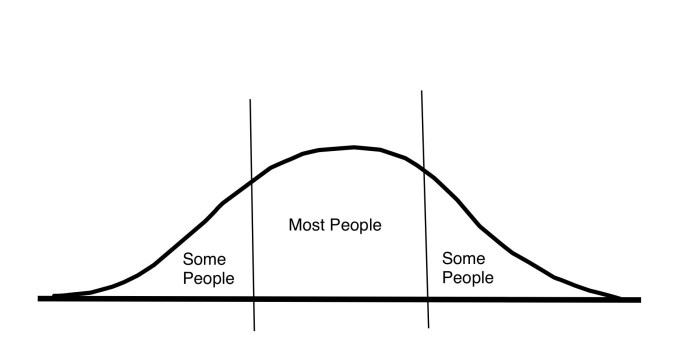
The reality is most of us are more or less average—average looking, of average intelligence, making about an average salary. And so on and so forth. Maybe some of us are above average in one aspect or another but few of us are far above average across the board in all facets of life.

Yet why is it so easy to look at others and recognize this statistical fact but few of us can admit to ourselves the many ways in which we are average?

The reason is what psychologists call illusory superiority. 

Illusory superiority is the tendency to overestimate one’s positive qualities and capabilities, and to underestimate one’s negative qualities, relative to others.

It is something we all do from time to time. And for the most part it is a great way to protect one’s mental health and self-esteem…if not taken to the extreme.

Looks at all the ways you may engage in this behavior:

Ever notice how you judge yourself by your “intentions” but judge others by their behavior?

Blame others for negative events instead of looking how your behavior played a factor?

Credit yourself with earning an “A” but blame the professor if you earned a “C?”

How you emphasize other people’s negative qualities but highlight your own positive qualities?

Give yourself credit for a top month sales record but blame the economy when your sales are on the decline?

How you make excuses for yourself but then judge others harshly when the same exact thing happens to them?

This self-enhancing bias is in play whenever you seek to excuse your failures as something beyond your control and attribute your successes to your own great character.

Human psychology, being what it is, is to always try to figure out a way to give yourself an edge over others. No one wants to see themselves as an Average Joe. Or Jane.
Fitness-Bell-Curve

But being average does not mean you are a failure.

If anything, there are many advantages to being average. Even good things taken to the extreme become undesirable.

Ambition…too much turns into greed, too little turns into failure

Conscientiousness….too much turns into a people pleaser, too little into a selfish jerk

Sociability…too much into an attention seeker, too little into anti-social

Work ethic….too much into a workaholic, too little results in the unemployment line

Confidence….too much turns into arrogance, too little into self-consciousness

If you want to be healthy, avoiding many physical and psychological illnesses, you want to be average.

Untitled drawing (3)

And the reality is most of us LIVE average lives.

Which is good because the world caters to those of us who live ordinary lives.

People who think being average means that they will never improve their life, or achieve any greatness in their life, have a really unhealthy mindset.

Once you accept being average, you will be happier. More productive. More satisfied with your life.

When you accept being average, you explore and give things a try. Because you are not caught up in trying to be perfect or extraordinary, which limits your willingness to even try.

If you let go of the pressure that you have to achieve some sort of greatness in order to achieve a “fulfilling” life, you may find a new appreciation for all the ordinary, average things in life.

If I felt I had to be an extraordinary writer to begin a blog, I would never be able to start a blog.

But I feel okay with being a more or less average writer who is passionate about the subject I write about.

Acceptance of being average, will give you many things to explore, without the pressure of needing to be exceptional.

So here’s to being average! If you find any grammar or spelling mistakes, I am not Mark Twain, and this is not the New York Times!

quote-the-curious-paradox-is-that-when-i-accept-myself-just-as-i-am-then-i-can-change-carl-rogers-24-91-90

Why We Love to Procrastinate

If you were to ask people what their worst habit is, of all the bad habits they may have, procrastination is usually up there at the top. Procrastination is postponing an unpleasant task to our future self. Who amongst us hasn’t been guilty of indulging in some procrastination?

Ironically enough, for the last few days, I have been procrastinating writing a post on procrastination.

I did all my go to ways to procrastinate–I went out with friends after work (love distracting myself with others), caught up on my DVR (it was calling my name), I scrolled through Instagram to see what other people were up to (sadly, I even got distracted by watching tv and lost my place on Instagram–had to start all over from the top of my feed-I hate that).

Procrastinating goes against our best interests. It is not logical. Even with the best intentions set many of us find ourselves unable to follow through.

Even when I finally start what I set out to do–I easily find ways to distract myself. I text, watch a few YouTube videos, sometimes, I even go stand in front of the fridge trying to decide if making something to eat is a good idea. Maybe now, I think to myself, is the opportune time to organize my junk drawer.

To be honest, this post would probably be better if I hadn’t waited until the last-minute to get to it.

But right there lies the beauty of procrastinating.

See when we wait until the last-minute to do something, we are able to give ourselves, a built-in excuse for why it doesn’t turn out so good. It’s not that I am a horrible writer, I have just been so busy with other things, that I couldn’t give it all my attention and effort.

This type of thinking serves as a way to give ourselves a buffer for criticism and failure. If I procrastinate working on something that I am worried may be above my abilities, I create an excuse for myself when it doesn’t turn out well.

Procrastinating is a great way to protect our ego and self-esteem.

We can see procrastination easily in others–the kid who don’t study or hand in their homework, the friend who never gets around to using that gym membership that cost a fortune, or when our partner puts off his to do list of what he needs to get done around the house.

Everybody procrastinates.

This tendency–to avoid taking action—is prevalent amongst all corners of the world.

It can be harmless to procrastinate depending on the task at hand. I can say for as long as I can remember, I put off doing my laundry until the last possible minute (running out of clean towels and I really want to re-wear something from a few days ago seems to get me moving). This isn’t going to really affect my life in any real, meaningful way. When push comes to shove, it gets done.

But people procrastinate not just tasks, but goals. I can’t tell you how many diets I put off to Monday, only to put it off to next Monday, only to put it off to next month…(I feel I am not alone on this one).

We avoid going to the gym, asking someone out on a date, tackling difficult assignments, apologizing, starting a new business, asking for help.

Maybe we procrastinate checking out a mole on our arm.  We put off difficult conversations to avoid conflict. We delay big decisions like switching careers or getting a divorce.

Procrastinating important goals–such as saving for retirement or quitting smoking–can lead to more serious problems.

The list is endless of what we can and DO procrastinate.

People will procrastinate until they run out of time.

But why, you may be asking, do we do this to ourselves?

We procrastinate because we are avoiding discomfort. We just don’t feel like it.

Procrastination is a misplaced coping mechanism.  It is an avoidance behavior, usually what we are avoiding, is PAIN. Whatever action we are avoiding involves some sort of pain-whether physical or emotional.

Procrastination keeps us from doing things we don’t want to do. Does anyone want to put away 20% of their paycheck for retirement when there is a long list of other things that money can be used for? Does anyway want to eat broccoli and cauliflower when there is a bowel of pasta sitting in front of them? Does anyone want to go for a run instead of relax on the couch after work?

We procrastinate because it is easy. It is easy to put things off. It is hard to break out of your comfort zone and build momentum. When we procrastinate we avoid the negative, unpleasant feeling of action and get to indulge in the comfort of INACTION. We put off going to the gym and opt to instead scroll the internet creating Pinterest boards of recipes we all know we will never make. We rationalize to ourselves why today isn’t the day.

Many of us will do anything to get us out of the unpleasant task of something we don’t feel like doing.

Procrastination is all about feelings. Mainly avoiding unpleasant ones. Even when we know better. Yet our desire to procrastinate can seriously affect our life.

Imagine a task you have been avoiding. Picture starting that specific action in your life RIGHT NOW. Try to fathom how you will feel.

The painful feelings you are avoiding can be fear, vulnerability, embarrassment, insecurity, anxiety. These are all forms of emotional pain.

We don’t procrastinate things we enjoy. We procrastinate things we view in one way or another as uncomfortable.

To overcome procrastination, we need to realize we are avoiding pain and that soon we ALL have to face reality. Eventually we have to–check our bank account. Get on the scale. Go to the doctor and find out what is really going on. Answer to our boss. Answer to ourselves.

You can only avoid reality and responsibility for so long. Your future self will not be any better equipped to take on a task that your current self is avoiding. Human nature, being what it is, likes to retreat to our comfort zone and stay there.

The price of our comfort zone is a shrunken world. We miss out on relationships, opportunities, experiences, all which will pass us by. Staying in our comfort zone keeps us from truly living a full life.

Our time is limited. When you procrastinate, you waste your time. Time, the one thing you can never get back, no matter who you are.

Start thinking about the future you. The you, who will thank you for getting the ball rolling, today. Not tomorrow. It is time to shift your mindset to thinking about down the road, not just for what you want in the moment.

My favorite piece of advice was from a teacher I had who told me to JUST get STARTED. Give yourself ten minutes on any task you are putting off. You will be surprised the type of momentum you get from just BEGINNING.

Remember you will never feel like it. Stop waiting until you feel like it. Feelings have a way of holding you back.

To change, you HAVE to take action.

We can prevent procrastination. It is a habit and like all habits it can be unlearned. Rip off the band-aid and feel the discomfort and stress, that you will eventually feel later.  Be willing to suffer through the feelings NOW to feel better later. The best feeling will be the results experienced by your future self-when you feel accomplished and able.

The bottom line is procrastination is just a feeling. 

There is nothing stopping you. Except you.

It is time to stop allowing yourself to be ruled by a feeling that brings with it so many negative consequences. It is time to stop letting yourself off the hook.

Can you imagine how much less stress and frustration you feel if you just make yourself do the things you don’t want to do, when you are actually supposed to do them?

Time for me to heed my own advice.

I am going to go now. To take a walk. Even though I don’t feel like it.


Are You Putting Your Happiness on Hold? How the Arrival Myth Will Ruin Your Life

Have you been putting your happiness on hold?

Are you waiting on your life circumstances to be just right to finally feel happy?

The concept of the arrival myth is that once you have “arrived” at a certain point in your life, everything will fall into place, and the life you have ALWAYS wanted will begin.

Tell me if any of these sounds familiar:

“Once I am finally in the right relationship…..then I will be happy

“As soon as I get out of debt…. then I will be happy

“Once I am done with school….then I will be happy

“When I lose those 30 pounds…. then I will be happy

“Once my kid gets into college… then I will be happy

“As soon as I get that raise… then I will be happy

“When I finally leave this horrible job…. then I will be happy”

~And the list goes on and on. ~

We put our happiness off to the future to AFTER we reach some future, external goal or event.

The myth of arrival leaves us believing that once we get to this certain point; our life will magically FEEL better. Because that is what the arrival myth is all about. How you feel.

For me, putting my happiness on hold until I reach some external goal or event seems like a surefire way to wake up on my deathbed never having experienced being happy. Human nature, being what it is, we are always going to keep moving the goal post.

There is also no way to ensure that the thing we are wishing for will even have any effect whatsoever on our happiness. This sets us up for pain, when we reach the goal we so longed for, and the happiness we were expecting, never comes.

Imagine losing 30 pounds and still feeling just as depressed…

Imagine having your kid get into their first choice college and still feeling just as anxious….

Imagine getting that huge raise and still feeling just as lonely…..

The reality is accomplishments don’t take away our depression OR anxiety OR our loneliness. Our life will not suddenly be all sunshine and roses once we reach our goal. The myth of arrival has to be one of the most happiness stealing mindsets around. It is common, so part of being human.

This type of thinking keeps us so focused on the destination, we cannot enjoy the journey.

Don’t be that person. Try to be happy. NOW.  No matter what the circumstances of your life are—don’t wait for the new job, new house, new partner, new location, new body, new income to experience joy.

Try not to allow your current circumstances make you long for a past that cannot be recovered OR put your happiness on a future event that may never come.

Remind yourself there are many people worse off than you in this world. We all know the common phrase “first world problems” which is something I think to myself when I am indulging in complaining or feeling like I got the short end of the stick in any given situation.  I tell myself that my problems really are NOT problems in the big scheme of things.

If you have your health, food in the fridge, a roof over your head, you are luckier than many who walk the Earth.

Remember you can always lose all the blessings you do have at any given moment.

Human nature is to take things for granted.

The extra 10 pounds you complain about don’t seem all that bad until you lose the job you support your family with. Then the job you complain about doesn’t seem all that bad, when you realize how hard it is to find a new one. See where I am going here? For some reason, as humans, we love to have problems to complain about to keep us from experiencing peace and contentment. If we don’t have any, we will create them. Reminding yourself things can ALWAYS be worse can help you appreciate all the imperfect but good things you do have.

Do not place your happiness in some future that may never even come.

Stop letting your current life situation steal your happiness, which you can be experiencing now.

Chances are, your life, is pretty great just the way it is.

If you are interested in counseling with me:
Erin Doyle Theodorou, M.Ed., LPC, NCC, ACS

etheodorou@theodoroutherapy.com

973-963-7485

Are You The Problem? Here’s How to Tell, and How to Change

There is no good way to say it…but sometimes the problem is YOU.

Rarely if ever, when you ARE the problem, do you realize it.

But maybe, just maybe, the problem with your life is you if:

*You push too hard to get your way.

*You think only one opinion matters-yours.

*You barely have any friends, and the friends you do have, are not very close friends.

*You are older than 5 and still yell. Or scream. (bonus point if you do this in public)

*You expect people to do as you say. Period.

*You can’t keep long-term relationships.

*You worry so much what other people think that it inhibits your life.

*You can’t control your emotions. And are a slave to them.

*You struggle with getting along with people at work.

*You enjoy saying passive aggressive things.

*Putting others down makes you feel good.

*You are not happy for others.

*You only see in black and white.

*You think everyone else is …..(fill in the blank: stupid, immature, selfish —whatever your favorite go to generalization is).

*You can’t accept difference of opinions.

*You hate to listen.

*You lie.

*You manipulate.

*You knowingly hurt others.

*You can’t apologize.

*You never learn from your mistakes.

These are just a few signs that it’s not them. IT IS YOU.

Problems are really based often on our own perspective. It is obviously never fun to admit you have a problem, let alone you ARE the problem. Most of the time, people need the help of others (with a different perspective), to help them overcome such unhealthy behaviors.

If you see yourself in some of these behaviors, you are probably damaging the  relationships in your life, left and right.  You may not think you are the problem, but if you engage in said behaviors, you are likely a problem for others. While some people might stick it out with you no matter what, like your parents or spouse, you are probably driving most people away. At best, people in your life are tolerating you.

But there is hope. It can change. AND you can change.

And you will feel better if you do.

The first step is recognizing these behaviors in yourself.

If you can and do recognize these unhealthy behaviors, it is time to take a moment and ask yourself WHY you are creating such negativity in your life.  Admitting it is half the battle. If you can admit to yourself you indulge in some of these behaviors, you can begin to eliminate them.

But if you continue to hold yourself above self-reflection, or be in denial about the way you act, you cannot begin to heal and grow.

Think long and hard about yourself, and be open and honest, about what is going well in your life, and what you would like to change. Writing this piece has deepened my commitment to recognizing when I engage in such behaviors myself–which we all do from time to time. None of us are perfect. It also opened my eyes to appreciating all the people in my life who are so kind, warm, positive, and loving. Which is the way I think we all, at our core, want to be.

Be well, my friends.

If you are interested in counseling with me:
Erin Doyle Theodorou, M.Ed., LPC, NCC, ACS

973-963-7485

etheodorou@theodoroutherapy.com

10 Signs You are Too Stressed Out

Stress…it has a way of sneaking up on you.

We live in a time where being busy has become an indicator of success. As a culture we are obsessed with being productive. How often have you asked someone how they are doing and they replied, “Busy!”  People are proud of their busyness. Yet being super-busy inherently includes with it stress. With our never-ending to-do lists and our calendars filled on the daily, we rarely if ever, take time to evaluate if we are under too much stress.

How much stress we can handle is largely subjective. We all do not have the same capacities for stress. It is not helpful to look at what other people can manage as a way to gauge how much stress you can handle in your life.

Stress happens to all of us–there is no avoiding it. It is a fixture in modern life.  Whether real or imagined, when you perceive a threat in your life, the body activates your nervous system’s “fight or flight” response, releasing cortisol, adrenaline, and a host of stress response hormones, preparing you to better handle the “threat.” Stress can make your muscles tense, beads of sweat appear, your stomach ache. Your breath may begin to shorten as your heart pounds.

Stress can feel like it is killing you, and the fact is, chronic stress CAN.

You may be thinking to yourself, well, how will I know if I have too much stress in my life? When does it cross the line from a healthy amount to potentially deadly?

Here’s how.

Signs You are Reaching Your “Stress Breaking Point”

1)You have mood swings and no energy. Our lives are full of events that activate the stress response. You are running late to the airport OR your son calls in the middle of the day from school sick OR you forget your phone at home OR the water heater breaks as you are leaving for work OR your cousins once removed are coming to stay for a week and your house is a mess. Do any of these sound familiar? It is important you monitor your emotional well-being for the emotional signs of stress–crying, mood swings, having trouble concentrating, difficulty making decisions, irritability. Stress can bring on a roller coaster of emotions and increase your vulnerability to anxiety and depression.

2)Anxiety has become your new companion. Anxiety can be normal in stressful situations. But worrying more than usual can be a sign your stress levels are out of control.  Too much stress can be a catalyst for developing an anxiety disorder. Many external factors can lead to anxiety-stress in your marriage, stress from work, stress from a serious medical illness, financial stress.  Stress creates anxiety. Anxiety makes it hard to manage stress. What a vicious cycle–chances are you engaged in it more than a few times. When stress and anxiety begin to interfere with normal functioning, it is time to seek help.

3)Sleeping is impossible for you. You are always exhausted, yet when nighttime comes, you can’t fall sleep. OR maybe you can fall asleep but staying asleep is the problem. It is a terrible feeling to live in a chronic state of exhaustion. Waking up tired is usually a symptom of being spread too thin. You feel lethargic just thinking of all that you have to do that day.  When night comes, you may find yourself laying in bed, with your mind racing. This is a sign you can’t shut down your overwhelmed brain.

4)You have frequent headaches. Advil is on you at all times. You pop aspirin like it is candy. You can hardly go a day without experiencing a horrendous, debilitating headache. Tension headaches and migraines are part of the body’s stress response. Identifying triggers can help to reduce the build up of stress that lead to these types of headaches.

5)Your libido has changed. Stress can lead to a diminished libido. Psychological stress impacts our hormones including suppressing our sex hormones. If you are chronically stressed, in all likelihood, your sex life will begin to suffer.

6)You have chronic pain, digestive, or skin problems. Is your job giving you a stiff neck? Do you find yourself breaking out after spending too much time with your mother? Does fighting with your husband get your stomach in knots? Stress often manifests in physical symptoms. Perhaps you have gone to the doctor and they cannot find ANY medical cause for your symptoms.  Many physical symptoms can be triggered or exacerbated by stress.

7)Your appetite changes. Stress can spike or kill your appetite. Or it can do both depending on the seriousness of the situation and the level of stress hormones it secretes by the particular stressor. Maybe you loss your appetite when you are stressed by work. But you become ravenously hungry when stressed by your wife and kids at home.  These stress hormones mess with your digestive system and screw with your sense of hunger. The gut-brain connection is REAL.

8)Pessimism is your new normal. Chronic stress can have an impact on your personality–including influencing how you view the world, making your irritable, impatient, frazzled. To boot, people with a pessimistic attitude tend to be less adept at handling stress. It can make you wonder which came first–all the stress or the pessimistic attitude. Pessimism leads to stress AND stress leads to a pessimistic attitude. Classic chicken or the egg.

9)You are having difficulty making decisions. Stress can make it hard for people to make decisions. It can be that you got tunnel vision–there is only one right choice and one wrong choice. And you HAVE to make the right choice. When you overwhelmed by stressed, it is hard to compromise or see the nuances of a choice or situation. Stress  has a way of moving us towards the safest, sure-fire option. It can make it hard for you to pull the trigger because of fear of making the wrong choice. Stress, as you can imagine, leads to poor decision-making.

10)You are easily annoyed by people and things. Stress can make you grumpy. No one wants to be a grump.  Yet when we become overwhelmed by our stress, other people are viewed as pains or nuisances. We become frustrated by other people even if they may not be doing anything annoying. Things (houses, cars, clothes) can be seen as burdens–taking up your time, energy, and adding to your already too long to do list. Stress can cause us to get inappropriately angry at the littlest thing. None of us want to live in that state.

So, what do you do if you are seeing yourself in some, hopefully not many, of the signs listed above?

Just by recognizing and identifying these symptoms in yourself is a great first step to mitigating the stress in your life. There is nothing wrong with keeping busy. But it is up to you to decide when your lifestyle is crossing the line between manageable and unmanageable. You have to remember–as long as you are alive the bills will keep coming, the responsibilities will keep building, and there will never be more than 24 hours in the day. Life has cycles—and the stress will always be there.

Balance is key to living a happy and healthy life. We all KNOW the generic tips to stress reduction: exercise, meditate, eat right, keep a positive attitude, get enough sleep.  Self-care is a must. It is practicing these tips that we need to work on.

We are an adaptable species-I have faith that we all have it in us to better manage our lives. If you can learn to go with the flow, life will be that much more easier to manage.

Remember, stress is not what happens to us, it is our response to what happens to us.

Be well, my friends.