How We Manage Our Shame

shame3

In a previous post, I discussed shame and how OTHERS may try to shame us, the reasons why, and how shame has its roots in one’s upbringing.

Equally important is how we are able to manage our own feelings of shame towards ourself as it is pivotal to our well-being. Shame can undermine our relationships and often runs our lives without us even knowing. Shame is a silent killer if you are not able to recognize its powerful presence in your life.

Everyone experiences shame. For healthy people, the shame they feel passes.

For others, shame is an emotion they try to cover up with other emotions-anger, aggression, passive aggression, rage, envy, jealousy, anxiety.

Shame is something we may to try to project on other people–terrified of being judged we may attempt to point out the faults in others to keep the spotlight off our own imperfections.

Perhaps we become self-deprecating. We may shame ourselves as a way to acknowledge our faults and failures before anyone else can point them out.

narc 1

Shame can also be such a fundamental part of our experience that it shapes our sense of self and identity.

Many people who struggle with shame develop into one of the two distinct personality types: the narcissist or the codependent.  (A codependent cannot be a narcissist, but a narcissist CAN also be codependent). These personalities are based on an undefined self. In both, shame and control are intricately tied together. Narcissists and codependents rely on OTHER people for their sense of self.  Each of these personalities place a lot of importance on what other people think of them.

abc

The only way to over come these shame based personalities is to give up your attachment to control, you will find your shame disappearing.

For narcissists, they hide their internalized shame with an outward expression of arrogance, contempt, rage, and criticism towards others. Narcissists lack empathy.  These are people who very much live in fear of being found out. Narcissism is the mask they use to cover up their deep-rooted feelings of self-loathing and toxic shame.

narc2

Narcissists are famous for unloading their shame onto others with insults and put downs. By making others feel bad about themselves, a narcissist can ease their own pain. Shame is the cause of their aggressive, mean-spirited behavior.

This shame based personality type truly feels they are right and you are wrong and that you are an idiot in comparison to them (obviously you feel GREAT being in their company).

A narcissist will battle to the death if they feel their sense of self (their false sense of self) is challenged. Narcissists can dish it out but hell hath no fury like a narcissist scorned!

narc e

Another shame based personality type is the codependent. Codependents try to control their internal feelings by controlling other people, events, and circumstances.

codepndent 2

For codependents,  their shame is also internalized, but expressed outwardly in a different form than the narcissist’s.  Similarly, a codependent’s sense of shame leads to other painful feelings and destructive behavior. With codependents, their shame plays out in care taking, passive aggression, people pleasing, control, resentment, and non-assertive communication. Codependents can’t speak their minds and similarly to narcissists, have a tendency to blame others. Often they are martyrs who are proud of their giving, self-sacrificing, long-suffering, and a selfless devotion to you (something they will hold over your head when it suits them).

Codependents try to be puppet masters pulling strings behind closed curtains. They are super focused on others. Their desire to feel needed is intertwined with the desire to feel important.

Codependents vacillate between feelings superiority and inferiority. Shame can come out as jealousy, envy, or judgement of others. By diminishing others, a codependent gets a superficial boost to themselves and get to hide their feelings of shame from their self.

If you are ruled by shame you may find yourself isolated–from family and friends. You may be cut off from your own authentic feelings which for you are too scared to feel.

Both narcissists and codependents hate to feel their feelings and the subsequent vulnerability that expressing our true self entails.

Vulnerability is very threatening to narcissists and codependents alike.

abc2

Codependents and narcissists as you can see are BOTH sides of the same coin.

Outside of the more extreme personality types of narcissism and codependency, shame can present in others way in our lives. Shame can affect how we function in relationships.

If you struggle with shame and control, you may find you either under-function OR over-function in your relationships.

While most people understand that balance is key to a fulfilling relationship,romantic or otherwise, it seems that many of us can’t escape the trap of either under-functioning or over-functioning.

Signs you overfunction in your relationships:

~You worry a lot

~You struggle with controlling behaviors

~You do for others what they can do for themselves

~You love to give advice (feeling a sense of responsibility for others and how things turn out)

~You are concerned with managing your image

~You moralize (moralizing is the tendency to harshly judge certain behaviors)

~You triangulate (triangulating is a manipulation tactic where one person will not communicate directly with another person, instead using a third person to relay communication to the second, thus forming a triangle)

~You overparent—both your kids AND other adults (taking care of others is a way to keep you from having to pay mind to your own issues)

~You take on the role of care-giving

~You try to change others

~If someone does not stay in sync with you/agree with you (how you think, how you feel)–you can’t be friends or in a relationship with them

Signs you underfunction in your relationships:

~You set goals and don’t follow through

~You let your partner make the decisions

~You ask numerous people for advice rather than make decisions on your own

~You let others do for you things you can do for yourself

~You struggle with addictions-food, alcohol, drugs, etc.

~You frequently are physically or emotionally ill

~You become less competent under stress

~You are underemployed

~You self-sabotage

~You zone out to tv or video games

~You seem lazy or unmotivated to others

Whenever someone is underfunctioning, someone else is overfunctioning.

function

Narcissism, codependency, overfunctioning, and underfunctioning all have their roots in shame based feelings. These are ways our feelings of internalized shame manifest in our lives.

Shame and control go hand in hand. When you give up your attachment to control, and instead choose compassion toward yourself and others, you will find your shame dissipate.

If you explore it carefully, if you navigate shame with compassion, you find the comfort that comes from no longer hiding from yourself—or keeping yourself hidden from others and the world.

abc3

Expectations: The Root of All Unhappiness

expectations 3

All of us of us have expectations.

We hold expectations of ourselves, others, circumstances, and what we want out of life in general. Managing our expectations is key to our happiness. We need to have realistic expectations, of ourselves and others, if not to be met with never-ending hurt and disappointment.

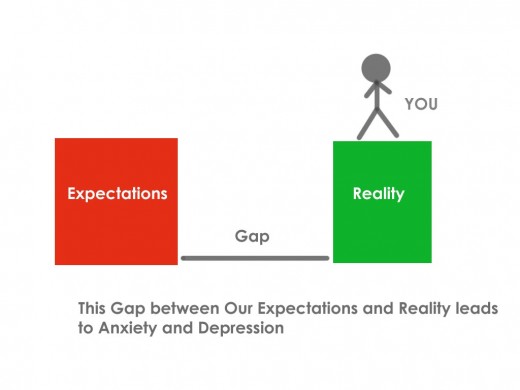
At a basic, simple level we are unhappy when our expectations of reality exceed our experience of reality (Nat Ware). 

The further away reality is from our expectations the more miserable you can expect to be.
expectations

I feel there are some common expectations held by unhappy people: that others MUST treat them well, that they should NOT have to deal with difficulty or hardship, and that they MUST do well.

This type of thinking is toxic and a recipe for misery.

Yet what about the specific expectations we hold for ourselves?

When you were a little boy or girl, did you want to grow up to be a baseball player, a super star, or a singer? At some point you probably gave up that dream for something more attainable (unless you are Derek Jeter, Leonardo DiCaprio, or Adele). When our dreams are out of reach, we feel stress, frustration, and anxiety. Many of us abandon our dreams, feeling they are impossible.

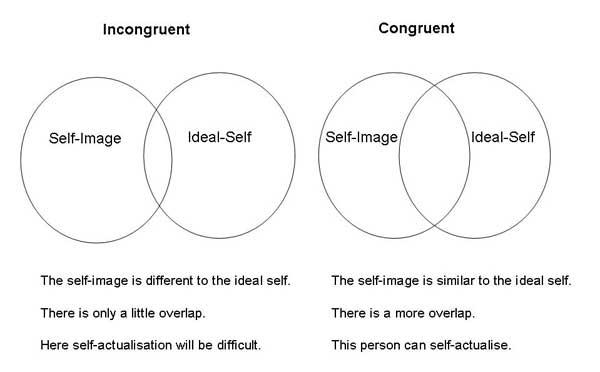
Carl Rogers, one of my favorite psychologists, referred to this gap as it relates to our self as incongruence.

Incongruence is when our desires and feelings are not aligned with our actions.

Maybe you always wanted to be a doctor but felt you can never do it and are now a med tech. You can’t bring yourself to go back to school to further your career, even though you always felt you can be more. You WANT to do more. But can’t motivate yourself to do it.

Maybe you want close relationships in your life, yet find you keep people at arm’s length. You can’t bring yourself to apologize to people you may have hurt or put yourself out there to build new relationships with people. Still–you WANT to have intimate relationships but aren’t willing to put yourself out there with people to obtain them.

Maybe you want to be healthy and in shape yet find yourself overeating and not exercising. You can’t bring yourself to change your diet or will yourself to even exercise for 15 minutes a day. You WANT to be healthy but can’t seem to muster the willpower.

Maybe you want to be financial secure yet find you are not saving enough for the future and are unwilling to live within your means. You repeatedly spend more than you should and procrastinate making a budget. You WANT to get your finances in order but can’t get your spending habits in line.

And the list goes on and on. You are in a state of incongruence when there is a gap between your ideal life and your REAL life.

Incongruence is going to cause psychological pain.

We all want our ideal self and actual experience to be consistent and overlap as much as possible. If you recognize yourself in one of the examples above, you are probably unhappy with the current state of your life.
congruence

Many psychological problems may arise when we are in a state of incongruence.

Expectations are the enemy of happiness.

We can see how our expectations of ourselves can lead to unhappiness, but what about our expectations of others?

Often our expectations of others leads to disappointment and hurt.

We all heard that the secret to happiness is LOWER expectations. Some even would probably say NO expectations is the real key to happiness in your relationships.

This is not to say you shouldn’t have standards. Standards are different from expectations. The two are not interchangeable.

A standard is a principle of how you will conduct yourself and behavior you will accept from others. It is a norm. For instance, a common standard people have is they would not scream or curse in public NOR would they find it acceptable to witness someone else engaging in such a manner. This isn’t an expectation-it is a standard of what is acceptable. Our standards are our values.

An expectation is how we would like people to behave or a situation to turn out. For example, an expectation would be if you expect your boyfriend to text you every day, regardless of how busy he is. Sure, it would be nice, but it is not a standard. It is an expectation of how you are expecting someone to ideally behave. They are more like unspoken rules. Expectations are in large part our ideals.

The reality is no one cares about our expectations except us. 

The simplest example of this truism is the golden rule. We think if we treat others well we will be treated in kind. I think we all have experienced otherwise.

The problem with expectations is they are often unspoken. You just expect people in your life to meet your expectations. But people have their own expectations that they live by which may be in conflict with yours.

Often we he hold expectations of others that we ourselves don’t even fulfill. We all have encountered someone with high expectations of others and little to no expectations of themselves.  These are the do as I say, not as I do types. Perhaps from time to time this has been you. Human nature can be hypocritical.

Nevertheless, there are going to be a few people in life whose expectations we are driven to fulfill. We try to anticipate expectations for important relationships in our lives. Most of us try to be cognizant of the expectations of our spouse, partner, boss, clients, kids.

But even in the these important relationships expectations are unmet and expectations can gradually slid into a sense of entitlement.

The problem with expectations is it can sour relationships if not managed.

As a society, we are living in a time where many who walk amongst us are profoundly unhappy.

And many of these people are unhappy by their own making: their expectations.

If you want to be happy, you are going to need to keep your expectations in check. Both of yourself and others.

Start to be mindful of the vicious expectation conflict cycle. Be mindful of how you interpret situations and other people. This is where lots of problems start since they are entirely subjective. If you identify a problem, you need to carefully consider your response. Pay mind to what you expectations are of the person AND the situation to determine if they are realistic.

If you hold an expectation of someone and they do not meet it you have a few options. You can end the relationship. You can address it. You can act passive aggressive. Or you can decide it isn’t a big deal and let it go.

All our interactions with people have the opportunity to weaken, strengthen, or remain neutral in our relationship with them.  This is why it is so important to examine your underlying expectations. You need to ask yourself  if you are being reasonable. It is reasonable to expect to be treated with civility and basic human respect. It is unreasonable to expect people to do as you expect them to do according to your rulebook. We need to be able to catch ourselves when we begin to drift into unrealistic expectations.

If it is an issue with respect or some other type of basic standard, that really isn’t a relationship you should be too concerned about, if a lack of basic respect exists. If it is a more superficial issue, remember people rarely behave exactly the way we want them to.

Remember the magnitude of unhappiness you experience will be proportionate to your thoughts and how you choose to interpret things.

As a therapist, I find many people come to counseling because their expectations of others are not being met. This is causing pain and problems for them. I work with them using CBT (cognitive behavior therapy) which focuses on changing THEIR thoughts and behaviors including their expectations. I gently remind them we can’t change others, we can ONLY change ourselves.

I find it is helpful to work with clients to improve their coping skills, tweak their expectations, and look at what role they are playing in creating unhappiness in their life.

Try taking some time to reflect on your expectations. Of yourself and others. It can be the beginning of a happier, more satisfying life.

expectations 2

If you enjoyed this article and are interested in seeking counseling with me:

https://www.psychologytoday.com/us/therapists/erin-doyle-theodorou-nutley-nj/243617

Erin Doyle Theodorou, M.Ed, LPC, NCC

THEODOROU THERAPY, LLC

590 Franklin Ave.

Suite 2

Nutley, NJ 07110

973-963-7485

etheodorou@theodoroutherapy.com

Why We Hate The Idea of Being Average

I want you to take a moment to ask yourself how you would feel if someone referred to you as average?

Most likely you would feel quite insulted.

None of us like to view ourselves as being average.  

As a society, we have become obsessed, with how we compare in relation to the average.

As a culture, we have elevated people’s ambitions, to the point where we are raised to believe we can all be exceptional, if we just work hard enough at it.

In fact, studies have shown most people rate themselves as “better than average” across various different traits which is statistically impossible.

On a scale of 1-10, perhaps you would rate yourself a 7.

On a scale of 1-10, perhaps you would rate most OTHERS a 5.

We don’t mind assigning the title of average to other people but we don’t want to be considered average ourselves.

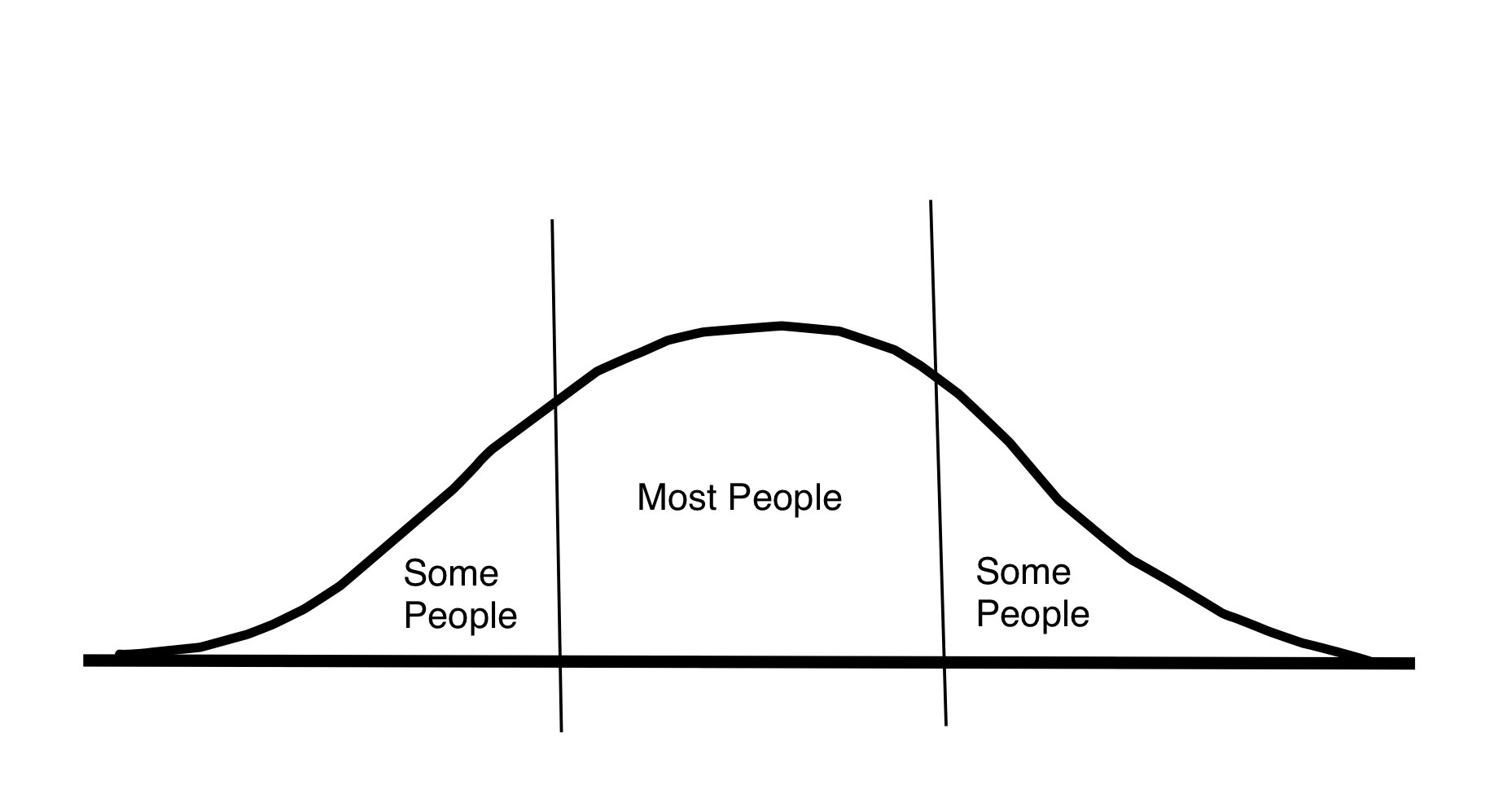
The reality is most of us are more or less average—average looking, of average intelligence, making about an average salary. And so on and so forth. Maybe some of us are above average in one aspect or another but few of us are far above average across the board in all facets of life.

Yet why is it so easy to look at others and recognize this statistical fact but few of us can admit to ourselves the many ways in which we are average?

The reason is what psychologists call illusory superiority. 

Illusory superiority is the tendency to overestimate one’s positive qualities and capabilities, and to underestimate one’s negative qualities, relative to others.

It is something we all do from time to time. And for the most part it is a great way to protect one’s mental health and self-esteem…if not taken to the extreme.

Looks at all the ways you may engage in this behavior:

Ever notice how you judge yourself by your “intentions” but judge others by their behavior?

Blame others for negative events instead of looking how your behavior played a factor?

Credit yourself with earning an “A” but blame the professor if you earned a “C?”

How you emphasize other people’s negative qualities but highlight your own positive qualities?

Give yourself credit for a top month sales record but blame the economy when your sales are on the decline?

How you make excuses for yourself but then judge others harshly when the same exact thing happens to them?

This self-enhancing bias is in play whenever you seek to excuse your failures as something beyond your control and attribute your successes to your own great character.

Human psychology, being what it is, is to always try to figure out a way to give yourself an edge over others. No one wants to see themselves as an Average Joe. Or Jane.

Fitness-Bell-Curve

But being average does not mean you are a failure.

If anything, there are many advantages to being average. Even good things taken to the extreme become undesirable.

Ambition…too much turns into greed, too little turns into failure

Conscientiousness….too much turns into a people pleaser, too little into a selfish jerk

Sociability…too much into an attention seeker, too little into anti-social

Work ethic….too much into a workaholic, too little results in the unemployment line

Confidence….too much turns into arrogance, too little into self-consciousness

If you want to be healthy, avoiding many physical and psychological illnesses, you want to be average.

Untitled drawing (3)

And the reality is most of us LIVE average lives.

Which is good because the world caters to those of us who live ordinary lives.

People who think being average means that they will never improve their life, or achieve any greatness in their life, have a really unhealthy mindset.

Once you accept being average, you will be happier. More productive. More satisfied with your life.

When you accept being average, you explore and give things a try. Because you are not caught up in trying to be perfect or extraordinary, which limits your willingness to even try.

If you let go of the pressure that you have to achieve some sort of greatness in order to achieve a “fulfilling” life, you may find a new appreciation for all the ordinary, average things in life.

If I felt I had to be an extraordinary writer to begin a blog, I would never be able to start a blog.

But I feel okay with being a more or less average writer who is passionate about the subject I write about.

Acceptance of being average, will give you many things to explore, without the pressure of needing to be exceptional.

So here’s to being average! If you find any grammar or spelling mistakes, I am not Mark Twain, and this is not the New York Times!

quote-the-curious-paradox-is-that-when-i-accept-myself-just-as-i-am-then-i-can-change-carl-rogers-24-91-90

Why We Love to Procrastinate

If you were to ask people what their worst habit is, of all the bad habits they may have, procrastination is usually up there at the top. Procrastination is postponing an unpleasant task to our future self. Who amongst us hasn’t been guilty of indulging in some procrastination?

Ironically enough, for the last few days, I have been procrastinating writing a post on procrastination.

I did all my go to ways to procrastinate–I went out with friends after work (love distracting myself with others), caught up on my DVR (it was calling my name), I scrolled through Instagram to see what other people were up to (sadly, I even got distracted by watching tv and lost my place on Instagram–had to start all over from the top of my feed-I hate that).

Procrastinating goes against our best interests. It is not logical. Even with the best intentions set many of us find ourselves unable to follow through.

Even when I finally start what I set out to do–I easily find ways to distract myself. I text, watch a few YouTube videos, sometimes, I even go stand in front of the fridge trying to decide if making something to eat is a good idea. Maybe now, I think to myself, is the opportune time to organize my junk drawer.

To be honest, this post would probably be better if I hadn’t waited until the last-minute to get to it.

But right there lies the beauty of procrastinating.

See when we wait until the last-minute to do something, we are able to give ourselves, a built-in excuse for why it doesn’t turn out so good. It’s not that I am a horrible writer, I have just been so busy with other things, that I couldn’t give it all my attention and effort.

This type of thinking serves as a way to give ourselves a buffer for criticism and failure. If I procrastinate working on something that I am worried may be above my abilities, I create an excuse for myself when it doesn’t turn out well.

Procrastinating is a great way to protect our ego and self-esteem.

We can see procrastination easily in others–the kid who don’t study or hand in their homework, the friend who never gets around to using that gym membership that cost a fortune, or when our partner puts off his to do list of what he needs to get done around the house.

Everybody procrastinates.

This tendency–to avoid taking action—is prevalent amongst all corners of the world.

It can be harmless to procrastinate depending on the task at hand. I can say for as long as I can remember, I put off doing my laundry until the last possible minute (running out of clean towels and I really want to re-wear something from a few days ago seems to get me moving). This isn’t going to really affect my life in any real, meaningful way. When push comes to shove, it gets done.

But people procrastinate not just tasks, but goals. I can’t tell you how many diets I put off to Monday, only to put it off to next Monday, only to put it off to next month…(I feel I am not alone on this one).

We avoid going to the gym, asking someone out on a date, tackling difficult assignments, apologizing, starting a new business, asking for help.

Maybe we procrastinate checking out a mole on our arm.  We put off difficult conversations to avoid conflict. We delay big decisions like switching careers or getting a divorce.

Procrastinating important goals–such as saving for retirement or quitting smoking–can lead to more serious problems.

The list is endless of what we can and DO procrastinate.

People will procrastinate until they run out of time.

But why, you may be asking, do we do this to ourselves?

We procrastinate because we are avoiding discomfort. We just don’t feel like it.

Procrastination is a misplaced coping mechanism.  It is an avoidance behavior, usually what we are avoiding, is PAIN. Whatever action we are avoiding involves some sort of pain-whether physical or emotional.

Procrastination keeps us from doing things we don’t want to do. Does anyone want to put away 20% of their paycheck for retirement when there is a long list of other things that money can be used for? Does anyway want to eat broccoli and cauliflower when there is a bowel of pasta sitting in front of them? Does anyone want to go for a run instead of relax on the couch after work?

We procrastinate because it is easy. It is easy to put things off. It is hard to break out of your comfort zone and build momentum. When we procrastinate we avoid the negative, unpleasant feeling of action and get to indulge in the comfort of INACTION. We put off going to the gym and opt to instead scroll the internet creating Pinterest boards of recipes we all know we will never make. We rationalize to ourselves why today isn’t the day.

Many of us will do anything to get us out of the unpleasant task of something we don’t feel like doing.

Procrastination is all about feelings. Mainly avoiding unpleasant ones. Even when we know better. Yet our desire to procrastinate can seriously affect our life.

Imagine a task you have been avoiding. Picture starting that specific action in your life RIGHT NOW. Try to fathom how you will feel.

The painful feelings you are avoiding can be fear, vulnerability, embarrassment, insecurity, anxiety. These are all forms of emotional pain.

We don’t procrastinate things we enjoy. We procrastinate things we view in one way or another as uncomfortable.

To overcome procrastination, we need to realize we are avoiding pain and that soon we ALL have to face reality. Eventually we have to–check our bank account. Get on the scale. Go to the doctor and find out what is really going on. Answer to our boss. Answer to ourselves.

You can only avoid reality and responsibility for so long. Your future self will not be any better equipped to take on a task that your current self is avoiding. Human nature, being what it is, likes to retreat to our comfort zone and stay there.

The price of our comfort zone is a shrunken world. We miss out on relationships, opportunities, experiences, all which will pass us by. Staying in our comfort zone keeps us from truly living a full life.

Our time is limited. When you procrastinate, you waste your time. Time, the one thing you can never get back, no matter who you are.

Start thinking about the future you. The you, who will thank you for getting the ball rolling, today. Not tomorrow. It is time to shift your mindset to thinking about down the road, not just for what you want in the moment.

My favorite piece of advice was from a teacher I had who told me to JUST get STARTED. Give yourself ten minutes on any task you are putting off. You will be surprised the type of momentum you get from just BEGINNING.

Remember you will never feel like it. Stop waiting until you feel like it. Feelings have a way of holding you back.

To change, you HAVE to take action.

We can prevent procrastination. It is a habit and like all habits it can be unlearned. Rip off the band-aid and feel the discomfort and stress, that you will eventually feel later.  Be willing to suffer through the feelings NOW to feel better later. The best feeling will be the results experienced by your future self-when you feel accomplished and able.

The bottom line is procrastination is just a feeling. 

There is nothing stopping you. Except you.

It is time to stop allowing yourself to be ruled by a feeling that brings with it so many negative consequences. It is time to stop letting yourself off the hook.

Can you imagine how much less stress and frustration you feel if you just make yourself do the things you don’t want to do, when you are actually supposed to do them?

Time for me to heed my own advice.

I am going to go now. To take a walk. Even though I don’t feel like it.


Are You Putting Your Happiness on Hold? How the Arrival Myth Will Ruin Your Life

Have you been putting your happiness on hold?

Are you waiting on your life circumstances to be just right to finally feel happy?

The concept of the arrival myth is that once you have “arrived” at a certain point in your life, everything will fall into place, and the life you have ALWAYS wanted will begin.

Tell me if any of these sounds familiar:

“Once I am finally in the right relationship…..then I will be happy

“As soon as I get out of debt…. then I will be happy

“Once I am done with school….then I will be happy

“When I lose those 30 pounds…. then I will be happy

“Once my kid gets into college… then I will be happy

“As soon as I get that raise… then I will be happy

“When I finally leave this horrible job…. then I will be happy”

~And the list goes on and on. ~

We put our happiness off to the future to AFTER we reach some future, external goal or event.

The myth of arrival leaves us believing that once we get to this certain point; our life will magically FEEL better. Because that is what the arrival myth is all about. How you feel.

For me, putting my happiness on hold until I reach some external goal or event seems like a surefire way to wake up on my deathbed never having experienced being happy. Human nature, being what it is, we are always going to keep moving the goal post.

There is also no way to ensure that the thing we are wishing for will even have any effect whatsoever on our happiness. This sets us up for pain, when we reach the goal we so longed for, and the happiness we were expecting, never comes.

Imagine losing 30 pounds and still feeling just as depressed…

Imagine having your kid get into their first choice college and still feeling just as anxious….

Imagine getting that huge raise and still feeling just as lonely…..

The reality is accomplishments don’t take away our depression OR anxiety OR our loneliness. Our life will not suddenly be all sunshine and roses once we reach our goal. The myth of arrival has to be one of the most happiness stealing mindsets around. It is common, so part of being human.

This type of thinking keeps us so focused on the destination, we cannot enjoy the journey.

Don’t be that person. Try to be happy. NOW.  No matter what the circumstances of your life are—don’t wait for the new job, new house, new partner, new location, new body, new income to experience joy.

Try not to allow your current circumstances make you long for a past that cannot be recovered OR put your happiness on a future event that may never come.

Remind yourself there are many people worse off than you in this world. We all know the common phrase “first world problems” which is something I think to myself when I am indulging in complaining or feeling like I got the short end of the stick in any given situation.  I tell myself that my problems really are NOT problems in the big scheme of things.

If you have your health, food in the fridge, a roof over your head, you are luckier than many who walk the Earth.

Remember you can always lose all the blessings you do have at any given moment.

Human nature is to take things for granted.

The extra 10 pounds you complain about don’t seem all that bad until you lose the job you support your family with. Then the job you complain about doesn’t seem all that bad, when you realize how hard it is to find a new one. See where I am going here? For some reason, as humans, we love to have problems to complain about to keep us from experiencing peace and contentment. If we don’t have any, we will create them. Reminding yourself things can ALWAYS be worse can help you appreciate all the imperfect but good things you do have.

Do not place your happiness in some future that may never even come.

Stop letting your current life situation steal your happiness, which you can be experiencing now.

Chances are, your life, is pretty great just the way it is.

If you are interested in counseling with me:
Erin Doyle Theodorou, M.Ed., LPC, NCC, ACS

etheodorou@theodoroutherapy.com

973-963-7485