Why do certain people irritate us or rub us wrong while others don’t?
You can be the most loving, kind, down to earth, open-minded person on the planet and STILL get extremely annoyed by certain people.
There are billions of us on the planet. The fact is we are not going to get along with everyone.
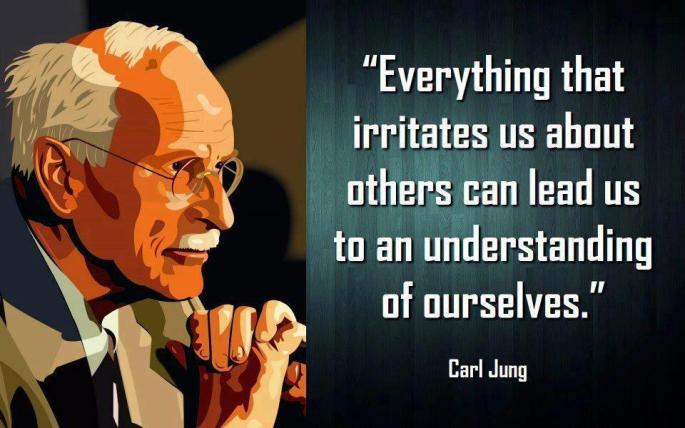
I can remember years ago studying Carl Jung who famously said, “Everything that irritates us about another can lead up to an understanding of ourselves.”
This may be a tough idea to get behind for many of us. For instance, if we don’t care for someone who is selfish, we wouldn’t think we dislike this individual because we, ourselves, are in fact selfish.
Yet Jung purported that if you are open enough to the idea, what you dislike about others, can teach you about yourself.
I think it is easier to apply this when the shoe is on the other foot. What I mean by this is it is easier to apply this theory when other people project their negative qualities onto us instead of when we are projecting our negative qualities onto someone else. I remember a couple of times in my past when people projected onto me the qualities that were in fact their own. Before I was trained as a psychotherapist, in all likelihood I would have reacted. Being in this profession, I am cognizant of when someone is projecting and knowing this, I feel no need to react (although being human I do slip up from time to time and always kick myself for doing so)!
There is no need to react or defend ourselves against other people’s projections. Those projections are theirs. We do not need to OWN other people’s stuff.
Usually when someone is projecting, they are trying to offload their negative qualities onto you.
Thus when someone is dumping their disowned feeling on you, if you are conscious enough, you cease the need to react at all.
The fact is everyone is your mirror.
According to Jung, we all have a shadow self.
The shadow is irrational, prone to psychological projection, in which a perceived personal inferiority is recognized as a perceived moral deficiency in someone else (Jung).
Our shadow is an innate part of ALL of us, yet the vast majority of us are blind to its existence.

Many of us do our best to hide our negative qualities, not only from others but from ourselves. Thus we often criticize and condemn others to ensure the focus does not fall our destructive tendencies and fault.
Many of us are only conscious of our persona. The persona is the social mask we as individuals present to the world. It is the public image of someone.
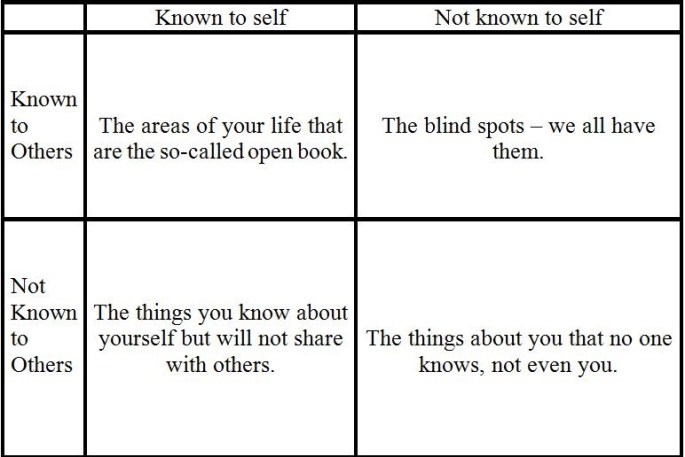
Underneath the mask we show to the world, our shadow remains unconscious and can wreak havoc in our life.
The Shadow is all the thoughts and emotions we repress as being socially inappropriate. Rage, envy, jealousy, schadenfreude (the pleasure we derive from another person’s misfortune). This is all shadow material. The more we repress shadow material, the more of a hold it has on us.
But what about if we are talking about people we don’t merely dislike but people we hate?
See when we dislike someone, we simply avoid this person. We don’t feel the need to rage about them, yell at them, fixate on them. We do not want to get into a back and forth with them. Dislike suffices. We just move on with our life and limit our contact with this person as much as humanly possible.
Hatred is a whole other animal. Hate often arises because we see another as an “enemy.” In this enemy we see a part of ourselves we hate. Yet whatever we hate about our “enemy” can be explained by simple fact: they trigger dormant feelings of shame and inferiority.
The more insecure you are, the more you feel attacked by others, regardless of whether they are in actual attacking you or not.
How insecure you are will play a factor in whether you merely dislike someone or if you hate them.
Dislike vs. Hatred
Let us differentiate between mere dislike and hatred. When you dislike someone, you rather NOT be around them. You do not want to interact with them because it is unpleasant. You do not wish ILL on this person and if anything you feel apathetic for them. Many you even pity them because you recognize how unhappy and miserable they are by their behavior. When you dislike someone, you don’t care to give them much thought or energy.
Disliking people is normal throughout life. Yet for the most part, we are going to be neutral towards people. We will not like them NOR dislike them.
Hatred, on the other hand, means you consider a person an enemy and a threat. Thus you are invested in their destruction. You wish ill on them and want to see them destroyed.
When you hate someone:
~you obsess over them. You will gossip and smear them to anyone who listens. You cannot let go of what they said or did.
~you feel good when something bad happens to them. If something good happens to them, you try to minimize it or dismiss it.
~you try to convince others of how horrible and evil this person is. You think people must know the “truth” about him or her. You desperately seek confirmation from others about how horrible this person is.
Long story short, the difference between hatred and dislike is the former involves time and effort while the latter involves apathy.
Personally, I have people I dislike but hatred to me is not something I allow myself to engage in because I am conscious of the fact it would just make ME miserable and unhappy. It also takes WAY too much energy and time to hate someone (and who has that?!) It destroys the person who feels it not the target of contempt and disdain. I believe is certain situations we all are capable of feeling hatred towards another person in passing but this emotion is not a fixture in our lives.
In psychologically unhealthy people, hatred may be felt by anyone who dare challenges their worldview or opinions (any famous figures coming to mind?!)
When you hate someone you feel compelled to verbally spar with them not because you want to win but you don’t want to lose. (Once again, people we hate trigger in us shame and inferiority). A person you just dislike, you don’t care to get into it with them. To you, it isn’t worth the energy. If you dislike someone, you aren’t being triggered by shame and inferiority. The person’s behavior just rubs you wrong (maybe they are in fact just obnoxious). And hey, if Jung has taught us anything, it is that we TOO can be obnoxious and rub people wrong!
Although most people would never acknowledge it, people who hate other people generally hate someone who they feel threatened by or triggers their feelings of inferiority.
You usually hate someone who exposes or highlights your issues, baggage, and insecurities.
If you hate someone, you feel that this person is trying to expose your flaws to the world. Hatred is a very irrational emotion. The fact is most people are not interested in exposing your flaws (unless they are abusive or a bully). Most of us are just trying to hide our own flaws.
Hatred is a slippery slope. It is not wrong to get threatened or angry with other people, yet in taking it to the level of hatred, you are dwelling and ruminating on your own hate.
If we hate someone, we feel they are diminishing us. If you feel this emotion, it is time to begin the process of release.
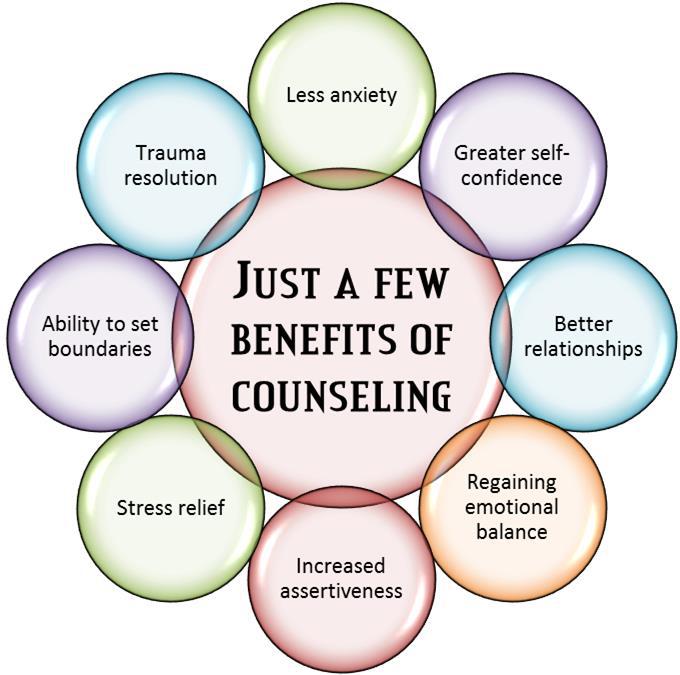
Counseling may be a good place to start to weaken the grasp this toxic emotion has on you.
Hate will not go away on its own. You need to actively work at releasing its toxic hold on you.
Hate makes us want to fight. Dislike makes us want to not engage.
Hate makes us irrational. Dislike makes us rationalize.
Hate makes us want to smear the person to ANYONE who will listen. Dislike makes us not even care to mention the person’s name because they aren’t on our mind.
Hate makes us want to seek revenge. Dislike makes us avoid the unpleasantness of dealing with this individual.
It is possible to move from hatred to dislike.
Release the judgements.
Move on with your own life.
Being compassionate can mean walking away without saying ANYTHING. Often no answer is the best answer.
When we are at peace with ourselves, we stop being at war with others.
To schedule a counseling session with me (AND if you are a reader who lives in New Jersey):
https://anewcounselingservices.com/erin-theodorou%2Cm-ed-%2C-lpc
Anew Counseling Services LLC
617 Oradell Avenue, Suite 3, Oradell, New Jersey, 07649
(551) 795-3822
tamanna@anewcounselingservices.com
 No matter who we are we all have our days where we just aren’t feeling great about ourselves. It can be situational such as a recent break up, a falling out with a friend, trouble with one of our kids, health issues (our own or someone we love’s), weight gain, financial stress, an issue at work, our house looking a fright. Insert crummy feeling here. When we are feeling bad about ourselves or our current situation, it can affect our life in numerous ways.
Feeling bad about yourself can color your view of the world—making us feel negative about everyone and everything. When we are in this state, we tend to bring others around us down too. We drive people away from us with our negativity. Let’s be fair here. Life is hard enough without being around a Negative Nancy or Debbie Downer. No one is going to want to be in your company if you spew negativity. When we put negativity out into the universe, we bring down the vibe of the room and the moods of others. I refer to this behavior as anger dumping–where we dump our negative emotions on someone else. For many people this helps them feel better. Yet this type of behavior will drive people away from us which in turn will only make us feel worse about ourselves.
No matter who we are we all have our days where we just aren’t feeling great about ourselves. It can be situational such as a recent break up, a falling out with a friend, trouble with one of our kids, health issues (our own or someone we love’s), weight gain, financial stress, an issue at work, our house looking a fright. Insert crummy feeling here. When we are feeling bad about ourselves or our current situation, it can affect our life in numerous ways.
Feeling bad about yourself can color your view of the world—making us feel negative about everyone and everything. When we are in this state, we tend to bring others around us down too. We drive people away from us with our negativity. Let’s be fair here. Life is hard enough without being around a Negative Nancy or Debbie Downer. No one is going to want to be in your company if you spew negativity. When we put negativity out into the universe, we bring down the vibe of the room and the moods of others. I refer to this behavior as anger dumping–where we dump our negative emotions on someone else. For many people this helps them feel better. Yet this type of behavior will drive people away from us which in turn will only make us feel worse about ourselves.
 Besides hurting our relationships, often when we aren’t feeling very high on ourselves, we make matters worse with our chronic negative self-talk.
A running dialogue in your mind can begin to play caustic self-talk. I am not making enough money. I am too fat. My house isn’t organized enough. My kids won’t listen. Why won’t my cholesterol numbers budge? I have too much to do. I am getting so old. Are those gray hairs? Why is my blood pressure so high? I hope I don’t lose my job. What am I going to do when my kids go to college? Does my wife still find me attractive? Why can’t I finish what I start? What’s next? Am I doing enough?
We all have a unique “tape” that plays in our mind.
Besides hurting our relationships, often when we aren’t feeling very high on ourselves, we make matters worse with our chronic negative self-talk.
A running dialogue in your mind can begin to play caustic self-talk. I am not making enough money. I am too fat. My house isn’t organized enough. My kids won’t listen. Why won’t my cholesterol numbers budge? I have too much to do. I am getting so old. Are those gray hairs? Why is my blood pressure so high? I hope I don’t lose my job. What am I going to do when my kids go to college? Does my wife still find me attractive? Why can’t I finish what I start? What’s next? Am I doing enough?
We all have a unique “tape” that plays in our mind.
 What are the thoughts that run through your mind when you are spiraling into your “negative zone?” We all have negative thoughts we tell ourselves when we are feeling down and out. Our thoughts are very subjective and usually are a reflection of our values. If you are a parent, maybe you get down on yourself about your parenting. If you are self-conscious about how you look, maybe you beat yourself up for how you are aging or how much weight you have put on through the years. If you are career-oriented, you chide yourself for things you could have done better with clients or colleagues. If you are relationship oriented, you focus on the state of your marriage or relationship. If you are into fitness, you beat yourself up about not getting below a 7 minute mile.
 We all have unique values and different things we tend to focus on. Yet it seems to be a universal experience that we are ALL our own worst critic.
Too often we do not question the thoughts we think. We just accept our thoughts at face value. The way we talk to ourselves is going to impact how we feel. CBT (cognitive behavior therapy) and REBT (rational emotive behavior therapy) are centered around how we feel is largely a result of the thoughts we think. Thus the goal in treatment is to work on a client’s cognitions and thought processes.
We all have unique values and different things we tend to focus on. Yet it seems to be a universal experience that we are ALL our own worst critic.
Too often we do not question the thoughts we think. We just accept our thoughts at face value. The way we talk to ourselves is going to impact how we feel. CBT (cognitive behavior therapy) and REBT (rational emotive behavior therapy) are centered around how we feel is largely a result of the thoughts we think. Thus the goal in treatment is to work on a client’s cognitions and thought processes.
 The way we think is going to have a direct impact on how we feel AND act. All too often we let a bad day spiral. Our thoughts turn pessimistic. We begin to view a bad day as a bad life. A bad work day as a bad job. A bad fight as a bad relationship. A lazy day as us just being lazy. We generalize negative feelings and blow things out of proportion.
The reality is some days are better than others.
We have days we are more productive than others. When days go less well, we usually are harder on ourselves.
But feeling bad about yourself won’t get you anywhere you want to go. The negative self-talk will zap your motivation. It will color the way you feel about others. You will begin to feel exhausted–mentally and physically. It was impact the way you feel about yourself. It can make you physically ill.
When you start to feel in a down mood…ask yourself what IS IT that I am focusing on?
Maybe you will find you are focusing on something you don’t want or something you don’t care for.
Perhaps you are focusing on….a person you don’t like, a habit you have you are struggling to kick, a situation at work that is driving you nuts, a problem your kid is having that you can’t seem to help her to overcome, an ongoing point of contention with your spouse, a number on the scale that won’t budge, and so on and so forth.
The way we think is going to have a direct impact on how we feel AND act. All too often we let a bad day spiral. Our thoughts turn pessimistic. We begin to view a bad day as a bad life. A bad work day as a bad job. A bad fight as a bad relationship. A lazy day as us just being lazy. We generalize negative feelings and blow things out of proportion.
The reality is some days are better than others.
We have days we are more productive than others. When days go less well, we usually are harder on ourselves.
But feeling bad about yourself won’t get you anywhere you want to go. The negative self-talk will zap your motivation. It will color the way you feel about others. You will begin to feel exhausted–mentally and physically. It was impact the way you feel about yourself. It can make you physically ill.
When you start to feel in a down mood…ask yourself what IS IT that I am focusing on?
Maybe you will find you are focusing on something you don’t want or something you don’t care for.
Perhaps you are focusing on….a person you don’t like, a habit you have you are struggling to kick, a situation at work that is driving you nuts, a problem your kid is having that you can’t seem to help her to overcome, an ongoing point of contention with your spouse, a number on the scale that won’t budge, and so on and so forth.
 What can you do when you are feeling down to boost ourselves up?
1.Reduce stress. We are more likely to get stuck in a negative spiral when our life is more hectic than we care for. Try to find ways to mitigate stress–focus on the musts, not the shoulds of your to-do list. Accept your needs, manage your time, practice relaxation. Learn to recognize the signs of your body’s stress response (difficulty sleeping, being easily angered, feeling depressed, having low energy, increased substance use).
2.Schedule things you enjoy into your week. Too often we forget about our self-care. Make sure you have time throughout the week to get in some things you enjoy–a tv show, a book, a workout, coffee with a friend. If you need to, literally schedule “fun” into your weekly planner. Adults need downtime and fun just as much as kids do.
3.Watch what you eat. Bad nutrition does not help our mood. In fact much research shows a direct correlation between an unhealthy diet and mood disorders. Make an effort to focus on a healthy diet as the foods we eat certainly impact our mental well-being. Do some research on nutritional psychiatry if you feel your diet can be impacting your moods.
4.Exercise. Even if you only have 15 minutes to go take a walk outside your office. Every little bit helps. Exercise has a way of getting us motivated, giving us energy, and improves our self-esteem. It also helps to break up the monotony of our day.
5.Limit time spent with negative people. You do not need other people’s negativity bringing you down. Set boundaries with these energy vampires. These people should get the least of our energy and time–anyone with a bad attitude, fatalistic outlook, disdain for other people, catastrophic thinkers—-they have got to go. These people have a way of creating problems for themselves AND others. It will be hard to not feel misery around miserable people.
6.Connect with the people you love. Too often we let weeks go by without calling a friend or family member. Texting is NOT the same. Try to figure out a way to connect with the people you love—call on the drive home from work, stop by on your Saturday morning bagel run, make the effort to connect.
7.Ask for help. We are all in this together. No man is an island. If you are struggling, reach out for support. Don’t let pride or fear get in the way. Sometimes we begin to self-isolate when we aren’t feeling too happy with ourselves. Withdrawing from people will only make you feel worse.
8.Meditate. Quieting our mind can reduce stress, improve sleep, increase focus, improve relationships, and improve our mood. Meditating has a way of stopping our judgmental thoughts and bringing us back into the present moment. It can help you stop spinning stories, thoughts, fantasies about yourself (and other people). Meditation cultivates calmness from within and helps you to take your thoughts (and self) less seriously.
9.Keep going. Give yourself credit for how hard you work. Action breeds confidence. Often when we are feeling down on ourselves, we get paralyzed into inaction by our negative thoughts. Don’t sit home thinking about it, just do it.
10.Watch your thoughts. Notice when you find yourself falling into a negative spiral. Thinking is the way we talk to ourselves. Often we talk to ourselves in a way we would never dare speak to others. Try to take note of your mental habits–the stories you tell yourself, your fantasies, your ideas. Learning to observe yourself is pivotal to monitoring your actions and changing how you feel.
We all struggle from time to time. No one is immune from feeling bad about themself every now and again. Part of being human is realizing we are all works in progress. We will never be “done” or “complete.” (Unless we are dead–I don’t think any of us want that).
We are always growing and evolving.
Try to feel good about yourself regardless of what trials and tribulations life brings. If you continually struggle with this, counseling may be the place to begin the journey to self-acceptance.
What can you do when you are feeling down to boost ourselves up?
1.Reduce stress. We are more likely to get stuck in a negative spiral when our life is more hectic than we care for. Try to find ways to mitigate stress–focus on the musts, not the shoulds of your to-do list. Accept your needs, manage your time, practice relaxation. Learn to recognize the signs of your body’s stress response (difficulty sleeping, being easily angered, feeling depressed, having low energy, increased substance use).
2.Schedule things you enjoy into your week. Too often we forget about our self-care. Make sure you have time throughout the week to get in some things you enjoy–a tv show, a book, a workout, coffee with a friend. If you need to, literally schedule “fun” into your weekly planner. Adults need downtime and fun just as much as kids do.
3.Watch what you eat. Bad nutrition does not help our mood. In fact much research shows a direct correlation between an unhealthy diet and mood disorders. Make an effort to focus on a healthy diet as the foods we eat certainly impact our mental well-being. Do some research on nutritional psychiatry if you feel your diet can be impacting your moods.
4.Exercise. Even if you only have 15 minutes to go take a walk outside your office. Every little bit helps. Exercise has a way of getting us motivated, giving us energy, and improves our self-esteem. It also helps to break up the monotony of our day.
5.Limit time spent with negative people. You do not need other people’s negativity bringing you down. Set boundaries with these energy vampires. These people should get the least of our energy and time–anyone with a bad attitude, fatalistic outlook, disdain for other people, catastrophic thinkers—-they have got to go. These people have a way of creating problems for themselves AND others. It will be hard to not feel misery around miserable people.
6.Connect with the people you love. Too often we let weeks go by without calling a friend or family member. Texting is NOT the same. Try to figure out a way to connect with the people you love—call on the drive home from work, stop by on your Saturday morning bagel run, make the effort to connect.
7.Ask for help. We are all in this together. No man is an island. If you are struggling, reach out for support. Don’t let pride or fear get in the way. Sometimes we begin to self-isolate when we aren’t feeling too happy with ourselves. Withdrawing from people will only make you feel worse.
8.Meditate. Quieting our mind can reduce stress, improve sleep, increase focus, improve relationships, and improve our mood. Meditating has a way of stopping our judgmental thoughts and bringing us back into the present moment. It can help you stop spinning stories, thoughts, fantasies about yourself (and other people). Meditation cultivates calmness from within and helps you to take your thoughts (and self) less seriously.
9.Keep going. Give yourself credit for how hard you work. Action breeds confidence. Often when we are feeling down on ourselves, we get paralyzed into inaction by our negative thoughts. Don’t sit home thinking about it, just do it.
10.Watch your thoughts. Notice when you find yourself falling into a negative spiral. Thinking is the way we talk to ourselves. Often we talk to ourselves in a way we would never dare speak to others. Try to take note of your mental habits–the stories you tell yourself, your fantasies, your ideas. Learning to observe yourself is pivotal to monitoring your actions and changing how you feel.
We all struggle from time to time. No one is immune from feeling bad about themself every now and again. Part of being human is realizing we are all works in progress. We will never be “done” or “complete.” (Unless we are dead–I don’t think any of us want that).
We are always growing and evolving.
Try to feel good about yourself regardless of what trials and tribulations life brings. If you continually struggle with this, counseling may be the place to begin the journey to self-acceptance.
 If you enjoyed this article and are interested in seeking counseling with me:
 Good relationships are the cornerstone of mental health and well-being.
They are a vital part of being able to withstand the vicissitudes of life.
If I were to think of the hardest times of my life, my friends and family’s support made all the difference. Their support, love, and comfort=priceless.
The people in my life who I know are with me through thick and thin…truly one of life’s greatest blessings.
Reflect on your own hardships and the most trying moments of your life. Who were the people who stood by your side and helped you make it through? Who had your back no matter what? What relationships have endured the test of time?
The fact is it is easy to be there for someone when times are good. It is when times are bad when we see the true colors of everyone in our lives.
Sadly, it is during tough times when the people we may have thought cared about us may reveal they do not care as much as we had previously assumed. The pain of this truth can be tremendous.
Good relationships are the cornerstone of mental health and well-being.
They are a vital part of being able to withstand the vicissitudes of life.
If I were to think of the hardest times of my life, my friends and family’s support made all the difference. Their support, love, and comfort=priceless.
The people in my life who I know are with me through thick and thin…truly one of life’s greatest blessings.
Reflect on your own hardships and the most trying moments of your life. Who were the people who stood by your side and helped you make it through? Who had your back no matter what? What relationships have endured the test of time?
The fact is it is easy to be there for someone when times are good. It is when times are bad when we see the true colors of everyone in our lives.
Sadly, it is during tough times when the people we may have thought cared about us may reveal they do not care as much as we had previously assumed. The pain of this truth can be tremendous.
 As painful as this may be, it makes you all the more appreciative of all the supportive, loving people in your life. You recognize the value these relationships are to your well-being.
That is what this post is about–the importance of nurturing good, healthy relationships. And the responsibility you having in doing so.
It is all too easy to neglect our relationships. Life happens–marriage, kids, careers, running a household. Listen, I get it! You are busy. You can only juggle so much!
But if you were to think of the happiest moments in your life–the majority of them most likely entailed being surrounded by ALL the people you love most. Weddings, parties, baptisms, graduations, housewarmings, anniversaries, birthdays, holidays, vacations. Happy memories are usually the times we spent with the ones we love and cherish the most.
In our fast-paced, always on the go world, it has become all too easy to forget that a happy life runs parallel with loving, supportive relationships. We are social animals. We are designed to be connected to others.
As an extremely individualistic society, we often think what will bring us long-lasting happiness are results of our individual pursuits. Our career success, our financial success, our individual goals.
But our communal goals are shown to bring more long-term happiness. We are all in this together, let’s not forget. Our relationships are a source of much of our joy in life. Our families, our circle of friends, the colleagues we are close with. Research shows close, supportive relationships bring more happiness than fame or money.
These are the people we laugh with, cry with, share with, vent with, help with. Our close relationships bring much of the happiness we experience on our journey through life.
Yet at the same time—-what is it that cause of the most unhappiness in our lives?
Our relationships.
As painful as this may be, it makes you all the more appreciative of all the supportive, loving people in your life. You recognize the value these relationships are to your well-being.
That is what this post is about–the importance of nurturing good, healthy relationships. And the responsibility you having in doing so.
It is all too easy to neglect our relationships. Life happens–marriage, kids, careers, running a household. Listen, I get it! You are busy. You can only juggle so much!
But if you were to think of the happiest moments in your life–the majority of them most likely entailed being surrounded by ALL the people you love most. Weddings, parties, baptisms, graduations, housewarmings, anniversaries, birthdays, holidays, vacations. Happy memories are usually the times we spent with the ones we love and cherish the most.
In our fast-paced, always on the go world, it has become all too easy to forget that a happy life runs parallel with loving, supportive relationships. We are social animals. We are designed to be connected to others.
As an extremely individualistic society, we often think what will bring us long-lasting happiness are results of our individual pursuits. Our career success, our financial success, our individual goals.
But our communal goals are shown to bring more long-term happiness. We are all in this together, let’s not forget. Our relationships are a source of much of our joy in life. Our families, our circle of friends, the colleagues we are close with. Research shows close, supportive relationships bring more happiness than fame or money.
These are the people we laugh with, cry with, share with, vent with, help with. Our close relationships bring much of the happiness we experience on our journey through life.
Yet at the same time—-what is it that cause of the most unhappiness in our lives?
Our relationships.
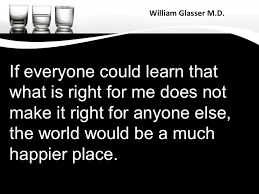 Much of the state of our relationships are a reflection on us. Our actions, our thoughts, our behavior. OR our inaction, negative thoughts, negative behavior. We are a large part of our relationship problems.
The problem is–many people do not want to take ownership of this fact. It is much easier to blame the other person than look at how we contribute to problems in our relationships.
Many of us don’t want to do our part.
Let’s be honest. We put care and effort into the things we value. If you value a certain relationship, you will put in the effort to maintain it, protect it, and keep it.
If you were to reflect on your relationships that you have lost throughout your life, at a certain point, if you were honest…you stopped putting in the effort. You stopped caring. Maybe with good reason–you outgrew the other person OR this was a relationship with a person who had not treated you right but you had tolerated for far too long. Part of life is loss and this includes losing relationships that no longer serve us.
Or maybe it was the reverse situation. The other person showed you they didn’t care. They didn’t put in effort. They didn’t value you or the relationship. They forced your hand into walking away.
Much of the state of our relationships are a reflection on us. Our actions, our thoughts, our behavior. OR our inaction, negative thoughts, negative behavior. We are a large part of our relationship problems.
The problem is–many people do not want to take ownership of this fact. It is much easier to blame the other person than look at how we contribute to problems in our relationships.
Many of us don’t want to do our part.
Let’s be honest. We put care and effort into the things we value. If you value a certain relationship, you will put in the effort to maintain it, protect it, and keep it.
If you were to reflect on your relationships that you have lost throughout your life, at a certain point, if you were honest…you stopped putting in the effort. You stopped caring. Maybe with good reason–you outgrew the other person OR this was a relationship with a person who had not treated you right but you had tolerated for far too long. Part of life is loss and this includes losing relationships that no longer serve us.
Or maybe it was the reverse situation. The other person showed you they didn’t care. They didn’t put in effort. They didn’t value you or the relationship. They forced your hand into walking away.
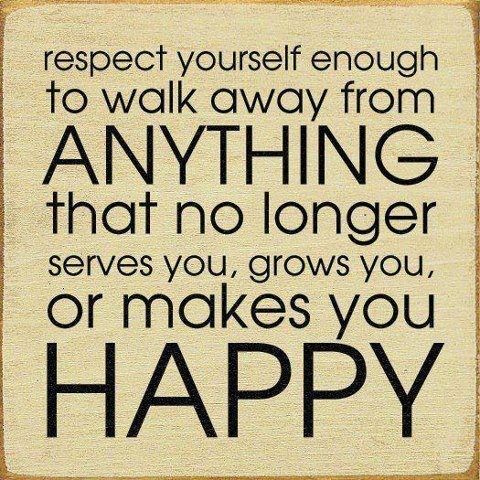 If you were to reflect on the relationships you lost along the way, can you pinpoint a time when you felt the cons outweighed the pros of maintaining it? I think if we are honest with ourselves we can. Or can you pinpoint a moment when you realized the other person didn’t care to maintain the relationship?
Any relationship in my life that has survived the test of time I have put effort into maintaining. The other person has put the effort in as well. It takes two.
Relationships with family members, friends, my partner. I value these relationships and I do what I can to support the individual and the relationship as a whole.
If you want to be mentally healthy research says having meaningful relationships will help you to fight off feelings of anxiety, depression, and anger. Having people to share your concerns, hopes, fears, and challenges with help you stay connected and stable.
Close relationships fight off feelings of loneliness. Loneliness is a silent killer. Social isolation is shown to lead to depression. Being connected is a fundamental human NEED. We all need to feel a sense of love and belonging.
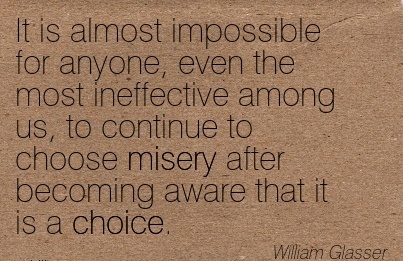
The reality is if you want the benefits of supportive relationships you need to CHOOSE to put effort into being a supportive, healthy person. You get what you give. It very much takes a choice to invest in the relationships in our life.
The truth is our relationships are very much a choice.
Our behavior is a choice. Our relationships are a reflection of our choices.
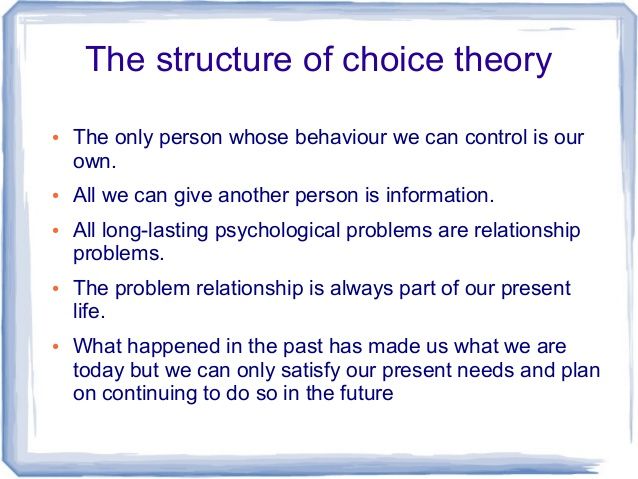
William Glasser, the father of choice theory, says virtually all our behavior is a choice. He posits that most mental health issues, including depression, arise from problems in one’s relationships.
If you were to reflect on the relationships you lost along the way, can you pinpoint a time when you felt the cons outweighed the pros of maintaining it? I think if we are honest with ourselves we can. Or can you pinpoint a moment when you realized the other person didn’t care to maintain the relationship?
Any relationship in my life that has survived the test of time I have put effort into maintaining. The other person has put the effort in as well. It takes two.
Relationships with family members, friends, my partner. I value these relationships and I do what I can to support the individual and the relationship as a whole.
If you want to be mentally healthy research says having meaningful relationships will help you to fight off feelings of anxiety, depression, and anger. Having people to share your concerns, hopes, fears, and challenges with help you stay connected and stable.
Close relationships fight off feelings of loneliness. Loneliness is a silent killer. Social isolation is shown to lead to depression. Being connected is a fundamental human NEED. We all need to feel a sense of love and belonging.
The reality is if you want the benefits of supportive relationships you need to CHOOSE to put effort into being a supportive, healthy person. You get what you give. It very much takes a choice to invest in the relationships in our life.
The truth is our relationships are very much a choice.
Our behavior is a choice. Our relationships are a reflection of our choices.
William Glasser, the father of choice theory, says virtually all our behavior is a choice. He posits that most mental health issues, including depression, arise from problems in one’s relationships.
 I think in popular psychology this concept has played out to a large extent. Many psychological theories focus on the issues that arise from unhealthy relationships with one’s parents. Oedipus complex. Electra complex.
I can say that I have seen as a clinician direct correlation between people who have bad relationships with their parents and their mental health.As a society we jokingly refer to this as having “mommy issues” or “daddy issues” but there is far from a joking matter.
Our relationships, especially key ones like the ones we have with our parents, impact our mental health.
Our relationships have a profound impact on our lives. This is why people who are often in unhealthy or abusive relationships tend to suffer a whole host of mental health ailments. The people we spend the most time with can build us up or break us down.
I think in popular psychology this concept has played out to a large extent. Many psychological theories focus on the issues that arise from unhealthy relationships with one’s parents. Oedipus complex. Electra complex.
I can say that I have seen as a clinician direct correlation between people who have bad relationships with their parents and their mental health.As a society we jokingly refer to this as having “mommy issues” or “daddy issues” but there is far from a joking matter.
Our relationships, especially key ones like the ones we have with our parents, impact our mental health.
Our relationships have a profound impact on our lives. This is why people who are often in unhealthy or abusive relationships tend to suffer a whole host of mental health ailments. The people we spend the most time with can build us up or break us down.
 It is also why people from dysfunctional families tend to develop anxiety, depression, and other disorders.
Our relationships have a direct impact on our mental health.
This is why it is so important to be choosy with who you allow into your life. Who we have relationships with is indeed a CHOICE. It is a choice to keep unhappy relationships in our lives.
It is also why people from dysfunctional families tend to develop anxiety, depression, and other disorders.
Our relationships have a direct impact on our mental health.
This is why it is so important to be choosy with who you allow into your life. Who we have relationships with is indeed a CHOICE. It is a choice to keep unhappy relationships in our lives.
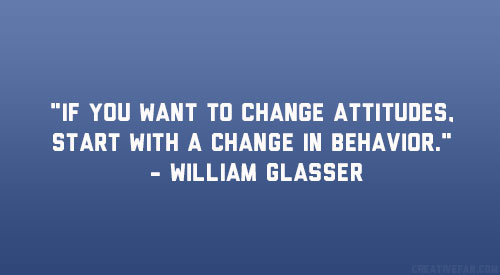 It is also a choice to manufacture problems in a relationship. There are ways of behaving that we bring into our relationships that can either enable healthy, happy relationships or destroy our relationships.
 Many times, the way people try to remedy relationship problems is by attempting to change others.
But what if we instead focused on changing ourselves? Something we can actually be successful at. If we change our behavior, it will certainly impact the response we get from others.
Many times, the way people try to remedy relationship problems is by attempting to change others.
But what if we instead focused on changing ourselves? Something we can actually be successful at. If we change our behavior, it will certainly impact the response we get from others.
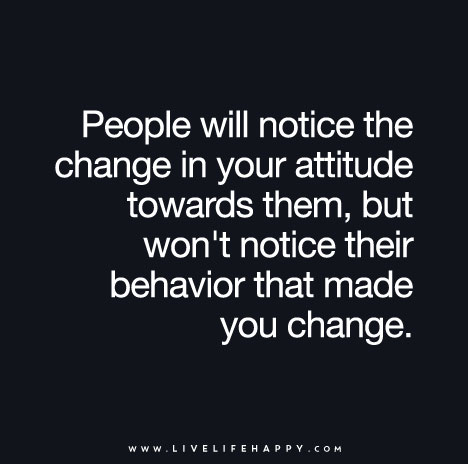 If you want to have happy, healthy, enduring relationships you need to look at YOUR behavior and how you behave in your relationships.
Is your behavior driving people towards you or driving people away from you?
If you enjoyed this article and are interested in seeking counseling with me:
If you want to have happy, healthy, enduring relationships you need to look at YOUR behavior and how you behave in your relationships.
Is your behavior driving people towards you or driving people away from you?
If you enjoyed this article and are interested in seeking counseling with me:


 Erin Theodorou, M.Ed, LPC, ACS, NCC