
 No matter who we are we all have our days where we just aren’t feeling great about ourselves. It can be situational such as a recent break up, a falling out with a friend, trouble with one of our kids, health issues (our own or someone we love’s), weight gain, financial stress, an issue at work, our house looking a fright. Insert crummy feeling here. When we are feeling bad about ourselves or our current situation, it can affect our life in numerous ways.
Feeling bad about yourself can color your view of the world—making us feel negative about everyone and everything. When we are in this state, we tend to bring others around us down too. We drive people away from us with our negativity. Let’s be fair here. Life is hard enough without being around a Negative Nancy or Debbie Downer. No one is going to want to be in your company if you spew negativity. When we put negativity out into the universe, we bring down the vibe of the room and the moods of others. I refer to this behavior as anger dumping–where we dump our negative emotions on someone else. For many people this helps them feel better. Yet this type of behavior will drive people away from us which in turn will only make us feel worse about ourselves.
No matter who we are we all have our days where we just aren’t feeling great about ourselves. It can be situational such as a recent break up, a falling out with a friend, trouble with one of our kids, health issues (our own or someone we love’s), weight gain, financial stress, an issue at work, our house looking a fright. Insert crummy feeling here. When we are feeling bad about ourselves or our current situation, it can affect our life in numerous ways.
Feeling bad about yourself can color your view of the world—making us feel negative about everyone and everything. When we are in this state, we tend to bring others around us down too. We drive people away from us with our negativity. Let’s be fair here. Life is hard enough without being around a Negative Nancy or Debbie Downer. No one is going to want to be in your company if you spew negativity. When we put negativity out into the universe, we bring down the vibe of the room and the moods of others. I refer to this behavior as anger dumping–where we dump our negative emotions on someone else. For many people this helps them feel better. Yet this type of behavior will drive people away from us which in turn will only make us feel worse about ourselves.
 Besides hurting our relationships, often when we aren’t feeling very high on ourselves, we make matters worse with our chronic negative self-talk.
A running dialogue in your mind can begin to play caustic self-talk. I am not making enough money. I am too fat. My house isn’t organized enough. My kids won’t listen. Why won’t my cholesterol numbers budge? I have too much to do. I am getting so old. Are those gray hairs? Why is my blood pressure so high? I hope I don’t lose my job. What am I going to do when my kids go to college? Does my wife still find me attractive? Why can’t I finish what I start? What’s next? Am I doing enough?
We all have a unique “tape” that plays in our mind.
Besides hurting our relationships, often when we aren’t feeling very high on ourselves, we make matters worse with our chronic negative self-talk.
A running dialogue in your mind can begin to play caustic self-talk. I am not making enough money. I am too fat. My house isn’t organized enough. My kids won’t listen. Why won’t my cholesterol numbers budge? I have too much to do. I am getting so old. Are those gray hairs? Why is my blood pressure so high? I hope I don’t lose my job. What am I going to do when my kids go to college? Does my wife still find me attractive? Why can’t I finish what I start? What’s next? Am I doing enough?
We all have a unique “tape” that plays in our mind.
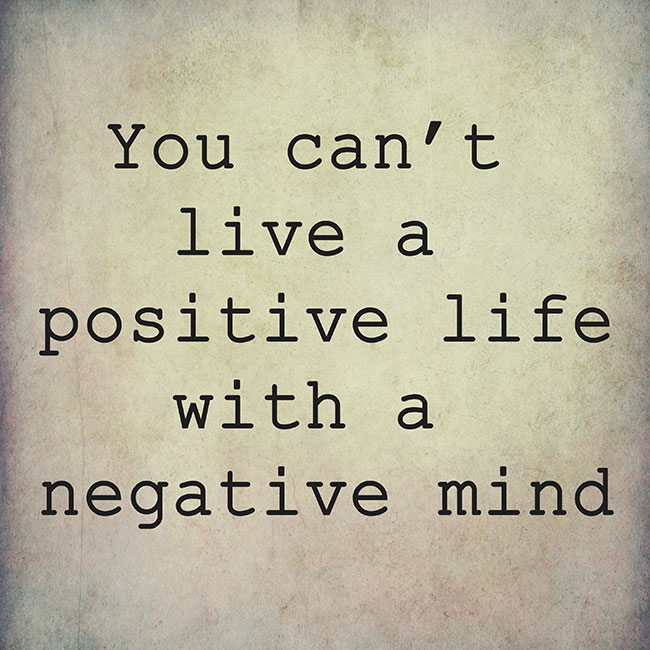 What are the thoughts that run through your mind when you are spiraling into your “negative zone?” We all have negative thoughts we tell ourselves when we are feeling down and out. Our thoughts are very subjective and usually are a reflection of our values. If you are a parent, maybe you get down on yourself about your parenting. If you are self-conscious about how you look, maybe you beat yourself up for how you are aging or how much weight you have put on through the years. If you are career-oriented, you chide yourself for things you could have done better with clients or colleagues. If you are relationship oriented, you focus on the state of your marriage or relationship. If you are into fitness, you beat yourself up about not getting below a 7 minute mile.
 We all have unique values and different things we tend to focus on. Yet it seems to be a universal experience that we are ALL our own worst critic.
Too often we do not question the thoughts we think. We just accept our thoughts at face value. The way we talk to ourselves is going to impact how we feel. CBT (cognitive behavior therapy) and REBT (rational emotive behavior therapy) are centered around how we feel is largely a result of the thoughts we think. Thus the goal in treatment is to work on a client’s cognitions and thought processes.
We all have unique values and different things we tend to focus on. Yet it seems to be a universal experience that we are ALL our own worst critic.
Too often we do not question the thoughts we think. We just accept our thoughts at face value. The way we talk to ourselves is going to impact how we feel. CBT (cognitive behavior therapy) and REBT (rational emotive behavior therapy) are centered around how we feel is largely a result of the thoughts we think. Thus the goal in treatment is to work on a client’s cognitions and thought processes.
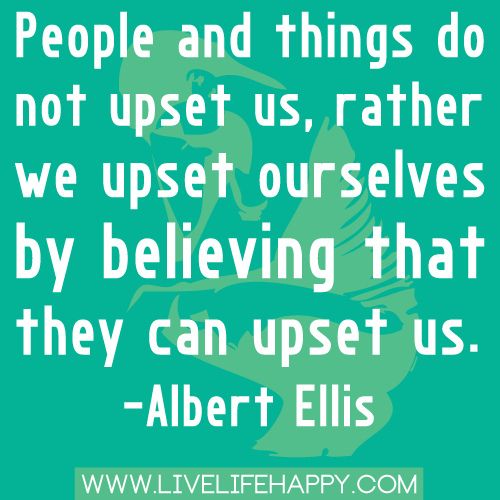 The way we think is going to have a direct impact on how we feel AND act. All too often we let a bad day spiral. Our thoughts turn pessimistic. We begin to view a bad day as a bad life. A bad work day as a bad job. A bad fight as a bad relationship. A lazy day as us just being lazy. We generalize negative feelings and blow things out of proportion.
The reality is some days are better than others.
We have days we are more productive than others. When days go less well, we usually are harder on ourselves.
But feeling bad about yourself won’t get you anywhere you want to go. The negative self-talk will zap your motivation. It will color the way you feel about others. You will begin to feel exhausted–mentally and physically. It was impact the way you feel about yourself. It can make you physically ill.
When you start to feel in a down mood…ask yourself what IS IT that I am focusing on?
Maybe you will find you are focusing on something you don’t want or something you don’t care for.
Perhaps you are focusing on….a person you don’t like, a habit you have you are struggling to kick, a situation at work that is driving you nuts, a problem your kid is having that you can’t seem to help her to overcome, an ongoing point of contention with your spouse, a number on the scale that won’t budge, and so on and so forth.
The way we think is going to have a direct impact on how we feel AND act. All too often we let a bad day spiral. Our thoughts turn pessimistic. We begin to view a bad day as a bad life. A bad work day as a bad job. A bad fight as a bad relationship. A lazy day as us just being lazy. We generalize negative feelings and blow things out of proportion.
The reality is some days are better than others.
We have days we are more productive than others. When days go less well, we usually are harder on ourselves.
But feeling bad about yourself won’t get you anywhere you want to go. The negative self-talk will zap your motivation. It will color the way you feel about others. You will begin to feel exhausted–mentally and physically. It was impact the way you feel about yourself. It can make you physically ill.
When you start to feel in a down mood…ask yourself what IS IT that I am focusing on?
Maybe you will find you are focusing on something you don’t want or something you don’t care for.
Perhaps you are focusing on….a person you don’t like, a habit you have you are struggling to kick, a situation at work that is driving you nuts, a problem your kid is having that you can’t seem to help her to overcome, an ongoing point of contention with your spouse, a number on the scale that won’t budge, and so on and so forth.
 What can you do when you are feeling down to boost ourselves up?
1.Reduce stress. We are more likely to get stuck in a negative spiral when our life is more hectic than we care for. Try to find ways to mitigate stress–focus on the musts, not the shoulds of your to-do list. Accept your needs, manage your time, practice relaxation. Learn to recognize the signs of your body’s stress response (difficulty sleeping, being easily angered, feeling depressed, having low energy, increased substance use).
2.Schedule things you enjoy into your week. Too often we forget about our self-care. Make sure you have time throughout the week to get in some things you enjoy–a tv show, a book, a workout, coffee with a friend. If you need to, literally schedule “fun” into your weekly planner. Adults need downtime and fun just as much as kids do.
3.Watch what you eat. Bad nutrition does not help our mood. In fact much research shows a direct correlation between an unhealthy diet and mood disorders. Make an effort to focus on a healthy diet as the foods we eat certainly impact our mental well-being. Do some research on nutritional psychiatry if you feel your diet can be impacting your moods.
4.Exercise. Even if you only have 15 minutes to go take a walk outside your office. Every little bit helps. Exercise has a way of getting us motivated, giving us energy, and improves our self-esteem. It also helps to break up the monotony of our day.
5.Limit time spent with negative people. You do not need other people’s negativity bringing you down. Set boundaries with these energy vampires. These people should get the least of our energy and time–anyone with a bad attitude, fatalistic outlook, disdain for other people, catastrophic thinkers—-they have got to go. These people have a way of creating problems for themselves AND others. It will be hard to not feel misery around miserable people.
6.Connect with the people you love. Too often we let weeks go by without calling a friend or family member. Texting is NOT the same. Try to figure out a way to connect with the people you love—call on the drive home from work, stop by on your Saturday morning bagel run, make the effort to connect.
7.Ask for help. We are all in this together. No man is an island. If you are struggling, reach out for support. Don’t let pride or fear get in the way. Sometimes we begin to self-isolate when we aren’t feeling too happy with ourselves. Withdrawing from people will only make you feel worse.
8.Meditate. Quieting our mind can reduce stress, improve sleep, increase focus, improve relationships, and improve our mood. Meditating has a way of stopping our judgmental thoughts and bringing us back into the present moment. It can help you stop spinning stories, thoughts, fantasies about yourself (and other people). Meditation cultivates calmness from within and helps you to take your thoughts (and self) less seriously.
9.Keep going. Give yourself credit for how hard you work. Action breeds confidence. Often when we are feeling down on ourselves, we get paralyzed into inaction by our negative thoughts. Don’t sit home thinking about it, just do it.
10.Watch your thoughts. Notice when you find yourself falling into a negative spiral. Thinking is the way we talk to ourselves. Often we talk to ourselves in a way we would never dare speak to others. Try to take note of your mental habits–the stories you tell yourself, your fantasies, your ideas. Learning to observe yourself is pivotal to monitoring your actions and changing how you feel.
We all struggle from time to time. No one is immune from feeling bad about themself every now and again. Part of being human is realizing we are all works in progress. We will never be “done” or “complete.” (Unless we are dead–I don’t think any of us want that).
We are always growing and evolving.
Try to feel good about yourself regardless of what trials and tribulations life brings. If you continually struggle with this, counseling may be the place to begin the journey to self-acceptance.
What can you do when you are feeling down to boost ourselves up?
1.Reduce stress. We are more likely to get stuck in a negative spiral when our life is more hectic than we care for. Try to find ways to mitigate stress–focus on the musts, not the shoulds of your to-do list. Accept your needs, manage your time, practice relaxation. Learn to recognize the signs of your body’s stress response (difficulty sleeping, being easily angered, feeling depressed, having low energy, increased substance use).
2.Schedule things you enjoy into your week. Too often we forget about our self-care. Make sure you have time throughout the week to get in some things you enjoy–a tv show, a book, a workout, coffee with a friend. If you need to, literally schedule “fun” into your weekly planner. Adults need downtime and fun just as much as kids do.
3.Watch what you eat. Bad nutrition does not help our mood. In fact much research shows a direct correlation between an unhealthy diet and mood disorders. Make an effort to focus on a healthy diet as the foods we eat certainly impact our mental well-being. Do some research on nutritional psychiatry if you feel your diet can be impacting your moods.
4.Exercise. Even if you only have 15 minutes to go take a walk outside your office. Every little bit helps. Exercise has a way of getting us motivated, giving us energy, and improves our self-esteem. It also helps to break up the monotony of our day.
5.Limit time spent with negative people. You do not need other people’s negativity bringing you down. Set boundaries with these energy vampires. These people should get the least of our energy and time–anyone with a bad attitude, fatalistic outlook, disdain for other people, catastrophic thinkers—-they have got to go. These people have a way of creating problems for themselves AND others. It will be hard to not feel misery around miserable people.
6.Connect with the people you love. Too often we let weeks go by without calling a friend or family member. Texting is NOT the same. Try to figure out a way to connect with the people you love—call on the drive home from work, stop by on your Saturday morning bagel run, make the effort to connect.
7.Ask for help. We are all in this together. No man is an island. If you are struggling, reach out for support. Don’t let pride or fear get in the way. Sometimes we begin to self-isolate when we aren’t feeling too happy with ourselves. Withdrawing from people will only make you feel worse.
8.Meditate. Quieting our mind can reduce stress, improve sleep, increase focus, improve relationships, and improve our mood. Meditating has a way of stopping our judgmental thoughts and bringing us back into the present moment. It can help you stop spinning stories, thoughts, fantasies about yourself (and other people). Meditation cultivates calmness from within and helps you to take your thoughts (and self) less seriously.
9.Keep going. Give yourself credit for how hard you work. Action breeds confidence. Often when we are feeling down on ourselves, we get paralyzed into inaction by our negative thoughts. Don’t sit home thinking about it, just do it.
10.Watch your thoughts. Notice when you find yourself falling into a negative spiral. Thinking is the way we talk to ourselves. Often we talk to ourselves in a way we would never dare speak to others. Try to take note of your mental habits–the stories you tell yourself, your fantasies, your ideas. Learning to observe yourself is pivotal to monitoring your actions and changing how you feel.
We all struggle from time to time. No one is immune from feeling bad about themself every now and again. Part of being human is realizing we are all works in progress. We will never be “done” or “complete.” (Unless we are dead–I don’t think any of us want that).
We are always growing and evolving.
Try to feel good about yourself regardless of what trials and tribulations life brings. If you continually struggle with this, counseling may be the place to begin the journey to self-acceptance.
 If you enjoyed this article and are interested in seeking counseling with me:
https://www.psychologytoday.com/us/therapists/erin-doyle-theodorou-nutley-nj/243617
Erin Doyle Theodorou, M.Ed, LPC, NCC
THEODOROU THERAPY, LLC
590 Franklin Ave.
Suite 2
Nutley, NJ 07110
973-963-7485
etheodorou@theodoroutherapy.com


 Erin Theodorou, M.Ed, LPC, ACS, NCC