Self Deception: How We Work Hard to Escape the Truth

th_richard_p_feynman_quote_the_first_principle_is_that_you_must_not_fool_yourself_and_you_are_the_easiest_person_to_fool_5645

People deceive each other all the time but how often we deceive ourselves is less often acknowledged.

The only way others can deceive you is if first you deceive yourself.

We fool ourselves into believing things that are FALSE and refuse to believe things that are TRUE. This is the basis of all self-deception.

We lie to ourselves about the smallest details–about how much we REALLY ate today to how much we weigh on our driver’s license.  We lie to reflect our aspirational goals. We lie to uphold social ideals. We lie about our most important life choices-why we picked a career path or married our partner.

The truth is your mind is inherently self-deceptive. If you ever studied philosophy, you likely studied Rene Descartes. He did an interesting thing in that he began his philosophy by doubting ABSOLUTELY EVERYTHING.

Everything would come under doubt, under skepticism. The point is he, like many other philosophers, pointed out something about our mind: it is a self-deception machine.

How often do you question the beliefs you hold as true? Have you ever challenged your thoughts and ideals?

Your own mind…the extent of its self deception..can be incredible. There are many ways our minds deceive us. So many ways that to list them would be endless.

The scary part is your mind has complete power of you. The number one mistake people mistake is assuming their mind can be trusted. That their feelings can be trusted. Both of which are fluid. This is why developing self-awareness and a mindfulness practice can be so pivotal if you are struggling with anxiety, depression, or any ongoing strong, negative emotions.

How do you know what you KNOW is RELIABLE?

Your mind will use every opportunity to deceive you to protect you from pain. Many truths are painful.

In our day-to-day lives, we lie to ourselves about hard truths we do not want to face. Our declining health. Our dwindling job prospects. Our aging reflection. Our growing waistline. Our passionless life. Our unloving family. Our poor financial decisions. Our child’s bad behavior. Our feelings of depression. The list goes on and on.

The truth often hurts. Often if we are forced to face the truth, we attack the messenger. 

In self-deception, we hurt ourselves and those around us by refusing to live authentically.

We lie to ourselves about the way we mistreat others. We lie to ourselves about the way we mistreat ourselves.

The truth is self-deception is a way of escaping from reality. Living in a world where we do not have to fact our real problems. The hard truths. To take a long hard look at how our life has turned out. To honestly look at the state of our relationships–including the most important one we will ever have which is with ourself.

Self deception is a popular mechanism people use to prevent themselves from feeling shame or guilt while at the same time allowing themselves to escape from something that they don’t want to face.

It is a way for people lie to themselves and justify bad behavior. To rationalize inaction and the inability to follow through. The failure to make the call. The excuse for never getting started.

Self deception can take many forms: denial, rationalization, repression, dissociation.  People push away any opposing evidence of a truth they do not want to admit. It is much deeper than outright lying, exaggeration, white lies, or twisting the truth. Self-deception is more complicated and often a subconscious response to a threat.

Consider the following example. A person drinks too much. If someone points out that there is an apparent drinking problem, the person in turn gets angry. Not angry at themself but at the person who points it out. He denies the drinking problem and goes on the attack for the mere suggestion of such a thing.

Yet the person in question drinks every day. Perhaps they have gotten a DUI or been arrested because of behavior taken when intoxicated.  Maybe he drinks on the job or has been let go from a job because of coming to work drunk. This person is not lying when he says he is not an alcoholic but truly believes they are not an alcoholic. Because to admit such a truth to himself would be too painful to bear.  Thus despite all evidence to the contrary, this person refuses to accept the truth.

As a counselor, I am frequently confronted by the fact that people often lie. Not to others. But to themselves. A much harder type of deception to admit or recognize. It takes much psychological strength to be honest with ourselves. I believe self-deception to be a big part of why many people are unhappy in their lives.  The truth is many people don’t have the emotionally wherewithal to face the truth and deal with the consequences of said truth.

Too often people fool themselves into believing something is true when it is false. People lie to themselves about the trivial but also about life altering realities. Refusing to see their job is killing them. That their mother is unloving. That their partner is abusive.

It is much easier to recognize self-deception in others than in ourself. Thus why as long as your mind can fabricate enemies for you to fight against that is great. It is a great distraction from having to look at yourself and the life you are living.  This is why some people seem to always be in conflict with others. It helps keep them from having to face themselves. They keep the focus external to avoid their internal struggle.

Recognizing the lies people tell themselves is easy. Have you ever been an argument with someone and they said something totally and utterly false with such conviction it almost took your breath away? Perhaps you could not tell if they were just a truly skilled liar or if they truly believe the lies the were telling. Self-deception can run deep.

Too often we can see where someone else is living a life, but cannot see such in ourself.

We have a basic need to think well of ourself. The easy way to have a positive self-image is to hide our defects.

Understanding the psychology of self-deception can help you to comprehend why some people can do horrendous things yet feel totally justified.

We see this play out often when it comes to discussing opposing political views. You can show someone facts to the contrary of what they believe. Even if the face of undeniable evidence, they refuse to believe it. It is amazing the lengths people will go not to face the truth.

Self-deception can ruin your life if you do not recognize it. The mind wants to a construct a reality for you that keeps you comfortable. To keep you safe. To keep you from experiencing pain.

People need to understand the mind’s ability to self-deceive. It can construct illusions that are indistinguishable from reality.

Your mind governs everything: your motivations, desires, likes, dislikes, emotions, your sense of certainty, sense of doubt, you memories, your narratives, your judgments, criticisms, how you derive meaning, what you focus on, what you consider real, what you consider false.

I ask you to reflect long and hard on the following:

What aspects of yourself are you afraid to take a long hard look at?

What truth about your life are you unwilling to admit?

What lies are you telling yourself about the relationships in your life?

Who in your life have you been avoiding facing the truth about?

What aspect of yourself do you avoid facing?

In what ways do you use escapism to avoid reality? Binge watching tv, video games, drinking, drugs, emotional eating, smoking, etc.

Answering these questions can be painful depending on where you are at in your life.

Overcoming the lies we tell ourselves is not easy.

Ask yourself, how do often do you just believe whatever your mind tells you? Part of cognitive behavioral therapy includes challenging your cognitions–the thoughts you think on autopilot. A central part of CBT is looking at our cognitive distortions: how the thoughts we think DECEIVE us.

Polarized thinking, black and white thinking, all or nothing thinking, jumping to conclusions, catastrophizing, overgeneralizing, emotional reasoning…just a few of the ways our thoughts may deceive us.

We deceive ourselves to avoid the givens of life: we will be hurt, people will let us down, we will let ourselves down, people we love will die, we too will eventually die…

As adults, we will most want to lie about painful psychological realities we experienced as children and how it affects the adults we are today.

Maybe as a child, your parents divorced. The breaking up of your family almost destroyed you…

Perhaps you had a parent who made you feel unwanted or unloved….as an adult, you fear intimacy and are hypervigilant of rejection.

Or maybe you had a parent who made you feel less than. Now as an adult, you make others feel less than to keep the attention off yourself.

Maybe you felt ugly as a child. You learned to eat in response to emotional pain. Now as an adult you are overweight because you eat for reasons other than hunger.

Or perhaps a kid you watched your parents constantly fight making you HATE and AVOID conflict. NOW as an adult, it is a struggle to even acknowledge negative feelings.

Although each of our childhoods are unique, what we learned in childhood will be exemplified in the lies we tell ourselves as adults.

Understanding our self-deception is the most important thing we can do to live a fulfilling life. Only when we accept who we truly are can we begin to change.

We are responsible for our lives. To lie to ourselves is to cheat ourselves of living an authentic life.

Do you compromise yourself to avoid the pain of facing the truth? Reflect on the ways you deceive yourself on a daily basis.

Self deception leads to pain and regret. We make choices with harmful consequences to ourselves and others. We choose not to change even when it causes pain to ourselves and those around us. We use self-deception to justify such behavior.

When we don’t take responsibility for who we are we hurt ourselves and everyone around us.

How do we start acknowledging the lies we tell ourselves and become more honest? The first step is self-awareness. Become an observer of yourself.

When you have a strong emotional reaction—pause.

When what you say doesn’t match how you act—pause.

Learn to respond NOT react.

Recognize when you are thinking irrational thoughts…and pause.

Recognize when your emotions are overriding your rational mind…and pause.

Often we becomes so focused on others in our lives. Why they said this. Why they did that. Never looking at our contribution to the relationship or the role we played.

When you are unresolved about someone or something…pause.

Ask yourself…what does my reaction to this situation say about me? As we become more honest and aware we become more responsible for our choices. The need to self-deceive lessens as we are living a life more true to ourselves.

Not changing when confronted with the truth is a choice. We worry about what facing the truth may mean.

The best way to overcome self-deception is counseling. It will be probably the only relationship in your life that exists solely to benefit you.

Confronting our self-deception is a lifelong process. If we are courageous enough to change, life will offer us new opportunities to understand ourselves. There is always more to learn.

Be more honest. Choose to become more honest with yourself. Choose to live the most fulfilling life you can–you only got one.

To schedule a counseling session with me (AND if you are a reader who lives in New Jersey):

https://anewcounselingservices.com/erin-theodorou%2Cm-ed-%2C-lpc

Erin Doyle Theodorou, M.Ed, LPC, NCC

Anew Counseling Services LLC

617 Oradell Avenue, Suite 3, Oradell, New Jersey, 07649

(551) 795-3822

etheodorou@anewcounselingservices.com

10 Habits of Highly Miserable People

a2

It is often said that happiness is a choice. For a miserable person, they often choose to make themselves (and those around them) miserable.

The unfortunate reality is not everyone wants to be happy. Most people with such a disposition never seek mental health treatment. They do not think they are the problem but the problem is “out there” ie in the external world.

Miserable people often have a woe is me attitude. This victim mentality grates on those around them. This mentality is exhausting to be around. Miserable people are often allergic to responsiblity.  A miserable person believes people are always out to get them.  They often portray themselves as victims who should be rescued, deserving of our sympathy and attention.

Below are some common ways you can spot a miserable person:

1)They love to blame others. Miserable people are often martyrs—it works as a get out jail free card for taking responsibility for their own life. They love to make themselves miserable under the guise of “helping” others. Having a martyr complex essentially involves pointing the finger at other people or situations in your life and blaming them for your disappointments, unhappiness, and emotional turmoil. The reality is no one is responsible for your disappointments, unhappiness, and emotional turmoil EXCEPT you. We all experience these feelings, but we must learn to process our feelings and move on. Miserable people like to stay stuck in the cycle of blame.

2)They love to pick fights. Miserable people love to make other people miserable. Misery loves company right? People who are constantly unhappy love to take it out on other people. Some people are disputatious and repel people with their snarky comments, rude remarks, and negative demeanor.  If antagonistic behavior is an ongoing thing with someone, you are likely dealing with an habitually MISERABLE person.

3)They will get involved in other people’s drama. Miserable people often feel their life is boring. How do they spice it up? By getting involved in the drama of others. (Some go as far as to create drama between others to watch it unfold). Miserable people find drama energizing. Happy people tend to disengage from drama and the people who create it. For miserable people, drama is a way of life.

4)They always expect the worst (of themselves, others, and life in general). Life sucks and all the worst thing that can happen, happens to them, is the mantra of a miserable person. Miserable people often expect the worst of everyone even the people they claim to love. They think other people have bad intentions toward them. The truth is most people don’t have bad intentions but are flawed people. You can always tell a person with bad intentions because when called on their behavior, it gets worse NOT better. They will get more aggressive, more demeaning, more negative.

5)They hate people. This kind of follows from #4. All of us experience negative thoughts from time to time. But a miserable person will make it known how much they despise their fellow-man (which in all likelihood includes you). A miserable person never has a good thing to say about anyone. People are the worst, people are selfish, people are liars, are common refrains from a miserable person.

6)They are selfish. Miserable people put themselves first (but project that other people are selfish, ironic I know). A miserable person drives people away from them because of their negative behavior. Life is hard enough, most people don’t want to spend their time with a Debbie Downer. Miserable people only care about themselves and their own troubles. Only their perspective matters.

7)They are envious of other people. A miserable person is NEVER happy for someone else. Miserable people think someone else’s success or good fortune takes away from them. They view life as a zero sum game due to their scarcity mindset. Miserable people do NOT have an abundance mindset that there is enough love, success, and resources to go around. For them, life is dog eat dog.

8)They hate change. Miserable people hate anything new or different. Change requires effort and miserable people usually don’t want to step outside of their comfort zone. Miserable people will complain about feeling “stuck” but will refuse to do anything to change their circumstances.

9)They love to complain. Complaining is their favorite pastime. This ties in with the blaming, playing victim, and seeking attention/sympathy while playing the role of martyr.  Chronic complainers seek validation and sympathy from those around them. Woe is me. For chronic complainers, every person, every situation, is an opportunity to go on a fault-finding mission.


a1


10)They never do anything to improve their life. Most miserable go through life stagnant. The game of life is too hard so they refuse to play. Yet they resent people who are still IN the game.  The only game a miserable person plays is the blame game. Miserable people are addicted to unhappiness and it becomes a way of life for them.

What are some common root causes of a miserable personality?

  • Low self-esteem
  • The appeal of martyrdom
  • A belief that being miserable is inevitable
  • Underlying depression and anxiety
  • Feeling trapped by your circumstances
  • Living with chronic stress
  • Resistance to being healthy–physically, mentally, and emotionally

The truth is our thinking creates our feelings. If you are chronically unhappy, you need to take a look at your self-talk and how you think about others and relate to the world. If someone or something is truly making you unhappy, you can leave the relationship or situation. 

a2

Living in the free world, the truth is we ALWAYS have a choice. It may not be an easy choice or a simple solution. Yet you have the freedom to not need to tolerate mistreatment or miserable circumstances. 

If you find your struggling with feelings of misery or a miserable person in your life, counseling may be a great place to begin the journey to a happier life.

To schedule a counseling session with me (AND if you are a reader who lives in New Jersey):

https://anewcounselingservices.com/erin-theodorou%2Cm-ed-%2C-lpc

Erin Doyle Theodorou, M.Ed, LPC, NCC

Anew Counseling Services LLC

617 Oradell Avenue, Suite 3, Oradell, New Jersey, 07649

(551) 795-3822
etheodorou@anewcounselingservices.com


The Importance of Being Independent and Taking Ownership of Your Life

As a society, we have become very dependent on other people.

Of course, when we are children we have to rely on others. Children need others to provide food, shelter, safety, and the right environment for them to grow and achieve their potential. We organically become more independent as we progress through life. Yet some people never fully transition to self-reliance and total independence. They go from depending on their parents to depending on their partner or some other close relationship in their life.

The truth is as a culture we have a tendency to rely on others far more than it is necessary.

Depending on your life circumstances, you may be dependent on people for emotional support. Or financial support. Or for your sense of self.

Perhaps you are someone who seeks the approval of others. Or needs to be in a relationship to feel okay. Or your financial well-being is dependent on your parents or your spouse.

b1

At certain developmental stages and life stages, certain dependence is appropriate. For instance during adolescence, it is appropriate to seek approval of others as it is part of growing up. Anyone who studied Piaget knows about the imaginary audience and personal fable of adolescence. Teens may mistakenly believe that everyone around them is watching and judging them, scrutinizing their every move, and can become painfully self-conscious as a result.  But this is a phase we all experience (although some people never seem to outgrow it).

There is also nothing wrong with moving back in with your parents after college while seeking employment or staying home with your kids when they are young and depending financially on your partner. Or when you reach your golden years, depending on the assistance of others to help you, is often needed. Different life circumstances can create extenuating circumstances where we need to depend on the support of others.

Yet over the course of life, being independent, is vital to being a well-rounded, healthy functioning person. Being independent means being able to take care of your own needs and to make and assume responsibility for your decisions while considering both the people around you and your environment.

self-re·li·ance

noun

reliance on one’s own powers and resources rather than those of others.

Being independent and able to support yourself, in all aspects of life, remains the cornerstone of a well-adjusted person. Independence refers to all aspects of your life including financial, career, emotional, personal beliefs and values.

a1.jpg

 It is extremely empowering knowing that you are in control of your own life and your own choices.  Financially, emotionally, mentally, spiritually. You do not need the validation or support of others to be okay. Human nature being what it is, you may prefer it, but you do not NEED it.

There are many forms of dependence on others people struggle with but some of the most common include codependency, financial dependency, and emotional dependency. Often times such issues are what lead people to come to counseling. 

c2

Signs of codependency include:

  • Having difficulty making decisions without advice and reassurance from others
  • Having difficulty assuming responsibility for your life
  • Having difficulty communicating in a relationship
  • Having difficulty disagreeing with others out of fear
  • Valuing the approval of others more than valuing yourself
  • Lacking trust in yourself and having poor self-esteem
  • Having fears of abandonment or an obsessive need for approval
  • Having difficulty starting projects or doing things on your own
  • Having an unhealthy dependence on relationships, even at your own cost
  • Having anxiety or negative feelings when alone
  • Having an exaggerated sense of responsibility for the actions of others
  • Having difficulty managing and defending personal boundaries

Signs of financial dependency:

  • You feel resentment or anger because the money you receive seems to come with strings attached, but you’re too scared of being cut off to say anything.
  • You have never been able to financially support yourself through your own endeavors
  • You lack even the most basic financial know-how, such as how to balance a checkbook or read a bank statement
  • You’re in a physically or verbally abusive relationship, or you’re simply unhappy with your living situation, but you worry you won’t be able to support yourself if you leave
  • You lack self-confidence and ambition and are scared you can’t support yourself
  • You have no idea what your family income level, net worth, or cash flow is

x.png

Some symptoms of emotional dependency:

  • Constant and obsessive need to be close to other people
  • Constant insecurity about the future
  • Feeling of not being good enough to be with the other person
  • Obsessive fear of losing love
  • Constant feeling of guilt if they don’t pay total attention to their partner
  • Acceptance of psychological and physical suffering, for fear of losing the relationship
  • A constant and dominant feeling of anxiety

Many forms of dependence can lead to emotional distress. 

At the end of the day, you only have yourself to fall back on, so it is a must to be able to handle things on your own. All relationships end at some point or another, that is an inescapable truth. You never know when someone you depend on may pass away. Or leave. In life, anything is possible. 

Many people do not want to make choices on their own because they do not want to be responsible for the outcome. Taking responsibility can be terrifying. It is easier to blame others than to take ownership.

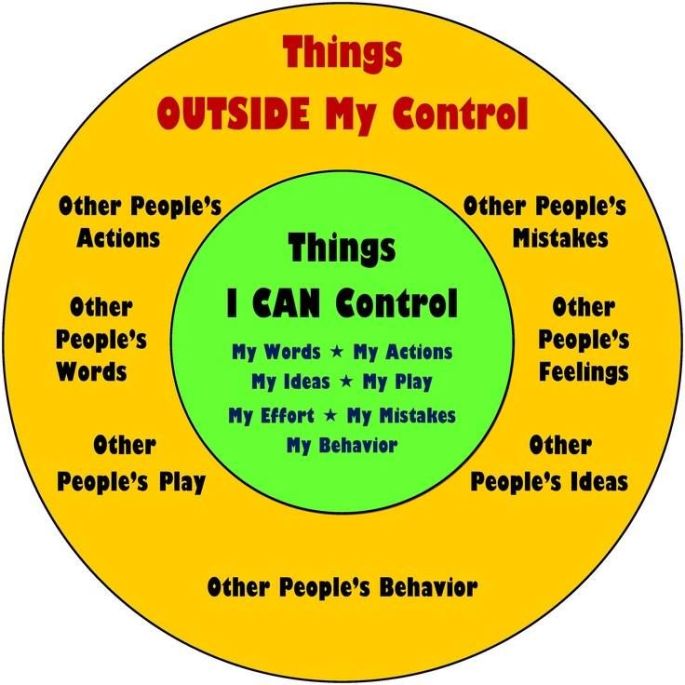
Taking ownership means embracing your power to create your own future.

As a clinician, many people come to counseling because they are unhappy about a certain aspect of their life. Yet before a person can change, they must take ownership that their choices and behavior that has gotten them to this point.  It is NOT the same thing as taking blame.

Taking ownership means you have CONTROL over your life.  Until you take ownership for your actions or failures, it’ll be very difficult for you to develop self-respect or even have the respect of others.

A person cannot be independent and simultaneously not take ownership for their life. Everything in your life requires you to take ownership: the good, the bad, the ugly.

A lot of people don’t want to hear this truth. I hear clients offer up excuses in sessions time and time again for an aspect of their life they find undesirable. We all indulge in this from time to time but at the end of the day everything in your life is a result of the choices you have made.

Your finances…your responsibility

Your relationships….your responsibility

Your health…..your responsibility

Your career….your responsibility

Your (underage) kids…..your responsibility (once they are adults, THEIR responsibility)

Your happiness….your responsibility

Your peace of mind….your responsibility

aaa1.jpg

To take responsibility for your life, is to take responsibility for your thinking, feeling, speaking and acting. You create your life with your thoughts, feelings, words and actions.

Stop blaming your partner, parents, economy, your upbringing for your misfortune.

Stop complaining. Complaining is another form of blaming and playing victim as if you have no choice. If you do not like something, leave the situation, change the situation, or accept it.

Realize happiness is an inside job.

Be the gatekeeper of your life and refuse to have a rerun of the same bad  behaviors, thoughts, and experiences of yesterday if they do not get you want you want in life.

When you take responsibility for your life and experience, you step into a place of calm confidence. When you are independent, you feel calm because you know that you are consciously in charge of yourself and that you can choose how you respond.

Standing on ones own feet is important. If you feel this is a struggle for you, counseling may be a good place to start the process of becoming more independent.

To schedule a counseling session with me (AND if you are a reader who lives in New Jersey):

https://anewcounselingservices.com/erin-theodorou%2Cm-ed-%2C-lpc

Erin Doyle Theodorou, M.Ed, LPC, NCC

Anew Counseling Services LLC

617 Oradell Avenue, Suite 3, Oradell, New Jersey, 07649

(551) 795-3822
etheodorou@anewcounselingservices.com


Why We Love Putting People in a Box and Why We Should Reevaluate Our Views on Ourselves, Others, and Life In General

On this journey through life, we are different people at various points in our journey. Surely you are not the same person at 48 that you were at 18.

a3

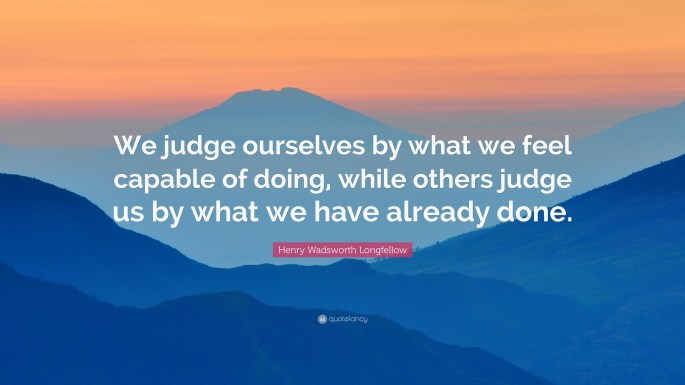
Yet the people in our lives often view us as who we were when they met us. More often than not it will be a struggle for them to shift their perception of you. Once they view you a certain way, regardless of the changes and progress you make in your life, it may be a challenge for them to take you out of the “box” they put you in.

This is why if you ask five people to describe someone, you will likely get five extremely varied answers. We meet people at different points in time impacting our perception of the individual.

Even our own self-concept may be reflective of a point in time that no long holds true today. Ask yourself when is the last time you took stock of who you are TODAY not who you were years ago? Do you still view yourself as an extrovert because growing up you liked to go out and socialize but now you spend your weekends at home on the couch dreading the mere thought of going to a party? Do you consider yourself a career driven person but have not been in the workforce in five, ten, fifteen years? Do you view yourself as athletic but have not been in shape since your college years? Often we do not update our self-concept as we evolve through life.

There is no right or wrong here. But at different stages of our life, to an extent, our identity shifts. You are a different “you” as a child vs. college student vs. a young professional vs. a person balancing career and family vs. someone who is retired. Yet oftentimes we hold onto an identity that is no longer valid which can in turn create conflict within ourselves and with the outside world.

Our self-concepts are not always perfectly aligned with reality. Our perceptions of others are not either. While we all tend to distort reality to a certain degree, congruence occurs when self-concept is fairly well aligned with reality. 

Try to reflect on the following three questions:

  • Do you think your view of yourself is how other people view you?
  • Can you think of someone you and a friend view completely differently?
  • Do you believe most people are aware of how others perceive them?

Too many people live on auto pilot. Many of us do not reflect on our beliefs of ourselves, others, and life in general to see if they are still relevant or hold true to this day.

People use labeling as a tool to resolve the complexity of their environments. It is easier to put people in categories than take the time to analyze the complexities of the individual (complexities which we all have). It is simpler and easier to label and categorize. The same can hold true for the views we hold of ourselves.

Not only do we tend to stereotype people, but once we label someone, we fight like hell to keep them in that category. Even if the face of evidence to the contrary. This helps to mitigate our cognitive dissonance.  (Cognitive dissonance refers to a situation involving conflicting attitudes, beliefs or behaviors. This produces a feeling of mental discomfort leading to an alteration in one of the attitudes, beliefs or behaviors to reduce the discomfort and restore balance).

Ironically enough as clinicians we HAVE to use diagnostic labels to interpret clients’ behavior to bill insurance companies. I am not a big fan of such protocol but it is a requirement for insurance companies to cover services. I feel people are so much more than the categories we put them in.

Yet in private practice we are able to change the diagnostic label as a client progresses through treatment. In day-to-day life, it seems our labels tend to be more rigid and fixed.

We label people: talkative, outgoing, shy, kind, rude, evil, sweet, smart, dumb, hardworking, successful, not successful, rich, poor, the list goes on and on.

More often than not I find people do not like to change their long-held views or labels. Of themselves OR others. Once they made up their mind on WHO someone is–it is what it is.

Even if they experience discomfort in the face of evidence which is contrary to their preconceived views, they will work hard to twist the truth and to justify their faulty perceptions. To reduce the discomfort, they will often use a myriad of defense mechanism (ex. denial, projection, rationalization) to mitigate any cognitive dissonance between themselves and the target of their label/judgement.

We also do the same with the view we hold of ourselves. And of life in general (we see this play out all the time in political discussions).

Not everyone, but many people seem to struggle with changing how they view a person (or oneself) once their mind has formed an opinion.

It is like our mind is a file cabinet. When we see someone we unconsciously pull the file on that person. The problem is we may have not updated our files in 5, 10, 15, 20 years or more.

For instance, one woman I know has repeatedly pointed out to me a mistake a person had made in college. The thing is the woman in question is well into her FORTIES. Thus this person is judging someone based on a mistake made over 20 years ago.  The person was using this mistake, from twenty years ago, as a reflection on this person’s present day character. In reality, this woman was a totally different person in the here and now. This type of type casting is reflective on this rigid, inflexible categorizing, people have a tendency to indulge in. Perhaps you have your own examples coming to mind.

The thing you may notice is that people like to stereotype you. They are going to do all in their power to put you in a box based on how you look, where you work, and where you live particularly at the point in time they met you. This allows them to mentally file you away alongside the thousands of other boxes consuming their mental files.

I have seen this commonly occur in families. It’s all an inside job. The only way we’re able to look at the world is through our own unique lens.

The truth is, all of us are capable real and meaningful change, but we often criticize those who display it. For some, having people “figured out” is preferable to actually figuring them out.

People do not want to take the time to reevaluate a person or their relationship to said person based on the here and now. What compels us to define ourselves and others by often narrow parameters, putting us into categories? People are busy and people are lazy. It is convenient. Labels enable people to make what they believe to be useful generalization. We then use these labels to justify our own behavior in turn.

This can in turn make us feel we know what is best for other people. This is a side effect of our short-sighted judgments. This has been done to me and I know I have done this from time to time with others.  It’s one thing if someone’s actions and behavior are directed at us personally, but when those decisions aren’t,  intervening, will bring about anger and frustration. We use our labels and generalizations to rationalize our actions towards others.

Labels have a way of dehumanizing people. It is okay to have different values. Life is a lot more complex than many of us are willing to acknowledge. 

Yet when we think we know what’s best for someone’s else life, what we are essentially doing is failing to recognize we are all unique people with different values. Keeping people in a box helps us to feel in control. Thus instead of accepting someone as they are NOW, we fight to view them as something we are comfortable with. When we view a person as who they were ten, fifteen, twenty years ago, it can be hard to connect with them if we are not able to communicate with who they are in the here and now.

Do you see the issues that can arise with this type of thinking? Of stereotyping someone and imposing your opinion of what’s best? This type of thinking and behavior plays out often in our society including our political landscape.

Perhaps you have been there before. Someone hurts you and you decide they did it because they’re an evil or bad person. You disregard all evidence to the contrary. When someone else speaks kindly of them, you assume that person does not know the “real” them like you do. Or someone says something that threatens a belief you hold dear, so you decide they’re wrong. Maybe you view yourself a certain way and when someone says something that contradicts this view, you attack them.

We fight fiercely to hold onto our beliefs. We push hard to get people to act in a way we deem best. At the core, this is about feeling secure and comfortable.

Yet being emotionally and mentally healthy means not labeling other people and putting them in boxes that we file away. It means giving ourselves and others the freedom to change.

We are not meant to be put in boxes. As people, we are always growing, changing, and evolving (hopefully that is).

In a way if you are not growing, you are dying.

When we look around at other people, we tend to be naturally drawn to people like us. Conversely, we may be repelled by certain types of people who seem very unlike us. This is why change can feel so threatening. Again, we see this play out in the political realm. But for our own peace of mind we need to begin to see most people do not fit neatly into categories. Life is messy. Things change. People are constantly in flux. The world is constantly moving forward–whether we are on board or not.

As it relates to ourselves, progress is important to be being happy. As humans if we are not growing more often than not we are not going to feel fulfilled. Think of people who have not changed any aspect of their life in five, ten, fifteen, twenty years (maybe you are thinking of yourself). These people in all likelihood lack a vibrancy to them. The thing is growth has a sense of aliveness to it. What makes us feel alive is progress.

The time has come for us to start thinking OUTSIDE the box instead of forcing others (and ourselves) into a box. The time has come to begin making progress in our own lives and allowing others to evolve. Let us not continue to box ourselves or others in.

a1

To schedule a counseling session with me (AND if you are a reader who lives in New Jersey):

https://anewcounselingservices.com/erin-theodorou%2Cm-ed-%2C-lpc

Erin Doyle Theodorou, M.Ed, LPC, NCC

Anew Counseling Services LLC

617 Oradell Avenue, Suite 3, Oradell, New Jersey, 07649

(551) 795-3822
etheodorou@anewcounselingservices.com


Who is Your Ideal Self? 2019 is the Year to Be Happy and At Peace with Yourself

Hello, 2019!

We are officially in the kickoff of the New Year. It is the year before we head into the Roaring 20’s and you can bet next year will be a doozy, old sport.

New Year’s Day can feel surreal. Many of us are probably in the midst of setting our 2019 resolutions. (Or recovering from the night before–a time well spent with family and friends celebrating the end of 2018).

Goals are important. Setting goals give you a long-term vision and short-term motivation. Goals are what move us forward in life.

Personally, I am a big believer in writing down your goals. Research has shown that people who write their goals and dreams down on a regular basis achieve those desires at a significant higher level than those who did not.

I spent some time dedicated solely to jotting lists broken down into categories of different goals: Financial, Career, Health, Emotional Life, New Experiences, Intellectual Life, Relationships, Volunteer, To Do Around House, Family, Life Vision, etc. (Not going to lie, I LOVE making a good list).

Everyone would have different categories based on their life circumstances and values.

a2

It can be an emotional day come January 1st.

Mixed emotions may come about. We may feel overwhelmed about what are realistic, worthy goals to set for yourself.

While hope and motivation may be at the forefront of your mind, for others, there can be something so unsettling about the start of another new year.

Perhaps you are asking yourself, how did a whole year fly by just like that? That in and of itself can feel unreal. Time seems to be moving more quickly with each passing year. It can seem like we were JUST starting 2018 not too long ago. It is a bit wild how the years seem to fly by, blurring together.

For others, they can be facing feelings of melancholy about another year coming to pass. Another year where they did not achieve any of the goals they set out to accomplish. Or a realization that their life has long become stagnant. They cannot remember the last year where they did something new or different. They may feel unmotivated and uninspired realizing they have spent not just the last year but the last SEVERAL years procrastinating their goals. Many goals may have been lost along their journey through life.

The hard pill to swallow is a New Year can bring about the hard realization you may be stuck in a rut. Your life has become stagnant and you didn’t even realize it was happening.

As a therapist, the last couple weeks of the year, I find clients will often share renewed goals for the new year. But more commonly they will share with me the disappointments of the previous year.

Many of us view the beginning of a new year as the best time to make behavioral changes and overcome unhealthy habits. I know I buy into this time of year being an opportune time to catalyze change in my personal life.

Each new year is a blank slate.

Emotionally, a new year can be trying. It can feel upsetting IF we are not any closer to our goals or becoming the ideal person we hold in our mind (we all have this so-called ideal self–possibly a thinner, richer, smarter, more successful, more athletic, more charming, healthier, more ambitious version of ourself). If you feel this way, instead of building yourself up, you may spend New Year’s day beating yourself up over the failures of 2018.

The fact is we can never get rid of ALL the negative aspects of ourselves because those are very real parts of us. We all have parts of ourselves we struggle to accept.

We all have dreams we are chasing whether we share them with others or not.

The end of the year can turn into a tailspin.

Perhaps the last few months you have shelved even TRYING to become the ideal person you hold in your mind.

Perhaps you have even forgotten what your ideal self even looks like.

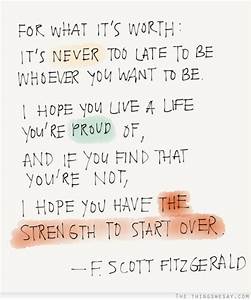
Yet goals that connect with our “ideal self” are most effective. The New Year presents an opportune time to connect with that ideal self.  When we RESOLVE to change, we feel better—more in control, more hopeful, more confident.

According to Carl Rogers, one of my favorite theorists, we ALL are constantly working towards self-actualization. According to Rogers, self-actualization occurs when we achieve our goals, wishes, desires.

According to Rogers (1959), we want to feel, experience and behave in ways which are consistent with our self-image and which reflect what we would like to be like, our ideal-self.  The closer our self-image and ideal-self are to each other, the more consistent or congruent we are and the higher our sense of self-worth.

But sometimes we lose ourselves on our journey to self-actualization.

This is why counseling can be a great first step to helping you get back in touch with the person you aspire to be. It can help you close the gap between your ideal self and your actual self. It can help get you back in touch with the REAL YOU, not the you who has been operating on auto pilot. A person is said to be in a state of incongruence if some of the totality of their experience is unacceptable to them and is denied or distorted in the self-image (Rogers).

a1111

Steps to Achieving your Ideal Self

1)Reflect on your current self vs. your ideal self. What don’t you like about your current behavior? What accomplishments are you proud of? What are parts of your current self you would never want to change? What are parts of yourself that you have never seemed to be ABLE to change?

You are the life you lead–so choose your path mindfully.

How do you handle adversity? How you handle conflict? Can you keep your cool under pressure? How do you talk to yourself when you mess up?

What standards would you like to uphold going forward? What kind of person would you ideally like to be? Most importantly: WHY is it important to make these changes? Having a strong why is a MUST for lasting change.

2)Reflect on COMPETING GOALS. The fact is many of us have competing goals vying for our attention and time. We need to not be so hard on ourselves when we have to shift focuses. Life is truly a balancing act. It can be hard to strike a balance between being a good parent with a demanding career. Being social while being on a strict diet. Traveling the world while saving money. Managing our various goals can be TOUGH. You need to have flexibility in your expectations depending on what is taking precedence at any given time. Let go of absolutes in your thinking patterns–ALWAYS, MUST, SHOULD, NEVER.

3)What would you do–if money— was not a concern? For many people, money is a defining factor in their life. For others, it is a limiting factor. How differently would you live your life (if different at all) if money was not a factor? The answer can be telling.

4)What do you want people to say about you and your life at your funeral? Great parent? Good friend? Successful? Well-traveled? Kind soul? Did a lot of good for others? No answer is right. But how you answer this question reflects much on what you value in life.

5)Remember you ARE the life you lead. Ask yourself–what is your day-to-day life like now? Are you a dedicated parent? A career driven professional? Someone who makes time for loved ones? A fitness fanatic? Dedicated to healthy eating? Are you kind? Are you thoughtful? Are you having an impact in a positive way the lives of others? Are you well-read? Do you travel? Do you do the right thing? Do you sit by silently when you see someone being mistreated? Do you mistreat others? Do you mistreat yourself?

6)Remember you ARE how you spend your money. Ask yourself–do you value experiences over materialistic objects? Do you pour all your money into living the most extravagant lifestyle you can or do you live below your means saving for the future? Both are reflective of YOU AND YOUR VALUES. Do you spend more than you should? Do you save? OR do you feel well-balanced between the two?

7)Remember you ARE what you eat. Ask yourself—do you eat like you love yourself? Do you far too often indulge in processed food, sugar, and fried food? Are you committed to healthy eating? Are you committed to your health, period?

8)Revise your goals to better reflect your limitations and true capabilities. It is important to be honest with our positive and negative qualities. We ALL have limitations. Often our goals feel because we do not take said limitations into account. Be kind to yourself but be realistic. All unrealistic goals do is set you up for failure (and pain).

Most importantly: Our daily life IS who we are. How do you spend your days? If today, was your last day on Earth, could you say you are proud of the life you led? Are you happy with your day-to-day existence?

These questions may seem like a lot to think about and reflect on. The answers will be unique fo all of us and a reflection of our values. One caveat to keep it mind is we are ALL human. Do not expect to tackle EVERYTHING you set out to do all at once. We cannot expect to be our IDEAL self 100% of the time. Life happens (stress happens). None of us are always in a total state of congruence. If you are feeling overwhelmed, consider speaking with a therapist who can help you unload and process through some of those feelings.

Make 2019 the year you work hard, but work JUST AS HARD on self-compassion and being kind to yourself, as you stumble along the way to achieving your ideal self.

a20000

To schedule a counseling session with me (AND if you are a reader who lives in New Jersey):

https://anewcounselingservices.com/erin-theodorou%2Cm-ed-%2C-lpc

Erin Doyle Theodorou, M.Ed, LPC, NCC

Anew Counseling Services LLC

617 Oradell Avenue, Suite 3, Oradell, New Jersey, 07649

(551) 795-3822
etheodorou@anewcounselingservices.com