
Are You a Good Person? The Litmus Test

Do you think you are a good person?

The mere fact you are choosing to read this means you’re wondering if in fact you are.

I find most people view themselves as “good.” Not perfect, but good. Most of us would be hard-pressed to find someone who does not regard themselves as a “good person.”

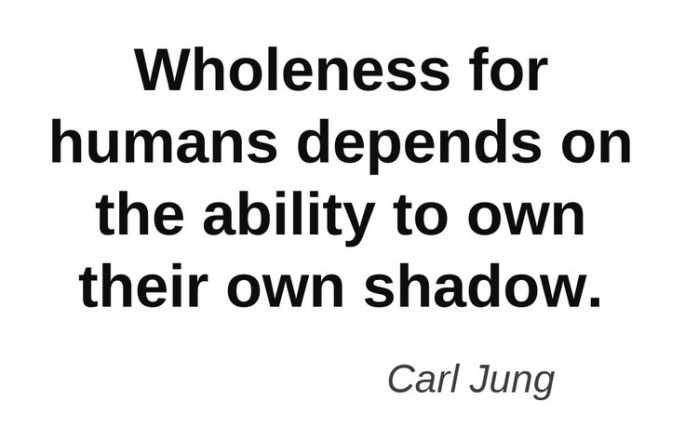
Yet how many people do you know that acknowledge the darker parts of their personality? Or their shadow self as Jung called it.

In short, the shadow is the “dark side”. Many people do NOT recognize the darker components of their personality.

Because most people tend to reject or remain ignorant of the least desirable aspects of their personality, the shadow is largely negative. 
b2.jpg

The problem with viewing yourself as wholly good, without acknowledging your shadow self, is it can lead to unhealthy ways of coping.

As humans it is important to feel we behave and act in a manner that reflects our self-image. How can you stay congruent with your identity, if you view yourself as a good person, in absolute terms, when you inevitably do wrong? This leads to justifying bad behavior. It leads to distorting the truth and repressing emotions we do not have the courage to face.

When people view themselves as wholly good behave badly, they find ways to justify their behavior to themselves (and others) as to maintain their self-image of being “good” and keep cognitive dissonance at bay.

The truth is none of us are good people 24 hours a day, seven days a week.

We all are fallible, we all have moments of weakness, we all act out of character (this is distinct from people we may encounter with poor character who act this way over and over again over the course of our relationship with them). No one who walks among us does not behave badly from time to time. It is part of the human condition and part of why conflict is so common in our relationships.

Being a good person is a value many of us in all likelihood hold dear (narcissists and sociopaths excluded).

Yet how do we know for sure if we are in fact a good person? “Good” is a very relative term. There is no universal truth that defines what being a “good person” is and looks like.

Some people think they’re “good” because they don’t intentionally go out and harm others, and others believe they are good because they do superficial acts of kindness for others.

Yet if you believe yourself to be a “good person” program, consider the following questions:

Are you a good person if you hurt people but your intention was not to do so?
Are you a good person if someone tells you that you are causing them pain but you disregard how they feel?
Are you a good person if you constantly speak ill of others?
Are you a good person if you lie on your taxes? Lie to your spouse? Lie to your children?

Do you ever feel envy or jealousy towards other people? Do you feel resentment towards the people in your life?

Are you honest with yourself?

Are you a good person if you steal from the government? On whatever level you may be playing the game…
Are you good person if you cheat–on a test, partner, or someone else? If you cheat your company?

When you witness poor behavior in others (lying, judgement, dishonesty, self-deception), can you acknowledge those same impulses inside yourself?

Are you a good person if you wish bad on others?

Do you express rage and contempt towards others?

Do you consider yourself a good person without accepting the darker parts of your personality?
Are you a good person if you are unaware of the negative emotions that arise within you through the day?

Do you believe it is wrong to feel hatred towards the people you love?

In terms of behavior:

~Would you give up your seat for a disabled person or pregnant woman on the train?
~Would you stick up for someone being verbally berated?

~How often do you help someone with extra bags?
~Do you donate your time or money to causes outside of yourself?

~Do you hold the doors open for others?

~Do you offer words of encouragement and kindness freely to others?

All the questions give insight into your character.

Are you happy with how your answer these questions? Do you find you can make excuses for yourself to justify your OWN bad behavior/character flaws but have the habit of condemning others?

I don’t believe that any human being is bad through and through or good through and through. We all have some of each inside us.  I do feel people’s character exists on a continuum–with character disturbed on one end and being virtuous on the other end.

The truth is some people have more good in them than bad.

The truth is some people have more bad in them than good.

It is important to know which person you are dealing with at any given time.

Maybe you’ve experienced this before: Dealing with someone who thinks he’s much nice or kinder than he really is. It can be hard to manage and maintain a relationship with someone who is not as good as he or she believes himself to be.

It can also be hard for people to maintain relationships with us if we are not a good of a person as we believe ourselves to be.

You need to be aware of the good AND bad in you. And others.

Viewing oneself as “good” explains a wide range of common defense mechanisms– denial, minimizing/justifying one’s own “bad”behavior, lying, becoming defensive.

The fact is our character is NOT set in stone—we are all capable of growing into a better person IF we are able to adopt a realistic self-image. We need to be able to look deeply into our shadow self if we want to move beyond the darker aspects of our personality.

We can see everyone feels justified in their own shoes. Every action that a person takes take, good or bad, they can always tell themselves it is justified  – otherwise they would not be able to perform the act in question at all.

We all want to be our best, but many people wonder if it’s actually possible for people to become better–themself included. The answer is a resounding yes. There are always ways to improve yourself.

Some general suggestions for a path forward:
1)Support others. Contribute to things outside of yourself–the larger community. Offer kind words and encouragement to the people you encounter. Consider how your words, actions, and behaviors impact others. Do not enable the bad behavior of others at the expense of someone else. Do good and good will come back. We all eventually reap what we sow.

2)Let go of anger. Think before you speak. Words said in anger can only be forgiven, not forgotten. A mindfulness practice can help you to lower your baseline feelings of anger. Much of anger arises from ruminating over the past–past injustice, grievances, pain from long ago. Stress can up our ability to lash out in anger. Consider adopting stress management techniques to your daily routine.

3)Take care of yourself–mentally, emotionally, physically. Exercise, eating well, meditation, seeking out counseling…all lead to building a strong foundation for living a good life and empowering yourself to be a better person.

4)Learn to set boundaries—for others AND yourself. We talk often about setting boundaries with other people but you should have your own set of standards in how you will or will not conduct yourself. Example–you won’t scream at other people, curse people out, threaten people, smear people’s names to others, steal, cheat, etc.

5)Reflect on the following questions (Forbes):

~What, or who, is worth suffering for?

~What can my most aggressive judgments of others tell me about myself?

~Are my opinions of others fixed, or do they evolve? Is that fair?

~Does my daily routine reflect my long-term goals?

~What do the things I envy tell me about what I want to give myself?

~If I could meet the best possible version of myself in an alternate reality, what would that person be like?

If you feel like you are struggling to become a better version of yourself, counseling can be a way to figure out a plan for your life, moving forward.

bad 1.jpg

To schedule a counseling session with me (AND if you are a reader who lives in New Jersey):

https://anewcounselingservices.com/erin-theodorou%2Cm-ed-%2C-lpc

Erin Doyle Theodorou, M.Ed, LPC, NCC

Anew Counseling Services LLC

617 Oradell Avenue, Suite 3, Oradell, New Jersey, 07649

(551) 795-3822

etheodorou@anewcounselingservices.com


Is Comparison TRULY the Thief of Joy?

a4.png

Is comparison truly the thief of joy?

The tendency to compare ourselves to others is as human as any other emotion. All of us are guilty of this behavior from time to time.

Comparison is a thief of joy because it fosters competition more than affiliation. It is hard to develop close relationships or feel a sense of community with people when you view everyone as “the competition.” Sad to say when we engage in the game of social comparison, we are stuck dealing with comparison’s partner in crime: envy. And its ugly stepsister– jealousy. Neither of which lays the foundation for healthy relationships with one’s self or others.

When we compare, we compete. (And I am not talking about HEALTHY competition). Instead of celebrating other people’s strengths and gifts, we seek to tear them down because we begin to view them as a threat. Comparison leads to competition which requires someone be the winner and someone else the loser. 

In turn, we view others as competitors instead of companions. Instead of fostering a sense of community, we foster a zero sum game. This is not a game that is going to end well for our relationships.

Ask yourself–when is the LAST time you compared yourself to another? A family member? A friend? A coworker? Or think of the last time you checked your Instagram or Facebook feed. Which updates made you feel jealous or made you feel as if your life paled in comparison? Which posts make you feel smug or better than that person who posted it? Feeling superior OR inferior to another are two sides of the same coin.

a3.jpg

In comparing yourself to others to evaluate your own sense of self-worth, you will ALWAYS be losing. This leads to a “better than versus worse than” mentality and feelings of superiority or inferiority— neither of which helps us to build healthy relationships with others or feel happy with our self.

Yet human nature being what it is includes having a fundamental need to evaluate ourselves, and the only way many of us seem to know to do that is in reference to something else.

We compare our accomplishments with everyone else’s.  We compare our looks, our body, our Instagram likes, our college acceptances, our careers. We compare our weight with everyone else’s. The size of our house. The number of stamps on our passports.

You name it- we compare it. Comparison drives the underlying feeling that we are never ENOUGH.

Soon we are stuck in the mental loop that there is always someone else doing it ALL better than we are.

Another issue with comparison is we usually zero in one aspect of a person’s life and envy it.  It is usually an area where we judge ourselves the most harshly that we compare to others. Yet rarely when we compare ourselves to others are we looking at the whole picture — the good, the bad, and the unfortunate.

We look at the one aspect of a person’s life we envy without taking into account all the other components of the person.  Everyone has a few less than ideal aspects to their life. No one’s life is completely free of sadness, pain, loss, shortcomings, insecurities, or disappointments.

In life, we all are forced to play the hand we are dealt.

The point is not to be better than anyone else. All ANY of us can do is play the cards we were dealt the best way we know how. To try to become a better version of yourself.

In this game of life you will never reach a point where you are better than others in EVERY way and why would you WANT to be.

By indulging in comparison, we demean ourselves and those we are comparing ourselves to.

a2

When I assume someone is better than me because they earn a higher salary than me, I am diminishing my value to the number of zeroes on my paycheck. If I assume I have more discipline than someone who weighs more than me, I am diminishing someone’s worth to a number on a scale instead of looking at them as a human being.

Comparison has a way of creating problems when there is none. It plants seed of jealousy and envy within us that spoils our ability to connect openly and authentically with others.

Jealousy has a way of focusing on one thing at the expense of others. Jealousy gives an incomplete view of another person.  For  instance, envy ignores the hours of work that generated the high-level salary — the sacrifice of time that could have been spent with friends or family. It tends to overlook the years of schooling, studying, discipline, student loan debt, and sacrifices that preceded the success. It discounts the cost of the benefit.

It’s pretty easy to envy one aspect of another person’s life — his/her looks, talent, wealth, significant other, personality, or intelligence. It’s much harder to look closely at a person’s life as a whole and then envy another person’s life — a complete compilation of experiences.

Whenever I experience pangs of envy and I have to weigh everything at once, I tend to be more satisfied with my lot. Because if I want anything someone else has (his/her salary, ACTUAL career, education, self-confidence, weight, etc) I have to take everything else that comes with it — be it the high levels of stress, ill spouse, imperfect teeth, chronic illness, difficult child, or an alcoholic parent. Everyone has aspects of their life that are UNenviable.

Sure some people’s lives have more blessings and some have more suffering and loss. But every life has its ups and downs. Everyone gets some — some good and some bad.

Mind you, everyone’s “some” will be different.

a1.jpg

So if you’re walking down the street and a super fit 20-year-old runs by, you might instantly assess that, by comparison, you’re out of shape. Then you may note that you’re at least two decades older than the jogger and juggling the care of three children under the age of 5 with a  full-time job. You recall that you don’t have the same metabolism or time for exercise. Or maybe you realize you don’t even LIKE to run.

Maybe you are just starting out in your career and feel jealous of someone who is 10 or 15 years further along in their career. You feel pangs of insecurity at their lucrative career. Yet you know this person is older and further along in establishing their life. Or maybe when you think about it, you don’t want an EXTREMELY stressful career with LONG hours that just happens to be lucrative, in turn. In playing the comparison game, we usually do not look at the big picture. It’s apples to oranges comparison.

Our comparison-targets also tend to be those within our social circle. We don’t usually fixate on how our lot in life corresponds to that of Mark Zuckerberg, or to that of the homeless man sprawled on the sidewalk, but rather to that of our friends, colleagues,  family members, and neighbors.

In other words, the more similar or close we are to another person in some way we think is important, the more we tend to compare ourselves to that person.

The truth is comparison is a waste of our time. First of all, success is a relative term. “Winning” and “success” has different meanings for different people. Some might be excelling at one thing but is struggling in other areas of their lives.  Second, we are all on our own timelines and started at VERY different places in life–different advantages and disadvantages. Third, social media is a highlight reel of people’s lives. Not many people are sharing/posting about their failures and daily challenges.

Comparison is a short-sighted approach to life. It brings on feelings of envy and jealousy–two wasted emotions.  If we realize that there is always going to be competition, there is always going to be someone we believe is better than us, then we can’t lose. If we start to be happy and satisfied with our own unique gifts, talents, and strengths, we lose the need to compare ourselves to others. Only when you apologetically own who you are—the good, the bad, and the ugly does comparison lose its grip on you.

If you find you are struggle with social comparison, counseling can be a good place to work through these feelings. Instead of trying to be better than others, focus your energy on being the very best version of yourself.

To schedule a counseling session with me (AND if you are a reader who lives in New Jersey):

https://anewcounselingservices.com/erin-theodorou%2Cm-ed-%2C-lpc

Erin Doyle Theodorou, M.Ed, LPC, NCC

Anew Counseling Services LLC

617 Oradell Avenue, Suite 3, Oradell, New Jersey, 07649

(551) 795-3822

etheodorou@anewcounselingservices.com


Growing Up in a Dysfunctional Family: Whose Life are You Really Living? Are You Self-Differentiated?

Since my days as a counseling graduate student, I have ALWAYS been a fan of Bowen Family Systems theory.

Bowen Family Systems theory is a theory of human behavior that views the family as an emotional unit and uses systems thinking to describe the complex interactions in the unit. It is the nature of a family that its members are intensely connected emotionally.

Often people feel distant or disconnected from their families, but this is more feeling than fact. Families so profoundly affect their members’ thoughts, feelings, and actions that it often seems as if people are living under the same “emotional skin.”

People solicit each other’s attention, approval, and support and react to each other’s needs, expectations, and upsets. The connectedness and reactivity make the functioning of family members interdependent. A change in one person’s functioning is predictably followed by reciprocal changes in the functioning of others. Families differ somewhat in the degree of interdependence, but it is always present to some degree (Bowen Center, 2019).

Bowen really explores the differences between healthy functioning families and dysfunctional families.

There are several characteristics that are generally identified within a healthy, well-functioning family. Some include: support; respect is abundant for all, privacy is respected, love and caring exists for ALL family members; an emotionally safe environment is present, new members are welcomed, people go gentle on the teasing and sarcasm, the family provides security AND a sense of belonging; OPEN lines of communication exists; the family system ALLOW members to change and grow, and the family makes each person within the family feel important, valued, respected and esteemed.

A dysfunctional family, on the other hand, is a family in which conflict, misbehavior, and abuse (physical or emotional) occur continuously and regularly, leading to other members to accommodate such actions.  Dysfunctional families don’t cope with stress in a healthy manner.  Blame is plentiful in a dysfunctional family. Poor communication is the norm. Boundaries are disregarded and habitually crossed. Rather than dealing with the stress that is causing problems, dysfunctional families lash out at each other.

If you grew up in a dysfunctional family, you are more likely to struggle with self-differentiation than if you were raised in healthy family systems unit.

Some signs you are part of a dysfunctional family unit (from Wikipedia):

  • Lack of empathy, understanding, and sensitivity towards certain family members, while expressing extreme empathy or appeasement towards one or more members who have real or perceived “special needs.” In other words, one family member continuously receives far more than they deserve, while another is marginalized
  • Denial(refusal to acknowledge abusive behavior, possibly believing that the situation is normal or even beneficial; also known as the “elephant in the room”
  • Inadequate or missing boundaries for self (e.g. tolerating inappropriate treatment from others, failing to express what is acceptable and unacceptable treatment of self and others)
  • Disrespect of others’ boundaries (e.g. physical contact that other person dislikes; breaking important promises, not respecting someone’s wishes; purposefully violating a boundary another person has expressed)
  • Extremes in conflict (either too much fighting or insufficient peaceful arguing between family members)
  • Unfair or unfair treatment of one or more family members due to their birth order, gender, age, family role, abilities (may include frequent appeasement of one member at the expense of others, or an uneven/inconsistent enforcement of rules)
  • Disrespect towards family members including shaming, displays of contempt, bitterness, ridicule, judgmental statements, demonization/dehumanizing, belittling, hypocrisy, excessive criticism, excessive gossip

Mind you, no family is perfect, even the functioning ones. Dysfunction exists on a spectrum.

Yet often in dysfunctional families members are very often enmeshed. Enmeshed families are rigid systems where boundaries are generally not respected. People in enmeshed families don’t know where they end and another family member begins. This is a hinderance to the differentiation process.

In an enmeshed family, control is usually an ongoing issue. Enmeshed family members often try to control how other family members think and act while simultaneously fighting off perceived attempts of feeling controlled themselves in how to think and act. Live and let live is NOT a mantra in an enmeshed family.

a2.jpg

Have you ever heard someone complain about the “drama” in his or her family? Chances are that the family fits the profile of the enmeshed family, in which each family member feels obliged to react to whatever is going on in the lives of other family members, effectively multiplying the tension.

In an enmeshed family, you will be made to feel guilty even if you didn’t do anything wrong. Any step outside the unspoken rules of the family system will be met with resistance.

Guilt, shame, abandonment, ostracism, and rejection are all seen in a dysfunctional family as methods of keeping members “in line” with conforming and behaving within the family systems unit.

Ask yourself the following…

Do you ever catch yourself defending yourself to other family members (your choices, beliefs, feelings, decisions)?  Are you expected to defend such? Are new members welcomed in? Is everyone with the family system overly involved in the lives of each other with little privacy? Is change frowned upon? Does a parent tell one child that they are their favorite? Are emotions contagious–if someone is angry, it rubs off on other family members? Do people form coalitions and gang up on other family members? Are you made to feel guilty for saying no? Are parents best friends with their (still underage) children? Are parents overly involved with their children and their activities? These are all signs of enmeshment.

What happens if you are the process of self-differentiation and de-enmeshment from your family? You will in all likelihood be met with resistance. Often anger and guilt to follow.

The truth is some people live their whole lives UNdifferentiated from their family of origin.

It can be too painful to self-differentiate, depending on the level of dysfunction, within the family system.

When you attempt to begin the process of differentiation, the reaction you receive from family members can be too much for you to handle, depending on where you are at in your personal development.

Am example is the following.  Imagine you grew up with a mother who wanted to know EVERYTHING about your life–a behavior that continues well after you are into adulthood.  Maybe your mom feels ENTITLED to know anything she wants about you (She is your mother after all! As she would readily point out if you resisted–ie the GUILT tactic).  Mom repeatedly asks you personal questions about all aspects of your life–despite the fact you are 45 years old with your own wife and kids. Mom’s MO is to grill you with questions regardless of how personal they may in fact be. There is no line mom won’t cross!

Maybe you begin counseling to figure out a way to set boundaries with mom. The therapist gives you strategies to how to better manage the relationship. Next time, you see mom for Sunday dinner, she, BEING the woman she is, asks you a question on a topic you feel uncomfortable with discussing (your income, your marriage, how you are parenting your kids, insert uncomfortable topic here). Maybe you usually answered whatever question asked by her (ie the path of least resistance) but this time you respond by saying you feel uncomfortable. Maybe your mother replies you are being too “sensitive” (a common rebuttal in enmeshed families when you set a boundary). She may even ask why you are being so “difficult.” You reply calmly to mom that you understand why she is curious but you are not interested in talking about said topic today (or EVER  for that matter but today works in this example).

After Sunday dinner, a few days pass…you start to feel relieved that you were able to set the boundary with mom.

But then your sister calls. Your sister shares with you that your mom has been complaining about you being “overly sensitive” and “difficult” lately with her (in dysfunctional families “triangulation” is common).

Mom, you see, is annoyed with you, for setting a boundary. For not playing her game as usual. Thus she is now venting to your sister about you, hoping your sister relays her displeasure with you. That such displeasure will get you back in line because change destabilizes dysfunctional family systems.

This is a prime example of triangulation.

Triangulation is a manipulation tactic where one person will not communicate directly with another person, instead using a third person to relay communication to the second, thus forming a triangle. Triangulation may manifest itself as a manipulative device to engineer rivalry between two people, known as divide and conquer or playing one person against another (Bowen Family Center).

Being labeled something disparaging is par for the course in enmeshed families when you start the differentiation process. Change and growth are NOT welcome in such family systems. Often, once you stop playing the family system game, you are criticized. This is part of trying to get you to change back and not continue self-differentiating.

a3

If you are wondering how self-differentiated you currently are, I copied and pasted Bowen’s Scale of Differentiation below.

Bowen’s Scale of Differentiation:

0……………………..25……………………..50……………………..75……………………..100

0-25

Can’t distinguish between fact and feeling

Emotionally needy and highly reactive to others

Much of life energy spent in winning the approval of others

Little energy for goal-directed activities

Can’t say, “I think….I believe….”

Little emotional separation from their families

Dependent marital relationships

Do very poorly in transitions, crises, and life adjustments

Unable to see where they end and others begin

25-50 (many people are here)

Some ability to distinguish between fact and feeling

Most of self is a “false self” and reflected from others

When anxiety is low, they function relatively well

Quick to imitate others and change themselves to gain acceptance from others

Often talk one set of principles/beliefs, yet do another

Self-esteem soars with compliments or is crushed by criticism

Become anxious when a relationship system falls apart or becomes unbalanced

Often make poor decisions due to their inability to think clearly under stress

Seek power, honor, knowledge, and love from others to cloth their false self

50-75

Aware of the thinking and feeling functions that work as a team

Reasonable level of “true self”

Can follow life goals that are determined from within

Can state beliefs calmly without putting others down

Marriage is a functioning partnership where intimacy can be enjoyed without losing self

Can allow children to progress through development phrases into adult autonomy

Function well–alone or with others

Able to cope with crisis without falling apart

Stay in relational connection with others without insisting they see the world the same

75-100 (Few function at this level)

Is principle oriented and goal directed–secure in who they are, unaffected by criticism or praise

Is able to leave family of origin and become an inner-directed, separate adult

Sure of their beliefs but not dogmatic or closed in their thinking

Can hear and evaluate beliefs of others, discarding old beliefs in favor of new ones

Can listen without reacting and communicate without antagonizing others

Can respect others without having to change them

Aware of dependence on others and responsibility for others

Free to enjoy life and play

Able to maintain a non-anxious presence in the midst of stress and pressure

Able to take responsibility for their own destiny and life

Maybe you are reviewing this scale and finding your are less differentiated then you would have previously thought. What to do now?

Counseling is a great outlet to pursue in beginning the differentiation process.

a1.jpg Once again, please excuse grammatical, writing errors. This blog is more about the content (I am not Charles Dickens here).

To schedule a counseling session with me (AND if you are a reader who lives in New Jersey):

https://anewcounselingservices.com/erin-theodorou%2Cm-ed-%2C-lpc

Erin Doyle Theodorou, M.Ed, LPC, NCC

Anew Counseling Services LLC

617 Oradell Avenue, Suite 3, Oradell, New Jersey, 07649

(551) 795-3822

etheodorou@anewcounselingservices.com

If you find yourself struggling with enmeshment, I find the following articles to be helpful resources of starting the process of de-enmeshing.

Resources:

https://drbaney.com/category/differentiation-of-self/

Differentiation of self through the lens of mindfulness

The Differentiated Self: Creating Healthy Relationship

Not Everyone Wants to Be Happy

One of the most common goals people express is their desire to be happy.

As Americans, our Declaration of Independence speaks to our  right to the “pursuit of happiness” ie our RIGHT to chase whatever our subjective happiness may be. We have a right to PURSUE happiness but obtaining it is not a given.

As a culture, we spend boatloads of money trying to figure out what EXACTLY personal happiness means to us. For Americans, happiness is almost an OBSESSION. The desire for it is woven into the fabric of our culture but in other parts of the world happiness is held in less esteem.

Often people turn to counseling with the objective “to be happier” at the end of the treatment process. Many of us search for happiness like the holy grail.

But happiness as a goal is not desired by all. The truth is not everyone wants to be happy.

Now many people would deny that being the case. I find most people readily admit to others they WANT to be happy. But their thoughts and actions denote otherwise.

People often destroy their own happiness.  THEY themselves destroy it. It can be painful to watch someone behave in such a self-destructive manner.

It plays out in a familiar fashion.

People hold onto relationships (romantic, familial, friendships) that make them feel bad. People continue in jobs that make them miserable. People give their power away to others–allowing other people to make them feel less than or ruin their days. People treat others poorly then wonder why they are lonely. People hold onto bad habits at the expense of their mental and physical well-being.

People negatively judge others. People negatively judge themselves. They think they need to be perfect to be loved. They seek the approval of others but do not give such approval to themselves.

People commonly obsess about the past. People often worry about the future. People frequently ruminate over things they can’t change–namely anything in the external world outside of themself.

People let their ego grow out of control. People procrastinate their ambition. People keep toxic people in their life. People continue being their own worst critic. People push people they love away.  People give up before they even start.

The truth is many people at a certain point in life settle. People settle for a life that does not bring them the happiness they desire. The moment a person chooses to settle is the moment them begin a slow death on the inside.

th

As a counselor, if a client tells me that want to be happy, my automatic response is, WHAT does happiness mean for you? Because the truth is happiness can look quite different depending on who you ask. Happiness is not one universal outcome.

So why isn’t someone happy with their life?  The answer is often simple. Many people are not happy because they don’t really want to be. 

55ae37d226334ae1449925db29128f48--random-thoughts-positive-thoughts

I am not talking about people who have extenuating tough life circumstances: homelessness, unemployment, cancer, clinical depression, etc. I am talking people with no EXTREME trying life circumstance in their current day-to-day life.

I believe many of us know someone on paper who has no reason to be unhappy-financial secure, healthy, good relationships, etc. But when you are around them, you can tell you are in the presence of a person who is unhappy despite seemingly positive circumstances.

Many of us scratch our head to understand why someone who seemingly has it all going for them seems so UNHAPPY.

Of course, we never know what mental health struggles a person is facing behind closed-doors.  And for those people we should have the utmost compassion.

But for other people…they are not happy because they are pursuing conditional happiness. Conditional happiness is everything goes your way and you are happy. Almost everybody attempts to do it this way but this approach doesn’t work.

Just think about it. As soon as one thing does NOT go your way, which is inevitable, you will be unhappy. Thus the odds of being happy from a mindset of conditional happiness is low. There are too many external factors we cannot control.

Unconditional happiness–having the mindset that you will be happy DESPITE the fact everything does not go your way. This is more conducive to living a fulfilling life. You will be happy FOR THE MOST PART no matter WHAT because your happiness is not dependent on the outside world to affirm it.

Can you tolerate that? Can you feel a sense of happiness REGARDLESS of what is going on in the external world? Can you feel happy even if you do not like the circumstances of the outside world?

If you are dependent on the external world to be a certain way to be happy, you are going to live a very unhappy life. We need a cultivate a sense of happiness that is not dependent on the external world complying with our wishes. Having rules and conditions on other people, on outside circumstances, and the world at large is a recipe for UNhappiness.

Tell me if this sounds familiar…

Do you ever say to yourself, “I will be happy WHEN……fill in the blank” (when I lose weight, when I get that promotion, when my son graduates high school,  when my parents get along, when my spouse retires, when I have enough money in my bank account, etc.).

If you are living with a “I will be happy WHEN” mindset you will NEVER be happy.

You are creating dogmatic rules for what you need to be happy, many of which are dependent on other people OR the external world to give it to you.

The key to overcoming this approach is to focus on WHY you need certain things to be a certain way to ALLOW yourself to be happy. You can live your whole life waiting on circumstances to align and the day will never come. Putting your happiness on hold is doing a disservice to you and YOU alone.

Some tips to help you:

1)Remind yourself of all the blessings in your life. Too often we focus on the one thing we DON’T have instead of all the things we DO have. “First world problems” is something I will say to myself when I find  myself getting down on something that on a global scale is irrelevant.

2)Remember at any time you can lose one of the blessings YOU do have. Someone you love. Your job. Your health.  We need to start appreciating the IMPERFECT things we do have while we still have them. Life throws curveballs.

3)Disengage from people who steal the happiness you DO have. The Negative Nancy. The Debbie Downer. The Sour Sally. The Judgmental Jane. Pretty much anyone who does not seem to wish you happiness (in all likelihood they do not wish happiness for themselves either). Make sure you surround yourself with a good support system.

4)Don’t let disappointment destroy your happiness. We all get disappointed from time to time. It is an unfortunate part of life. Check your expectations and see what role you had in setting yourself up for said disappointment. Let go of hurt, unfulfilled expectations, and disappointment. You are not doing this for the outside world but for YOU. Do not give your happiness away to anything OUTSIDE of YOURSELF. Take positive steps to improve but enjoy yourself in the process.

The question is DO YOU WANT TO BE HAPPY? Or do you want to continue to live your life with conditional happiness? The choice is yours.

The bottom line is this: YOU and YOU alone are responsible for the conditions of your life. So instead of putting your happiness on hold, find opportunities to be more fulfilled. Not tomorrow but TODAY. If there are not opportunities, CREATE opportunities. Life, as we all have heard, is more about the journey than the destination.

Stop waiting for circumstances to be “just right” to allow yourself to be HAPPY.

And if you need help with this, counseling is a great place to start on your journey to unconditional happiness.

To schedule a counseling session with me (AND if you are a reader who lives in New Jersey):

https://anewcounselingservices.com/erin-theodorou%2Cm-ed-%2C-lpc

Erin Doyle Theodorou, M.Ed, LPC, NCC

Anew Counseling Services LLC

617 Oradell Avenue, Suite 3, Oradell, New Jersey, 07649

(551) 795-3822

etheodorou@anewcounselingservices.com

10 Habits of Highly Miserable People

a2

It is often said that happiness is a choice. For a miserable person, they often choose to make themselves (and those around them) miserable.

The unfortunate reality is not everyone wants to be happy. Most people with such a disposition never seek mental health treatment. They do not think they are the problem but the problem is “out there” ie in the external world.

Miserable people often have a woe is me attitude. This victim mentality grates on those around them. This mentality is exhausting to be around. Miserable people are often allergic to responsiblity.  A miserable person believes people are always out to get them.  They often portray themselves as victims who should be rescued, deserving of our sympathy and attention.

Below are some common ways you can spot a miserable person:

1)They love to blame others. Miserable people are often martyrs—it works as a get out jail free card for taking responsibility for their own life. They love to make themselves miserable under the guise of “helping” others. Having a martyr complex essentially involves pointing the finger at other people or situations in your life and blaming them for your disappointments, unhappiness, and emotional turmoil. The reality is no one is responsible for your disappointments, unhappiness, and emotional turmoil EXCEPT you. We all experience these feelings, but we must learn to process our feelings and move on. Miserable people like to stay stuck in the cycle of blame.

2)They love to pick fights. Miserable people love to make other people miserable. Misery loves company right? People who are constantly unhappy love to take it out on other people. Some people are disputatious and repel people with their snarky comments, rude remarks, and negative demeanor.  If antagonistic behavior is an ongoing thing with someone, you are likely dealing with an habitually MISERABLE person.

3)They will get involved in other people’s drama. Miserable people often feel their life is boring. How do they spice it up? By getting involved in the drama of others. (Some go as far as to create drama between others to watch it unfold). Miserable people find drama energizing. Happy people tend to disengage from drama and the people who create it. For miserable people, drama is a way of life.

4)They always expect the worst (of themselves, others, and life in general). Life sucks and all the worst thing that can happen, happens to them, is the mantra of a miserable person. Miserable people often expect the worst of everyone even the people they claim to love. They think other people have bad intentions toward them. The truth is most people don’t have bad intentions but are flawed people. You can always tell a person with bad intentions because when called on their behavior, it gets worse NOT better. They will get more aggressive, more demeaning, more negative.

5)They hate people. This kind of follows from #4. All of us experience negative thoughts from time to time. But a miserable person will make it known how much they despise their fellow-man (which in all likelihood includes you). A miserable person never has a good thing to say about anyone. People are the worst, people are selfish, people are liars, are common refrains from a miserable person.

6)They are selfish. Miserable people put themselves first (but project that other people are selfish, ironic I know). A miserable person drives people away from them because of their negative behavior. Life is hard enough, most people don’t want to spend their time with a Debbie Downer. Miserable people only care about themselves and their own troubles. Only their perspective matters.

7)They are envious of other people. A miserable person is NEVER happy for someone else. Miserable people think someone else’s success or good fortune takes away from them. They view life as a zero sum game due to their scarcity mindset. Miserable people do NOT have an abundance mindset that there is enough love, success, and resources to go around. For them, life is dog eat dog.

8)They hate change. Miserable people hate anything new or different. Change requires effort and miserable people usually don’t want to step outside of their comfort zone. Miserable people will complain about feeling “stuck” but will refuse to do anything to change their circumstances.

9)They love to complain. Complaining is their favorite pastime. This ties in with the blaming, playing victim, and seeking attention/sympathy while playing the role of martyr.  Chronic complainers seek validation and sympathy from those around them. Woe is me. For chronic complainers, every person, every situation, is an opportunity to go on a fault-finding mission.


a1


10)They never do anything to improve their life. Most miserable go through life stagnant. The game of life is too hard so they refuse to play. Yet they resent people who are still IN the game.  The only game a miserable person plays is the blame game. Miserable people are addicted to unhappiness and it becomes a way of life for them.

What are some common root causes of a miserable personality?

  • Low self-esteem
  • The appeal of martyrdom
  • A belief that being miserable is inevitable
  • Underlying depression and anxiety
  • Feeling trapped by your circumstances
  • Living with chronic stress
  • Resistance to being healthy–physically, mentally, and emotionally

The truth is our thinking creates our feelings. If you are chronically unhappy, you need to take a look at your self-talk and how you think about others and relate to the world. If someone or something is truly making you unhappy, you can leave the relationship or situation. 

a2

Living in the free world, the truth is we ALWAYS have a choice. It may not be an easy choice or a simple solution. Yet you have the freedom to not need to tolerate mistreatment or miserable circumstances. 

If you find your struggling with feelings of misery or a miserable person in your life, counseling may be a great place to begin the journey to a happier life.

To schedule a counseling session with me (AND if you are a reader who lives in New Jersey):

https://anewcounselingservices.com/erin-theodorou%2Cm-ed-%2C-lpc

Erin Doyle Theodorou, M.Ed, LPC, NCC

Anew Counseling Services LLC

617 Oradell Avenue, Suite 3, Oradell, New Jersey, 07649

(551) 795-3822
etheodorou@anewcounselingservices.com