Get Over Yourself: Why You Need to Free Yourself of Self-Importance to Live a Happy Life


I am NOT that important.

The show WILL go on WITH or WITHOUT me….that is fact.

And it liberating to know this. The truth will set you free!

Is it me or do people seem more self-important than ever lately? I feel this plays a role in the high state of anxiety our society lives and breathes in. Being self-important is a sure-fire way to be high-strung and easily triggered. It takes A LOT of energy to keep yourself at the center of the universe (I am exhausted at the mere thought).

The truth is nobody is watching you. Nobody is spending all day thinking about you. Very few people even care about you except for close family, friends, your significant other. Why such a seemingly harsh statement? Because you’re not that important (trust me, nor am I)! It is a tough but important message to hear if you want to be happy and emotionally healthy.

Self-importance can become a source of tremendous angst and unhappiness. Self-consciousness can create an obsession with how we appear to others, what they think of us, and with our image.

I have counseled people who are paralyzed by their self-consciousness and pervaded by self-important cognitions. When a person is self-conscious, they think as though they are on stage, and the audience (ie other people) are scrutinizing their every step.

Being self-conscious can limit our ability to enjoy the moment and express ourselves fully.  Cognitive behavioral therapy is really helpful in overcoming such a faulty thinking pattern.

Moreover, a colleague of mine recently shared a TED talk with me on freeing yourself of self-importance as a precursor for living a happy life. I copied the link to the TED talk above and found it to be an interesting talk to invest the 17 some odd minutes in.

Basically, the bottom line is you need to “get over yourself” if you want to be a happy person.

Usually when we hear the expression get over yourself we think of a self-absorbed jerk who is being inconsiderate of everyone around them–acting as if they are MORE important than others.

Yet we have ALL seen self-importance in action. It is the mother at the airport standing with all her and her children’s bags in the middle of the moving sidewalk, oblivious to those behind them who may need to pass. It is the person in the waiting room loudly chatting on their cell phone completely ignoring the NO CELLPHONES IN WAITING ROOM sign. The driver leaning on her horn because someone in front of her remains stopped when the light turns green—to allow a pedestrian to finish crossing. The colleague who takes credit for all apparent successes and blames others for all failures. It is the friend who talks twenty minutes nonstop about themselves without asking you how YOU are.

These scenarios are increasingly common in our day-to-day life. Yet can you recognize when you are in fact the offending party in said scenarios?

Getting along and getting ahead requires playing well with others, either in cooperation as friends, family, spouses, teammates, and coworkers. Yet many people struggle with doing just that. Our day-to-day life is filled with thoughts about what others may be thinking, what others may be doing, trying to figure out WHY someone said this or did that.

Yet how often do you ask yourself what effect YOUR words and actions are having on those around you? Healthy relationships require that you do just that. We are, by default, the center of our world.  Yet self-importance leads us to focus on how other people’s words and actions affect US, but fail to pay mind to when we are in fact the offending party.

Ask yourself how often do you:

~Worry about what other people are saying/thinking about you?

~Feel stressed that your problems are unique and NO ONE else struggles like you do?

~Obsess about your perceived shortcomings–looks, financial, success, grades, etc.?

~Induldge in over thinking—on a variety of topics?

Ask yourself honestly. How much of your day is spent focusing on YOU?

The thing is about self-importance, in its many different forms of expressing itself, is toxic. It pollutes the energy of those who need to feel self-important, as well as anyone and anything they interact with. Most other people, don’t appreciate being made to feel less than, will become defensive or take offense at the energy spewing out at them.

Being authentic doesn’t mean you don’t take care of yourself or look out for your best interests—of course you must. But you do this with an attitude of grace and softness rather than aggression or antagonism.

Empathy is at the cornerstone of emotional intelligence, but so is the ability to regulate our thoughts and behavior so as to have a positive effect on our own lives AND on the lives of the people we love and care for.

Daniel Goleman said, when we focus on ourselves, our world contracts, as our problems and preoccupations loom larger. But when we focus on others, our world expands.

We all have moments of  frustration, anxiety, and angst. But did you ever notice that all those situations have one thing in common? You.

At extreme levels, self-important thinking can lead to paranoia, a belief that others are thinking about you, talking about you, and paying attention to you when they are not. I often gently point out to clients that MOST people are worried about their own daily to do lists, families, obligations, etc. The truth is most people’s thinking is centered around them, not you. Most people are busy living their own lives–they neither the time nor the energy to devote to people who have little effect on them including you.

Ask yourself often what it is you want to contribute while you’re here, what impact you want to have on others and the legacy you want to leave behind.

If you want to be happy, don’t dwell on yourself so much.  Self-importance reduces our ability to go with the flow, while putting stress on our relationships. Viewing everything through a “how does this reflect on me” lens is unfair to others. People may begin to avoid us or keep conversations short with us.

If you really want to “get over yourself” once and for all, practice a daily gratitude practice. Embrace humility and being humble.

Take yourself LESS seriously. LIGHTEN UP.

a3.jpg

If you find yourself relating to this video or blog post, counseling might be a great place to process these emotions and figure out a better way to live and let live.

To schedule a counseling session with me (AND if you are a reader who lives in New Jersey):

https://anewcounselingservices.com/erin-theodorou%2Cm-ed-%2C-lpc

Erin Doyle Theodorou, M.Ed, LPC, NCC

Anew Counseling Services LLC

617 Oradell Avenue, Suite 3, Oradell, New Jersey, 07649

(551) 795-3822

etheodorou@anewcounselingservices.com

Is Your Perception Off? How Problems of Perception Can Hurt Your Relationships and How Counseling Can Help

“We don’t see things as they are, we see them as we are.”

I think many of us have heard that quote before….and to some extent it seems to hold true.

As a counselor, I find people often seek counseling because they want help in bettering an important relationship in their life. Clients may be bewildered to how an important relationship in their life has gotten to where it has gotten. Whether it is their spouse, family member, colleague, or a friend, I find clients will frequently claim to have NO idea how they got to such a bad place in the presenting troubled relationship.

Most of our problems in our everyday lives, including our relationships, arise from our inability to understand the power of perception and how this can affect one’s life, experience, and relationships.

It is the job of a therapist to guide clients to a better understanding of themselves and to a better understanding of how others may be experiencing them. Counseling requires the clinician to dive into a client’s worldview and challenge any cognitive distortions he/she may present with that may be causing conflict in their life.

I think we can can all agree it is much easier to see the problems in perceptions of others than it is to see in oneself. If you’ve ever listened to someone’s description or opinion of you and it sounded completely foreign, you probably found yourself wondering where on earth this person was coming from. Yet ask yourself, are you able to recognize when your opinion seems off base to another or when someone else has NO idea where you are coming from?

Do you feel you are cognizant of your words and actions–specifically the impact they may have on others?

People, more often than they care to admit, say and do things without thinking out the consequences of their words and actions. Maybe you find you are guilty of this as well. Most of us are from time to time. Being able to make amends when our behavior has a negative impact on another is the hallmark of emotional maturity. But before we can do this we need to develop a sense of self-awareness and how our behavior impacts others. This is why counseling can be so beneficial to everyone at one point or another over the course of their life.

As a counselor I find myself frequently asking clients regarding their behavior, “What were you hoping to accomplish by THAT?” This answer can very telling to the motivations behind what a person says or does in relation to other people. The sad truth is people often act against the very thing they are hoping to accomplish in their relationship.

In life, we often say things or do things without paying mind to what we are hoping to accomplish.

I find as a clinician if you can’t understand why someone is doing something, look at the consequences of their actions, whatever they might be, and you can in turn infer the motivations from the consequences their actions are bringing about.

Thus if someone is making everyone around them unhappy and you are scratching you head as to why, their motivation may be very simple—to make everyone around them unhappy including themselves. The fact is many people do not act in their best interest as head scratching as that may be.

Then there are people who are too easily ruled by feelings, impulses, and fleeting thoughts. Children have this luxury. Adults do NOT.

As an adult you are free to conduct yourself as you wish. But natural consequences are to follow. Thus if you tell off your boss, expect to be fired. If you drink and drive, expect to be arrested. If you eat 5,000 calories a day, expect your pants to not fit. If you mistreat someone, expect than to exit stage left out of your life. Insert bad behavior and negative consequence here.

Natural consequences are the inevitable results of our actions. The Buddhist religion refers to this as “karma.” Christianity refers to this as “reaping what you sow.”

In counseling, the clinician works with the client to figure out how their actions, words, and behaviors lead to the current state of their relationship. One of the many benefits of counseling is it challenges a client’s perception/cognitions (As a counselor, I am a big fan of cognitive behavioral therapy which entails cognitive challenging, cognitive restructuring, and cognitive reframing, which is a therapeutic process that helps the client discover, challenge, and modify or replace their negative, irrational thoughts ie their PERCEPTIONS).

The truth is everyone sees situations differently and based on what they interpret, their actions will be a perfect match for what they see. The problem with this is some people have faulty perceptions. In the end our perceptions form our reality.

This is why relationship conflict is inevitable and common. We are bring own your unique lens and worldview to everyone we interact with and to every relationship we have.

Counseling can be a helpful resource to figure out a way to mend a trouble relationship–whether with a spouse, partner, friend, coworker, or family member. Therapy can help you better understand how the relationship has unraveled to this point.

It is important to realize that perception is quite a self-centric and individualistic process. Allowing your perception to interfere with your feelings and the way you interact with others can be problematic if you are off with how you are perceiving things. When you are stressed, overly emotional, or suffer from some sort of mental illness or personality disorder, your perception is almost guaranteed to be off.

Through the counseling process, you can begin to unravel the many layers your world view and if you struggle with any problems of perception.

A common issue I see in counseling, is that some people can be led down the rabbit hole of worrying about how OTHER people perceive them

I gently remind clients we can’t control how others see us. But being mindful of how we’re perceived — and whether it matches with how we see ourselves can lead us to reflecting on behaviors we might consider changing.

Counseling brings the focus back to you and YOUR perceptions–not other people’s thoughts, perceptions, and feelings. All of which we are powerless to control.

Through the therapeutic process, your clinician can help you see many of our problems are caused by faulty ways of thinking about ourselves and the world around us. It is the therapist’s toolbox to help you challenge, reframe, and restructure how you view problematic relationships in your life–for your benefit, so you can adopt more positive, functional thought habits.

Counseling can also help you function better in your relationships.

The fact is most of us are not trained on how to listen or how to challenge our own perceptions. People attempt to validate their own perceptions—even if they are faulty! People selectively interpret what they see on the basis of their interest, background, experience, and attitudes. If you want to interact effectively with someone, to influence them, first you need to be able to listen to them and perceive them accurately–outside of your own projections, biases, and possibly misguided emotions.

Although it may seem overwhelmingly difficult to change your own ways of thinking, it is actually like any other thing you hope to get good at – it is hard when you first begin, but with practice, you will find it easier and easier to challenge your own negative thoughts and beliefs.

For instance, say you and your partner are having the same fight over and over again. In your mind, it is ALL your partner’s fault. If ONLY he (or she) can see they are in fact wrong, everything would be okay. Let’s be real here. People get into fights because neither side thinks they are wrong thus having this line of thinking is not beneficial to you or your relationship.

This is where cognitive restructuring can come into play to help you. THIS technique involves identifying a situation that leads to stress, anxiety, anger, and the thoughts and feelings that arose in that situation.  Working with the clinician, you work to examine the thoughts you have and in turn determine what is true about them and what is not true about them.  The final step is you work with the clinician to develop an alternative and more balanced thought and determine how you will feel (outcome) when you adopt this new way of thinking.

Cognitive behavioral therapy emphasizes three main components implicated in psychological problems:  thoughts, emotions, and behaviors. By breaking down difficult feelings into these main component parts, it becomes very clear where and how to intervene.

If you are struggling with managing your relationships in your life, it may be helpful to work with a clinician to examine the way you think. CBT works to identify unhelpful thinking patterns and devise new ways of reacting to a problematic situation.

b1

The power of reframing is undeniable. A change in perception of how you view things that others say to you, instantly helps you release tension. If you continue to operate on auto pilot without reframing your perceptions, what you actually experience is NOT the way the person experiences him or herself. You are experiencing your perception of the person–which may not be grounded in reality but clouded by your emotions and feelings.

More importantly when we dedicate the time and energy to work our perceptions and the way we experience life, we learn to focus on the now. Too often our perception is clouded by the past or future acts which have no meaning to the present moment at hand.  Only NOW matters in our interactions with others. Yes, there are times we need to process through and discuss the past with others or figure out a way to move forward, but this is all do from the space of NOW.

Too many people get stuck in the past. Or project their mind into worries over the future. Both cause problems in our perception of the here and now.

Perception forms the foundation of your life. YOUR reality. Which may not be the reality of other people in your life. If you can become mindful of every person you interact with has their unique lens of how they look at the world, it can help you better navigate the relationship. When you change the structure of your perception, you change the structure of your world.

If you find you are struggling with a valued relationship in your life, consider giving counseling a try. It might be just the thing you need to transform your life and relationships.

To schedule a counseling session with me (AND if you are a reader who lives in New Jersey):

https://anewcounselingservices.com/erin-theodorou%2Cm-ed-%2C-lpc

Erin Doyle Theodorou, M.Ed, LPC, NCC

Anew Counseling Services LLC

617 Oradell Avenue, Suite 3, Oradell, New Jersey, 07649

(551) 795-3822

etheodorou@anewcounselingservices.com

b2.jpg

Is Your Relationship Happy and Healthy?

Do you ever wonder if your relationship is a happy and healthy one?

If you are worried about the state of your relationship, you are in good company. Whether you have been together for 1 year, 5 years, 10 years, 20 years, or 30+ years, it is completely normal to evaluate the status of your relationship from time to time. Whether you are newlywed or refer to yourselves as old Ball ‘n’ Chain, every relationship has its share of ups and downs

A happy and healthy relationship is not based on one factor. While it is safe to say the happiest long-lasting relationships probably don’t have affairs, fly off the handle over leaving the dishes in the sink, or lie about secret bank accounts, one can say that a long-lasting relationship requires the acceptance that neither you nor your partner are perfect.

Below are some signs you are in a happy and healthy relationship with your significant other:

1)Your feel content and satisfied most of the time. Your relationship with your partner should make you feel loved and secure.  There are growing pains in any relationship. As we progress through life, we change and evolve. We are certainly not the same person at 55 we were at 25. Yet change requires growth, and growth is sometimes not easy.  In fact, some growth is downright painful, especially when it affects the way you feel about a key relationship you have come to rely upon as a source of connection, stability and enjoyment. Being able to change as individuals and evolve together as a couple is important to a healthy and happy relationship.

a3.jpg

2)You make each other want to do better and be better. People change and forget to tell each other is a common reason relationships fail. In a happy, healthy relationship you are encouraging each other to become the best versions of yourself–mentally, emotionally, physically, financially. Open, ongoing communication is key. There are a LARGE number of people who are willing to stay in a unfulfilling relationship because the thought of change is too scary. This is no way to live. You need to put in the effort to BE a good partner if you want your partner to do the same in turn. The good news is that pain can be huge motivator for change, so be willing to embrace the discomfort. As a couple, you shoot be rooting for each other to succeed in every facet of life. Change is never easy but if you can overcome the inevitable obstacles you will face together, your relationship will be stronger than ever when you come out on the other side.

3)You have a good physical connection including intimacy–emotional and physical. Sex is very important to a happy, healthy relationship. Sexual passion is something that may have peaks and valleys, but passion for each other and for their relationship is constant in happy relationships. Being able to be emotionally vulnerable is equally as important. Being able to let one’s guard down and be vulnerable is a key to a healthy and happy relationship.

4)You share laughter and have a similar sense of humor. Having fun together is at the foundation of any great relationship. Being able to laugh often with your partner is a sign of a gratifying relationship. Laughter is truly the best medicine but it is also the cornerstone of a strong bond with your partner. Laughter plays a part in the initial attraction through weathering the bumps of any long-term relationship. Humor is incredibly important in romantic relationships.

a7.jpg

5)You may not always agree, but are both committed to doing what is best for the greater good of your relationship. Relationships are tough and you have to be committed to doing what is in the best interest of your relationship even if this is sometimes at the expense of your own personal wants/desires. There will be competing interests vying for priority in your life from your career to friends to family, but your partner always need to be at the top of your priority list. If you put your partner first, your relationship has the legs to last a lifetime. Putting your partner first needs to become a habit in your relationship.

a5.jpg

6)You feel good about how your manage your life together. In other words, when you know what to do and what’s expected with you, you tend to be happier both yourself and with your significant other. When you and your partner feel unhappy with the allocation of chores, the stress in your relationship increases tenfold.  Couples fight just as frequently about who does what around the house as they fight over finances. So figure out what works best for the two of you. Maybe you do the laundry, but he takes the garbage out. You do the food shopping, but he takes the cars to be serviced. You and your partner should define whose job it is to do what.

8)You know how to recover from a fight. Even in the best relationships, conflict will happen. Happy couples talk. “Agreeing to disagree” is a refrain to become comfortable with because not ever problem has a viable solution. Having empathy for the other person is crucial in any relationship. You need to protect your relationship from things that can hurt the integrity of you, your partner, and your relationship as a whole.  Happy couples are not concerned about who’s right or wrong, as they regard themselves as a team above all else, and what is important to them is doing what is right for the greater good of their relationship.

a4.png

9)You have a shared vision for your life, even if you both have individual goals you are pursuing. Having a vision for your life together is essential. Do you and your partner set aside time to discuss goals–individual and shared alike? Making time together for planning, intention, and strategic thought as you move into the future together will bind you closer together and give you shared goals to work toward as a couple.

10)You accept each other for who they are—the good, the bad, the ugly. This one should go without saying, but there are many couples who love one another but don’t actually like one another. Happy couples accept each other’s imperfections because they are able to accept their own imperfections.  Perhaps more telling is that people who consider their partner to be their best friend are almost twice as satisfied in their relationships as other people. Loving someone for who they are is easier said than done but just as we wanted to be accepted with our shortcomings and all, we need to be able to provide the same to our partner.

a6.jpg

If you identify your relationship lacking in many of the aforementioned characteristics, I encourage you to seek professional counseling to address these issues and give you the resources to create and maintain a healthy relationship.

To schedule a counseling session with me (AND if you are a reader who lives in New Jersey):

https://anewcounselingservices.com/erin-theodorou%2Cm-ed-%2C-lpc

Erin Doyle Theodorou, M.Ed, LPC, NCC

Anew Counseling Services LLC

617 Oradell Avenue, Suite 3, Oradell, New Jersey, 07649

(551) 795-3822

etheodorou@anewcounselingservices.com

Are You An Emotional Vampire?

a2

As a counselor, I hear often hear stories about emotional vampires and their antics. I credit this to the fact people often are driven to seek out professional counseling when certain relationships in their life are driving them crazy. Making them miserable. Ruining their days. Even worse, sometimes ruining their lives, particularly if it a boss or another person, who has direct control over their life.

Emotional vampires are the people in life who are habitually draining to interact with. The difficult person. The whiner. The victim. The non-stop talker. The narcissist. The drama king/queen. The person void of empathy. The complainer. The martyr. The anger dumper. The controller. The person who makes everything a competition.

None of us escape these personality types. They are in every profession, every family, every social circle.

These folks are quite simply exhausting. They need constant attention. They can bring down the mood of any person they interact with. They often seem to lack any sort of self-awareness (or other times they ARE aware and quite frankly don’t give a damn about how their behavior impact others).

All emotional vampires suffer from low self-esteem, but not all people with low self-esteem are emotional vampires.

As a person who works day in and day out in the mental health profession, I find enormous respect for the art of relationships, especially understanding what makes them work or fail. In all successful relationships, whether with romantic partners, friends, families, or co-workers it’s vital that each person honestly examine his or her behavior and be willing to discuss it and change.

The real question is: ARE YOU AN EMOTIONAL VAMPIRE? We all think we know ourselves well, but psychological studies show otherwise. In fact, most of us are somewhat off the mark with how we view ourselves versus how other people experience us.

a1

If you are wondering if YOU may in fact be an emotional vampire, reflect HONESTLY on the following:

  • Are you self-involved? Yes / No
  • Do you think before your speak? Yes/No
  • Do you feel like you are often the victim? Yes/No
  • Do you believe your problems are not your fault?Yes/No
  • Are you a black and white thinker?Yes/No
  • Are you often negative? Yes / No
  • Do you gossip or bad-mouth people? Yes / No
  • Are you critical, and/or controlling? Yes / No
  • Do people often tell you to calm down? Yes/No
  • Do you feel that people often don’t (or can’t) understand you or your problems?Yes / No
  • Do you become easily overwhelmed? Yes/No
  • Do you feel that there are many barriers in your life which you have no control over? Yes / No
  • Do you struggle to control your emotions? Yes/No
  • Do you often ask for help from others and/or feel like few people are willing to help you?Yes / No
  • Do you feel like you often don’t receive the attention or appreciation that you deserve?Yes / No
  • Do people avoid you or glaze over during a conversation? Yes / No
  • Do people often complain that you don’t listen to them, when in fact, you feel like they don’t listen to you?Yes / No
  • Do you feel like most other people have lives that are much easier than yours?Yes / No
  • Do you fight with close friends and loved ones often?Yes / No
  • If so, is it usually their fault?Yes / No
  • Do people suddenly drop contact with you with no explanation and refuse to communicate with you again?Yes / No

If you did answer “yes” to at least half of the above questions, chances are you are an emotional vampire.

The remedy for these draining behaviors is to start shifting your perspective. Counseling can be a great way to begin the journey to becoming a better version of yourself.

Journaling about this can also help. Ask yourself, “Is there a particular trigger that creates the situation? If so, then how can you avoid the trigger? How can you become aware of when you fall into this attitude?”

Ask yourself, who are the people in your life who give you energy and who are those who drain you. If you are surrounded by people who are energy vampires, their negative qualities may begin to rub off on you. Figure out who in your life is positive and mood enhancing to spend time with. Make an effort to develop those relationships.

One caveat to the topic of emotional vampires is personality disordered individuals. The sad truth is there are pathological people with personality disorders–these people are more often than not incorrigible.

Luckily if you are reading this, it is unlikely to be the case that you are in that category. 

If you find you are struggling with these types of behaviors, it may be helpful to give professional counseling a try. Counseling can lead to a happier and healthier you which will greatly benefit you…and the people around you!

To schedule a counseling session with me (AND if you are a reader who lives in New Jersey):

https://anewcounselingservices.com/erin-theodorou%2Cm-ed-%2C-lpc

Erin Doyle Theodorou, M.Ed, LPC, NCC

Anew Counseling Services LLC

617 Oradell Avenue, Suite 3, Oradell, New Jersey, 07649

(551) 795-3822

etheodorou@anewcounselingservices.com


Are You a Good Person? The Litmus Test

Do you think you are a good person?

The mere fact you are choosing to read this means you’re wondering if in fact you are.

I find most people view themselves as “good.” Not perfect, but good. Most of us would be hard-pressed to find someone who does not regard themselves as a “good person.”

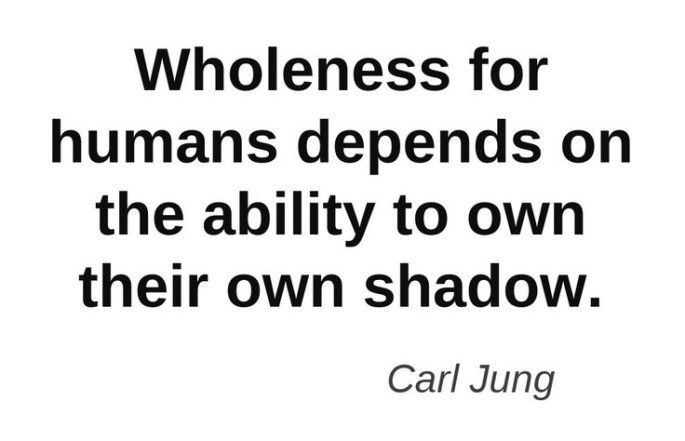
Yet how many people do you know that acknowledge the darker parts of their personality? Or their shadow self as Jung called it.

In short, the shadow is the “dark side”. Many people do NOT recognize the darker components of their personality.

Because most people tend to reject or remain ignorant of the least desirable aspects of their personality, the shadow is largely negative. 

b2.jpg

The problem with viewing yourself as wholly good, without acknowledging your shadow self, is it can lead to unhealthy ways of coping.

As humans it is important to feel we behave and act in a manner that reflects our self-image. How can you stay congruent with your identity, if you view yourself as a good person, in absolute terms, when you inevitably do wrong? This leads to justifying bad behavior. It leads to distorting the truth and repressing emotions we do not have the courage to face.

When people view themselves as wholly good behave badly, they find ways to justify their behavior to themselves (and others) as to maintain their self-image of being “good” and keep cognitive dissonance at bay.

The truth is none of us are good people 24 hours a day, seven days a week.

We all are fallible, we all have moments of weakness, we all act out of character (this is distinct from people we may encounter with poor character who act this way over and over again over the course of our relationship with them). No one who walks among us does not behave badly from time to time. It is part of the human condition and part of why conflict is so common in our relationships.

Being a good person is a value many of us in all likelihood hold dear (narcissists and sociopaths excluded).

Yet how do we know for sure if we are in fact a good person? “Good” is a very relative term. There is no universal truth that defines what being a “good person” is and looks like.

Some people think they’re “good” because they don’t intentionally go out and harm others, and others believe they are good because they do superficial acts of kindness for others.

Yet if you believe yourself to be a “good person” program, consider the following questions:

Are you a good person if you hurt people but your intention was not to do so?
Are you a good person if someone tells you that you are causing them pain but you disregard how they feel?
Are you a good person if you constantly speak ill of others?
Are you a good person if you lie on your taxes? Lie to your spouse? Lie to your children?

Do you ever feel envy or jealousy towards other people? Do you feel resentment towards the people in your life?

Are you honest with yourself?

Are you a good person if you steal from the government? On whatever level you may be playing the game…
Are you good person if you cheat–on a test, partner, or someone else? If you cheat your company?

When you witness poor behavior in others (lying, judgement, dishonesty, self-deception), can you acknowledge those same impulses inside yourself?

Are you a good person if you wish bad on others?

Do you express rage and contempt towards others?

Do you consider yourself a good person without accepting the darker parts of your personality?
Are you a good person if you are unaware of the negative emotions that arise within you through the day?

Do you believe it is wrong to feel hatred towards the people you love?

In terms of behavior:

~Would you give up your seat for a disabled person or pregnant woman on the train?
~Would you stick up for someone being verbally berated?

~How often do you help someone with extra bags?
~Do you donate your time or money to causes outside of yourself?

~Do you hold the doors open for others?

~Do you offer words of encouragement and kindness freely to others?

All the questions give insight into your character.

Are you happy with how your answer these questions? Do you find you can make excuses for yourself to justify your OWN bad behavior/character flaws but have the habit of condemning others?

I don’t believe that any human being is bad through and through or good through and through. We all have some of each inside us.  I do feel people’s character exists on a continuum–with character disturbed on one end and being virtuous on the other end.

The truth is some people have more good in them than bad.

The truth is some people have more bad in them than good.

It is important to know which person you are dealing with at any given time.

Maybe you’ve experienced this before: Dealing with someone who thinks he’s much nice or kinder than he really is. It can be hard to manage and maintain a relationship with someone who is not as good as he or she believes himself to be.

It can also be hard for people to maintain relationships with us if we are not a good of a person as we believe ourselves to be.

You need to be aware of the good AND bad in you. And others.

Viewing oneself as “good” explains a wide range of common defense mechanisms– denial, minimizing/justifying one’s own “bad”behavior, lying, becoming defensive.

The fact is our character is NOT set in stone—we are all capable of growing into a better person IF we are able to adopt a realistic self-image. We need to be able to look deeply into our shadow self if we want to move beyond the darker aspects of our personality.

We can see everyone feels justified in their own shoes. Every action that a person takes take, good or bad, they can always tell themselves it is justified  – otherwise they would not be able to perform the act in question at all.

We all want to be our best, but many people wonder if it’s actually possible for people to become better–themself included. The answer is a resounding yes. There are always ways to improve yourself.

Some general suggestions for a path forward:
1)Support others. Contribute to things outside of yourself–the larger community. Offer kind words and encouragement to the people you encounter. Consider how your words, actions, and behaviors impact others. Do not enable the bad behavior of others at the expense of someone else. Do good and good will come back. We all eventually reap what we sow.

2)Let go of anger. Think before you speak. Words said in anger can only be forgiven, not forgotten. A mindfulness practice can help you to lower your baseline feelings of anger. Much of anger arises from ruminating over the past–past injustice, grievances, pain from long ago. Stress can up our ability to lash out in anger. Consider adopting stress management techniques to your daily routine.

3)Take care of yourself–mentally, emotionally, physically. Exercise, eating well, meditation, seeking out counseling…all lead to building a strong foundation for living a good life and empowering yourself to be a better person.

4)Learn to set boundariesfor others AND yourself. We talk often about setting boundaries with other people but you should have your own set of standards in how you will or will not conduct yourself. Example–you won’t scream at other people, curse people out, threaten people, smear people’s names to others, steal, cheat, etc.

5)Reflect on the following questions (Forbes):

~What, or who, is worth suffering for?

~What can my most aggressive judgments of others tell me about myself?

~Are my opinions of others fixed, or do they evolve? Is that fair?

~Does my daily routine reflect my long-term goals?

~What do the things I envy tell me about what I want to give myself?

~If I could meet the best possible version of myself in an alternate reality, what would that person be like?

If you feel like you are struggling to become a better version of yourself, counseling can be a way to figure out a plan for your life, moving forward.

bad 1.jpg

To schedule a counseling session with me (AND if you are a reader who lives in New Jersey):

https://anewcounselingservices.com/erin-theodorou%2Cm-ed-%2C-lpc

Erin Doyle Theodorou, M.Ed, LPC, NCC

Anew Counseling Services LLC

617 Oradell Avenue, Suite 3, Oradell, New Jersey, 07649

(551) 795-3822

etheodorou@anewcounselingservices.com